

Amongst the most prevalent concerns in aesthetic dentistry is tooth wear. Causes include, but are not limited to, the intake of acidic foods and beverages, heavy tooth brushing, and attrition, where tooth-to-tooth contact is to blame.[i] The latter is a concern as it may not simply be amended by changing patient behaviours.
In some instances, the presence of malocclusion will cause unfavourable contacts, increasing the prevalence of wear. Extreme cases may expose the dentine, causing pain and sensitivity.[ii] Malocclusion in childhood has been observed as a risk factor for tooth wear in adulthood,i but for many, damage may already be caused prior to intervention.
In these cases, a combined orthodontic and restorative approach may be implemented. Addressing the underlying cause of wear is vital to long-term outcomes, demonstrating the importance of sequencing care.
A sequenced approach
Damage to the anterior dentition, including chipping and wear, is often indicative of a larger problem. To ignore this entirely and restore only the aesthetic damage that a patient presents with can lead to negative treatment outcomes. This may include the same damage being caused to the restorations, placing an individual back at square one – wasting time and money, and placing distrust in the practitioner.
Proceeding with orthodontic care first in these circumstances is therefore paramount. Fixed braces and removable aligners are the most prominent treatment options. They will suit different people based on factors such as case complexity, aesthetic demands, and prospective treatment times.
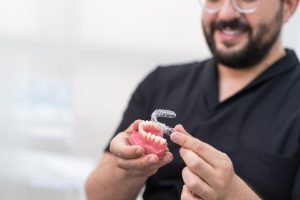
Taking this approach also allows for conservative interventions, which is preferred by many dental professionals.[iii] This is further enhanced when restorative techniques such as composite bonding and injection moulding are selected over the placement of ceramic veneers or crowns. Here, the natural tooth structure is preserved after orthodontic treatment – though some may be removed for interproximal reduction – and interventions can be more simply repaired if further damage is caused.
Restoring after orthodontic treatment allows the clinician to consider the most harmonious result, whilst having the desired occlusion already in place.
It’s important to note that it is not always possible to judge the impact of occlusion on tooth surface loss, as the literature notes that both normal occlusion and severe malocclusion may show varying patterns and intensities of wear.[iv] Clinicians should assess whether occlusion is the cause in each individual case, and use this information when assessing their orthodontic and restorative interventions.
Interdisciplinary care planning
When devising a treatment plan for a patient that includes orthodontic care followed by a composite restoration, clear communication with all relevant parties is vital.
Firstly, the patient should have reasonable expectations for the outcome of treatment. Depending on the level of malocclusion that is present, the length of orthodontic treatment may increase. If a patient is uninformed on this aspect of care, and anticipates a faster result, they will no doubt become unhappy with their treatment and may falter in engagement, further damaging treatment outcomes.
Similarly, if an individual requests restorative care, but it is paramount that malocclusion is addressed first, they must be aware of the need for this structure of treatment. Clinical teams will have to explain the importance of bonding procedures coming last in this process, even if it was their primary concern when seeking support.
Communication with other dental professionals is vital in multidisciplinary care. If a patient is referred to an orthodontist, there must be a conversation regarding who will complete any eventual restorative care to ensure that the treatment plan is clear long before the first step is completed. Conversations will also extend to the laboratory, who may aid in the design of clear aligners, retainers, or more invasive restorative elements where necessary, including crowns or veneers.
A cohesive working relationship for all parties ensures the treatment can progress predictably, causing little to no issue for the patient.
Confidence in the restoration
 When choosing the restorative solutions to be used in practice, there are multiple things to be considered. Aesthetics is a primary concern for many patients. The final restoration must appear seamless within the existing dentition, both in shade and shape. However, to avoid the relapse of damage that patients may present with, it’s important that a material is also chosen with its physical properties in mind.
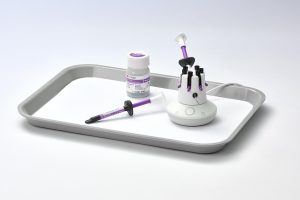
The Solventum™ Filtek™ Easy Match Flowable Restorative provides the ideal balance, with just three shades (Bright, Natural and Warm) covering the entire classical VITA shade guide. It enables simple placement, whilst providing confidence in the appearance of the final outcome. The solution is also optimised with Filtek’s TRUE nanotechnology, which ensures excellent polish retention and wear resistance – increasing the longevity of every course of treatment.
Not all cases of tooth wear will be caused by malocclusion, but where there is a link, a considered approach is required. Thought must go into the structure of care, communication with key individuals, and the chosen materials at every stage. Chosen correctly, each of these aspects will amount to an effective outcome, and a happier patient.

Find out more about Solventum™ Filtek™ Easy Match Flowable Restorative and request a free sample today, https://www.solventum.com/en-gb/home/f/b5005623004/
To learn more about Solventum, please visit https://www.solventum.com/en-gb/home/oral-care/
For more updates on trends, information and events follow us on Instagram at @solventumdentalUK and @solventumorthodonticsemea
©Solventum 2026. Solventum, the S logo and Filtek are trademarks of Solventum and its affiliates. 3M is a trademark of 3M company.
About Solventum
Solventum, enabling better, smarter, safer healthcare to improve lives. As a new company with a long legacy of creating breakthrough solutions for our customers’ toughest challenges, we pioneer game-changing innovations at the intersection of health, material and data science that change patients’ lives for the better while enabling healthcare professionals to perform at their best. Because people, and their wellbeing, are at the heart of every scientific advancement we pursue. We partner closely with the brightest minds in healthcare to ensure that every solution we create melds the latest technology with compassion and empathy. Because at Solventum, we never stop solving for you.
[i] Department of Health and Social Care, NHS England, (2025). Guidance, Chapter 7: Tooth wear. (Online) Available at: https://www.gov.uk/government/publications/delivering-better-oral-health-an-evidence-based-toolkit-for-prevention/chapter-7-tooth-wear [Accessed June 2026]
[ii] Ahmed Bahammam, S., & Bahammam, H. A. (2026). Association between malocclusion and other occlusions in mixed and permanent dentitions: a cross-sectional study. Frontiers in Oral Health, 7, 1726950.
[iii] Spadoni, D., Valeri, C., Quinzi, V., Schneider Moser, U., & Marzo, G. (2024). Advancing Orthodontic Aesthetics: Exploring the Potential of Injectable Composite Resin Techniques for Enhanced Smile Transformations. Dentistry Journal, 13(1), 18.
[iv] Leck, R., Paul, N., Rolland, S., & Birnie, D. (2022). The consequences of living with a severe malocclusion: A review of the literature. Journal of orthodontics, 49(2), 228-239.