Every day the dental practice provides vital care, reassurance, and guidance for patients. An estimated 37% of adults see an NHS dentist every two years,[i] each with unique oral health needs. Some will keep their teeth in great condition, receiving only commendation for their diligent oral hygiene regimen until their next appointment. Others will require more extensive intervention, but with a variety of possible needs between each patient, the practice must be prepared to provide effective care to them all.
Effective inventory management ensures clinicians are always prepared to support individuals, and give them the restorative care they need to continue each day with a radiant smile. Oral healthcare professionals have no crystal ball – they must use what they understand about frequent and unique patient presentations to best prepare for any circumstance.
Common challenges
Whilst oral health needs will vary widely between patients, there are common themes. Caries, periodontal disease, edentulism, oral cancer and oro-dental trauma are five of the most frequently seen problems in practice,[ii] each with a varying degree of prevalence.
Restorations for each of these may require long-term treatment plans, some with referrals to clinicians with greater experience in key fields, such as oral cancer management. However, the presence of caries, incidences of tooth wear, or even the natural development of diastemata or an asymmetrical smile may all be treated with straightforward restorative care.
An adult oral health survey commissioned in the UK in 2023 found that 41% of dentate adults had obvious decay affecting at least one tooth, and that 21% had extensive obvious decay, resulting in caries that affected the dentine.[iii] Here, clinicians need to be prepared with exceptional oral hygiene advice, the ability to provide fluoride treatment where suitable to aid the remineralisation of the tissue, and to deliver an effective restoration where necessary. In many cases, this will be a composite restoration, which could be preferred over amalgam by many since the developments of the Minamata Convention, whilst being less invasive than crown or veneer placement.
Similarly, tooth wear is an increasingly common problem, affecting approximately 71% of dentate adults to some degree.iii 66% of patients are thought to be affected in their anterior dentition, both a functional concern that may give way to increased sensitivity with increased dentine exposure, but also an aesthetic concern.
Posterior and anterior restorations have the same requirements (high quality aesthetics, longevity, successful functional outcomes) but may need different approaches to achieve them. Clinicians need to be prepared with a variety of solutions suited to different clinical approaches, ensuring they can excel with the care they provide once called upon.
Pragmatic clinical approach
There are many ways to approach the same clinical problem. Overall, an additive or minimally-invasive approach is typically preferred. It is seen as progressive by some, with conservative approaches prioritising the preservation of the natural tooth structure.[iv] In order to implement this in restorative dentistry, clinicians need materials that work in a variety of scenarios, equipped to both adhere to dentine and enamel, or even caries-affected tissue that is judged to be viable to stay at the treatment site.
There are cases, however, where a more invasive approach is necessary. Patients may have teeth that are so severely compromised that a restoration such as a crown is the best option for them, in turn requiring an effective indirect adhesive. Or perhaps the tooth can be mostly saved, but a larger composite restoration is necessary. In these situations, depth of cure is a value that clinicians should consciously prioritise, alongside the fundamental aesthetics and ability to sustain occlusal loads.
Whilst minimally invasive care is preferred, clinicians must be prepared to implement a variety of techniques dependent on patient presentation. A development of clinical knowledge allows for this, as well as effective inventory management and planning.
Reliability comes first
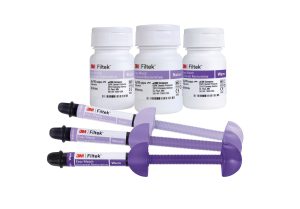

Solventum provides a wide array of solutions as part of the Filtek™ Radiant Smiles initiative, ensuring clinicians have effective materials every step of the way. From everyday check-ups to unexpected emergencies, the Filtek™ dental restorative range features versatile and reliable solutions that deliver aesthetic excellence, such as the Filtek™ Easy Match Universal Restorative which balances aesthetics and simplicity, and Filtek™ Supreme XTE Universal Restorative, for versatility in multi-shade layering and single-shade restorations.
The dental team cannot predict the oral health needs of every patient that enters their practice. Ensuring they are prepared for a variety of clinical needs gives confidence in every aspect of care, for both the clinical team and the individuals that they treat.

Explore the Solventum Filtek™ Family of Dental Restoratives here, https://info.engage.solventum.com/filtek_family_en#section-1
To learn more about Solventum, please visit https://www.solventum.com/en-gb/home/oral-care/
For more updates on trends, information and events follow us on Instagram at @solventumdentalUK and @solventumorthodonticsemea
©Solventum 2026. Solventum, the S logo and Filtek are trademarks of Solventum and its affiliates. 3M is a trademark of 3M company.
About Solventum
Solventum, enabling better, smarter, safer healthcare to improve lives. As a new company with a long legacy of creating breakthrough solutions for our customers’ toughest challenges, we pioneer game-changing innovations at the intersection of health, material and data science that change patients’ lives for the better while enabling healthcare professionals to perform at their best. Because people, and their wellbeing, are at the heart of every scientific advancement we pursue. We partner closely with the brightest minds in healthcare to ensure that every solution we create melds the latest technology with compassion and empathy. Because at Solventum, we never stop solving for you.
[i] Oral Health Foundation, (n.d.). UK oral health statistics. (Online) Available at: https://www.dentalhealth.org/uk-oral-health-statistics [Accessed September 2026]
[ii] World Health Organisation, (2025). Oral health. (online) Available at: https://www.who.int/news-room/fact-sheets/detail/oral-health [Accessed September 2026]
[iii] Office for Health Improvement & Disparities, (2025). Adult oral health survey 2023, Accredited official statistics, Report summary. (Online) Available at: https://www.gov.uk/government/statistics/adult-oral-health-survey-2023/report-summary [Accessed September 2026]
[iv] Alyahya, Y. (2024). A narrative review of minimally invasive techniques in restorative dentistry. The Saudi Dental Journal, 36(2), 228-233.