


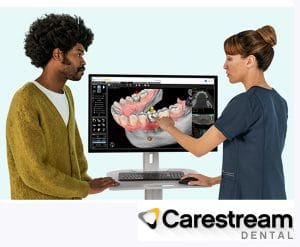
 Modern dentistry is all about delivering exceptional outcomes in the safest, most predictable, and conservative way. The treatment workflow requires a significant amount of time to be spent assessing the clinical situation in order to determine the best possible solution for that specific patient. This process includes identifying any potential complications, and then designing the treatment plan to avoid them completely or mitigate their impact on the final outcome. Both patient and clinical factors should be incorporated to optimise the result and ensure a smooth treatment journey.
Managing patient factors
When it comes to the patient, there are several risk management strategies to consider. The first is to effectively control patient expectations so that they know exactly what to expect both during and after treatment completion. By understanding what patients desire from their care, professionals will be better informed of their priorities and can plan treatment accordingly. Given that management of patient expectations is directly linked to their satisfaction with the outcomes achieved,[i] the entire process is crucial for delivering dentistry to the standard that each patient anticipates.
This also entails supporting patients to ensure their aims are achievable, and in the best interests of their oral health. Social media in particular may create unrealistic expectations for treatment outcomes, and patients should be aware of the difference a given intervention will make.
Other patient-related risk factors involve their lifestyle habits and commitment to ongoing oral hygiene maintenance. Smoking, for example, is linked with a 140% higher risk of implant failure compared to treatment in non-smokers.[ii] It also negatively impacts periodontal health, increasing the risk of periodontitis, whether the patient is undergoing any kind of active treatment or not.[iii] As you will know all too well, poor oral hygiene also has a substantially negative influence on long-term oral health and treatment outcomes.[iv]
To mitigate these risks, a relationship needs to be built between patient and practitioner. Effective communication is the cornerstone of establishing this rapport, helping patients to place trust in their dental team.[v] Technological developments have been instrumental in strengthening this relationship, in turn increasing patient engagement with their oral healthcare and boosting their satisfaction.[vi] With improved patient communication comes better education, which has also been found to reduce the risk of litigation against dental professionals.[vii] Though not a new concept, this bond remains key in the delivery of exceptional patient care today.
Overcoming clinical challenges
Another area of risk is that of clinical complications. For instance, common problems to arise alongside implant therapy are peri-implantitis (affecting approximately 10% of implants), and bone loss greater than 2mm (6%) within five years.[viii] Orthodontic treatment is often associated with root resorption,[ix] while common risks of endodontic include iatrogenic perforation, ledge formation, and canal blockage, among others.[x]
In many situations, the skill and confidence of the practitioner may impact the success of treatment and the avoidance or management of complications. This is why it’s so important for professionals to complete ongoing training and education, updating their knowledge and capabilities according to the latest evidence-based techniques and technologies.
Meticulous assessment, diagnostics, and treatment planning are also vital to minimise the incidence of these adverse events. This is crucial no matter what type of treatment is being provided, how complex it initially seems, and which clinical techniques are to be implemented.
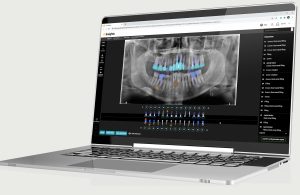
Reliable diagnostic imaging is crucial for this stage in the treatment process. For more complex treatment therapies involving implants, oral surgery, or advanced endodontics, for example, 3D imaging will be crucial, emphasising the importance of access to high-quality equipment. When you choose solutions like the CS 9600 CBCT scanner from Carestream Dental, you will benefit from the world’s most intelligent CBCT system – a scalable, 5-in-1 solution that is easy to use, AI-powered, and capable of delivering crystal-clear images from a broad range of volume sizes. A low-dose imaging mode further reduces risk for the patient, enabling imaging with up to 85% less radiation exposure than 2D panoramic images.

Safer and more predictable care
Ultimately, there will always be risks associated with any dental treatment. However, it is the dentist’s responsibility to minimise the risks associated as much as possible with meticulous assessment, diagnostics, planning, and execution. The goal is to offer highly predictable clinical solutions that deliver excellent outcomes in a safe and efficient way. Patient communication is vital in order to address lifestyle and other modifiable risk factors, as well as to manage their expectations and ensure informed consent.

For more information on Carestream Dental visit www.carestreamdental.co.uk
For the latest news and updates, follow us on Facebook and Instagram @carestreamdental.uk
Author: Nimisha Nariapara

[i] El-Haddad C, Hegazi I, Hu W. Understanding Patient Expectations of Health Care: A Qualitative Study. J Patient Exp. 2020 Dec;7(6):1724-1731. doi: 10.1177/2374373520921692. Epub 2020 Apr 28. PMID: 33457636; PMCID: PMC7786689.
[ii] Mustapha AD, Salame Z, Chrcanovic BR. Smoking and Dental Implants: A Systematic Review and Meta-Analysis. Medicina (Kaunas). 2021 Dec 27;58(1):39. doi: 10.3390/medicina58010039. PMID: 35056347; PMCID: PMC8780868.
[iii] Alwithanani N. Periodontal Disease and Smoking: Systematic Review. J Pharm Bioallied Sci. 2023 Jul;15(Suppl 1):S64-S71. doi: 10.4103/jpbs.jpbs_516_22. Epub 2023 Jul 5. PMID: 37654319; PMCID: PMC10466628.
[iv] Gallione C, Bassi E, Cattaneo A, Busca E, Basso I, Dal Molin A. Oral Health Care: A Systematic Review of Clinical Practice Guidelines. Nurs Health Sci. 2025 Mar;27(1):e70027. doi: 10.1111/nhs.70027. PMID: 39776243; PMCID: PMC11707404.
[v] Ho JCY, Chai HH, Lo ECM, Huang MZ, Chu CH. Strategies for Effective Dentist-Patient Communication: A Literature Review. Patient Prefer Adherence. 2024 Jul 1;18:1385-1394. doi: 10.2147/PPA.S465221. PMID: 38974679; PMCID: PMC11225999.
[vi] Ho JCY, Chai HH, Huang MZ, Lo ECM, Chu CH. Impact of Modern Communication in Transforming Dental Care. Dent J (Basel). 2025 Sep 25;13(10):441. doi: 10.3390/dj13100441. PMID: 41149088; PMCID: PMC12564604.
[vii] Lester GW, Smith SG. Listening and talking to patients. A remedy for malpractice suits? West J Med. 1993 Mar;158(3):268-72. PMID: 8460508; PMCID: PMC1311752.
[viii] Jung, R.E., Pjetursson, B.E., Glauser, R., Zembic, A., Zwahlen, M. and Lang, N.P. (2008), A systematic review of the 5-year survival and complication rates of implant-supported single crowns. Clinical Oral Implants Research, 19: 119-130. https://doi.org/10.1111/j.1600-0501.2007.01453.x
[ix] Alam MK, Kanwal B, Abutayyem H, Alswairki HJ, Alfawzan AA, Shqaidef A, Almakrami LH, Alaqidi SFS, Alaskar AA, Almutairi IA, et al. Complications Arising Due to Orthodontic Treatment—A Systematic Review and Meta-Analysis. Applied Sciences. 2023; 13(6):4035. https://doi.org/10.3390/app13064035
[x] Bhuva B, Ikram O. Complications in Endodontics. Primary Dental Journal. 2020;9(4):52-58. doi:10.1177/2050168420963306