Within the profession, and the field of endodontology specifically, it’s important to analyse the outcomes of treatment within the historical context, taking a step back in order to see how it’s really grown. Dr Tiago Pimentel, specialist endodontist and lecturer at the University College London (UCL) Eastman Dental Institute poses an interesting question.
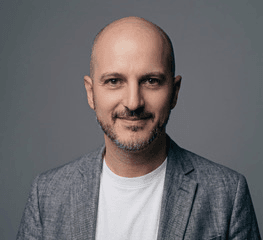 “Here’s a question I want you to sit with for a second: we’ve been telling ourselves that endodontic success rates have plateaued for more than 50 years, that the whole endodontic field has stagnated – what if that’s the wrong reading entirely? What if the number on paper is actually hiding progress, not failure?
“The cases that we treat today are not the cases that we treated in the 60s, 70s, and 80s. Today we treat curved canals, we do re-treatments, we manage resorption, perforation, broken files – teeth that would have been extracted back then. We’re achieving the same success rate with much harder work. New materials and instruments allow us to push the boundaries of our treatment. So, if it isn’t technique that is failing us anymore, what is?”
With dentistry evolving so drastically over recent decades, including when it comes to technological capabilities and patient expectations, it’s helpful to reflect. Tiago will be discussing this concept in depth at the British Endodontic Society (BES) Regional Meeting, joining us as a Guest Speaker in November.
“At this year’s BES Regional Meeting I’m giving a session called ‘Nothing is impossible: are we there yet?’ After thinking about what is failing us, I think I have come to suspect that the weakest link is us. Our brains haven’t been upgraded, so we still anchor on crude test results; we still feel the pull to do something rather than just watch and wait in some cases. We are still reluctant to use appropriate imaging modalities for the predictable management of the cases that we treat.
“The session walks through these heuristics – mind shortcuts – that have a real impact on outcomes. Action bias, and the real cost of treating, how we misread pulp diagnosis, and most importantly a different way of thinking about outcomes and what really matters to the patient.”
Having established the premise of the lecture, Tiago outlines his aims for attendees and how reframing their outlooks benefits everyone, including themselves and their patients.
“What I hope you leave with is a bit of useful discomfort, a sharper eye for the moments when failure isn’t in our hands or on our files, it’s in our heads. That’s a skill, and it’s one that we can get better at. I think this matters now more than ever, because most of what still looks like clinical disagreement in endodontics today is really just bias dressed up as judgement. If we can name it, we can catch it. That’s better for us, it’s better for the tooth in front of us, and ultimately that’s better for the patient. So, come along and join me for this year’s Regional Meeting in November.”
Don’t miss out on this fantastic opportunity to hear from Dr Tiago Pimentel at this year’s BES Regional Meeting, held at Rhodes House, Oxford on 20th and 21st November, alongside Guest Speakers Dr Fabio Gorni, Dr Massimo Giovarruscio, and Dr John Rhodes, with table clinics presented by Dr Claudia Brown, Dr Melanie Kidner, Dr Howard Lloyd, and Dr Fiona McMichen.
Visit the BES website for more information, and to book your place at this highly anticipated conference.

For more information about the BES, or to join, please visit the website www.britishendodonticsociety.org.uk or call 07762945847
BES Regional Meeting
20 – 21 November 2026
Rhodes House, Oxford