A certified resin does not make every dental 3D print safe by default. The real safety story is the complete validated workflow: resin, printer, software settings, print orientation, layer thickness, cleaning, curing and the instructions for use (IFU), all working together. Certification describes the material as supplied. It does not, by itself, describe the finished device that reaches the patient.
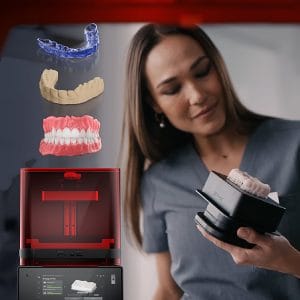
That principle sits behind the SprintRay system. Its resins, printers, software and post-processing equipment are developed to work as one guided ecosystem. The workflow, not the resin alone, is the unit of safety. Safe resin is only half the story; the final device is only as reliable as the process used to produce it.
This is not hobby printing
When a dental practice or laboratory prints a patient-specific appliance, it may be acting as the manufacturer of a custom-made medical device. In Great Britain, practices and laboratories therefore need to understand when MHRA registration and the wider custom-made-device requirements apply.
That point should not be overstated. MHRA registration is not approval, certification or endorsement of a product or process. It is, however, a reminder that dental printing carries a level of regulatory responsibility far beyond hobby printing.
SprintRay removes the guesswork
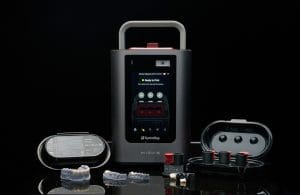
An integrated SprintRay workflow offers more than convenience. The printer, validated resin profiles, software and post-processing stages are aligned with the relevant IFUs. Instead of asking the user to invent a process, the system guides them through one that has already been tested and documented.
The SprintRay hardware-resin compatibility guide supports this directly by default. All SprintRay resin combinations have been tested, which ensures the dental practice team selects the correct material, printer and processing route without unnecessary trial and error.
Every detail matters: positioning angle, layer thickness, wash chemistry, wash time, drying, curing time, curing temperature and light wavelength. A small change may not be immediately visible, but it can affect fit, strength, residual monomer, biocompatibility and long-term clinical performance.
Validated means repeatable
 Cleaning is a useful example. Newer non-alcohol-based cleaners may appear more convenient, but convenience is not the test. Where a resin IFU specifies ethanol or IPA, switching to another cleaner can take the user outside the validated workflow. The issue is not resistance to change; it is ensuring that the final device is produced in the way the manufacturer tested and documented.
The complete workflow
This is not an argument that one certified resin is automatically safe, and another is not. Resin certification is one part of a wider process. SprintRay resins, used for their intended indication on compatible SprintRay equipment and processed according to the relevant IFU, are designed to deliver predictable clinical results. Departing from that workflow introduces uncertainty. Choose a guided system that helps your practice get the process right, not just the material.

For more information on the 3D printing solutions available from SprintRay, please visit https://sprintray.com/en-uk/