Dr Balraj Sekhon presents two cases demonstrating the use of different Coltene HyFlex instrumentation in the management of caries-compromised teeth, exploring a structured approach to canal preparation in general practice.
Teeth presenting with extensive carious involvement and pulpal pathology require careful assessment to determine restorability. In cases where canal anatomy may be narrow or access is limited, a controlled approach to instrumentation is essential to support consistent outcomes.
Patient presentation
A 58-year-old female patient presented with pain associated with the lower left second premolar (LL5). Clinical examination revealed extensive caries with symptoms consistent with pulpal involvement.
Assessment
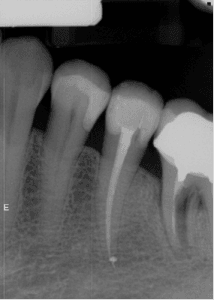
Radiographic assessment confirmed significant structural compromise with carious pulpal involvement. The tooth was considered restorable. Treatment options, including extraction and replacement versus endodontic treatment, were discussed, and the patient opted to proceed with root canal therapy to retain the natural tooth.
The adjacent LL6 had previously been assessed by a specialist endodontist and carries a poor prognosis, with implant placement planned following stabilisation of LL5. Risks, benefits, and alternatives were discussed and informed consent obtained.
Treatment
Following local anaesthesia, rubber dam isolation was placed. Access was gained via the occlusal surface, revealing a single canal. Initial canal negotiation was carried out using size 10 and 15 K-files to establish a glide path. Working length was determined using an apex locator.
Canal preparation was completed using the HyFlex EDM system, following the recommended sequence of orifice opener, glide path preparation, shaping and finishing to a 25/.04 taper. Irrigation was performed using 3% sodium hypochlorite throughout.
A working length radiograph was taken prior to obturation. The canal was dried with sterile paper points.
Obturation was achieved using AH Plus sealer and a HyFlex 25 gutta-percha cone using cold lateral condensation. A composite core build-up was placed immediately following obturation to restore structural integrity, with plans for definitive cuspal coverage restoration to protect the tooth long-term.
Outcome
Post-operative radiographs demonstrated a well-condensed root filling to working length with appropriate apical termination. The patient reported resolution of symptoms and the tooth was restored with a composite core and scheduled for cuspal coverage.
Patient 2
Patient presentation
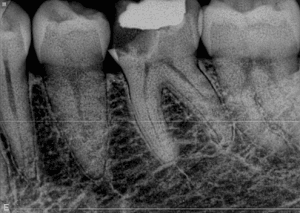
A 56-year-old female patient presented with the lower left first molar (LL6). Clinical and radiographic examination confirmed extensive caries. Caries removal was carried out and found to be pulpal.
Given the strategic importance of the tooth and its restorability, endodontic treatment was recommended as an alternative to extraction.
Assessment
The tooth was considered restorable and endodontic treatment was planned. Due to anticipated canal anatomy, the HyFlex OGSF system was selected to support controlled and efficient preparation. Risks, benefits, and alternatives were discussed and informed consent obtained.
Treatment
Following local anaesthesia, rubber dam isolation was placed. Access was gained via a mesio-occlusal approach. Caries removal was completed using a slow-speed handpiece and sterile rose head burs, allowing visualisation of the pulp chamber.
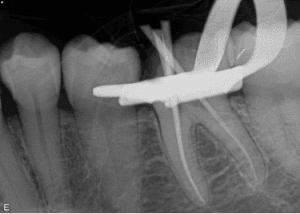
Initial canal negotiation was carried out using size 10 and 15 K-files. Working length was determined using an apex locator.
Canal preparation was completed using the HyFlex OGSF system with a VDW handpiece, finishing to a 30/.04 taper. Irrigation with 3% sodium hypochlorite was used throughout.
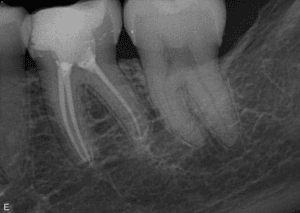
The canals were dried with sterile paper points and obturated using HyFlex gutta-percha and OneFil bioceramic cement using cold lateral condensation. A bulk-fill composite core was placed to provide coronal seal.
Outcome
The patient tolerated the procedure well and reported a comfortable experience. Post-operative advice was provided, including the need for cuspal coverage due to the increased fragility of the tooth following treatment.
HyFlex OGSF sequence
Clinically, the HyFlex OGSF sequence provided a streamlined and controlled approach to canal preparation. The system allowed efficient progression through the canal while maintaining tactile feedback, particularly in the context of narrow anatomy. The combination of glide path establishment followed by shaping supported a consistent workflow.
The simplicity of the sequence reduces unnecessary steps while maintaining control, supporting efficiency in general practice. Instrumentation remained stable throughout, with smooth progression and maintenance of canal anatomy.
Conclusion
These cases demonstrate the use of HyFlex instrumentation in the management of both premolar and molar endodontic cases. A structured approach to preparation, combined with appropriate irrigation and restorative planning, supports predictable outcomes in general practice.
Case appraisal and learning points
The use of the HyFlex endodontic system supports efficient and controlled canal preparation, particularly in anatomically complex or compromised teeth. Its enhanced flexibility and resistance to cyclic fatigue allow clinicians to better negotiate curved canals and adapt their approach to varying case difficulties.
This versatility provides clinicians with greater confidence when managing more challenging endodontic cases, offering a broader range of treatment options while maintaining procedural safety. However, successful outcomes remain dependent on careful case selection, adherence to sound endodontic principles, and appropriate restorative planning to ensure long-term prognosis.

For more information, visit https://colteneuk.com/HyFlex-EDM email info.uk@coltene.com or call 0800 254 5115
Author bio:
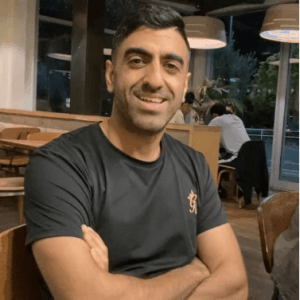 Dr Balraj Sekhon (GDC 81951) is an experienced general dental practitioner with a strong focus on restorative and implant dentistry. He qualified from the University of Manchester in 2003 and has since developed a particular interest in advanced implant treatments and multidisciplinary care.
Dr Sekhon was awarded a Master’s Degree in Implantology with Distinction from the University of Central Lancashire, reflecting his commitment to postgraduate education and clinical excellence. He has extensive experience in the planning and delivery of implant-based rehabilitation, as well as complex restorative cases.
He is the principal dentist of two practices in the Northwest of England: Circle Dental Care in Trafford and Heaton Moor Dental in Stockport. Across both practices, he provides a wide range of treatments with an emphasis on high-quality, patient-centred care, utilising digital workflows and modern techniques to optimise outcomes.