

A patient presenting for full-arch rehabilitation may already have spent years adapting their behaviour around a failing dentition – avoiding photographs, modifying food choices in social situations, or even delaying treatment through embarrassment and dental anxiety. For these patients, the challenge extends beyond managing disease or restoring function and aesthetics. Recognising the psychological impact of tooth loss and addressing the habits that may have contributed to long-term oral health decline helps support patients as they rebuild confidence in their oral health. In this way, implant dentistry can be truly life changing.
The issues start before tooth loss
Full-arch rehabilitation is not simply about replacing teeth lost to terminal dentition with implants. Severe periodontal disease rarely develops in isolation and, as well as poor oral hygiene habits, underlying systemic disease such as uncontrolled diabetes may also contribute to progressive deterioration.
For some patients, embarrassment and dental anxiety may lead to delayed attendance and avoidance behaviours, with one Danish study describing the phenomenon as ‘tooth shame’.[i] Tooth loss and failing dentitions have been shown to carry a significant emotional and social burden, affecting confidence, relationships and everyday interactions long before treatment is sought.[ii]
Before progressing to the restorative planning stage, clinicians should consider how the patient arrived at this point in the first place. Smoking, unstable periodontal disease, and difficulties maintaining oral hygiene do not simply disappear once implants are placed, meaning these factors may still influence long-term treatment success.
Building trust before rebuilding smiles
Prior negative dental experiences, anxiety around treatment or unrealistic expectations shaped by social media and heavily marketed ‘same-day smile’ concepts mean that establishing trust early is essential. Clinicians should aim to understand not only aesthetic expectations but also the patient’s commitment to staged treatment, maintenance and oral hygiene. Avoiding information overload, discussing limitations honestly and involving patients in collaborative decision-making can help support informed consent throughout what is often a lengthy and complex process.
No two full-arch patients are the same
Patient expectations, functional priorities and psychosocial perceptions often vary considerably depending on age, previous experiences with oral healthcare and the duration of edentulism. Improvements in oral-health-related quality of life scores following implant-retained rehabilitation continue to be widely reported across different patient age groups, including the elderly.[iii]
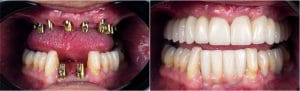
Contemporary full-arch rehabilitation therefore requires patient-centred treatment planning, with decisions around implant positioning, grafting requirements and prosthetic design tailored to the individual patient’s anatomy, risk factors and long-term restorative needs.[iv] In selected cases, approaches such as graftless full-arch concepts may help reduce the need for more extensive augmentation procedures, potentially reducing both treatment burden and cost for selected patients.[v]
Aesthetics, confidence and expectations
A younger patient presenting with a recently failing dentition and minimal bone loss may prioritise cosmetic appearance and immediate restoration of confidence in social situations. In these cases, preserving soft tissue architecture and emergence profiles may support FP1-style restorative approaches where aesthetics remain an important consideration. In addition, carefully managing patient expectations around immediate loading and prosthetic design may become just as important as the surgical procedure.
When function takes priority
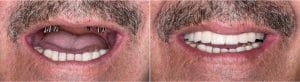
In contrast, a long-term edentulous patient with advanced tissue loss may require an FP3 design featuring prosthetic gingiva and lip support.[vi] Monolithic zirconia restorations may offer predictable long-term outcomes.[vii] Limited mobility or arthritis may also make hygiene access and maintenance central considerations. Many of these patients are more focused on eating comfortably and speaking confidently rather than the ‘perfect smile.’
Balancing complexity with reality
Some patients may be medically compromised, financially constrained, or have complex maintenance considerations. For this group, graftless concepts may help reduce treatment burden and improve affordability, although realistic planning compromises may still be required.[viii]
These contrasting presentations demonstrate why modern implant rehabilitation is so prosthetically driven, with decisions around implant number, prosthetic materials and augmentation or tissue replacement tailored to the individual patient’s functional, aesthetic and maintenance needs.[ix],[x]
Mentorship matters
These are complex rehabilitation cases requiring judgement, communication and bespoke planning. As implant dentistry becomes increasingly sophisticated, clinicians benefit from advanced training and mentorship that supports both surgical and restorative decision-making. The PG Diploma in Advanced Augmentation Techniques in Implant Dentistry from One to One Implant Education reflects this need. Confident clinicians communicate more clearly, consent more honestly, manage complications better, avoid overselling, recognise limitations, and treatment plan more appropriately. Through nine comprehensive modules covering a variety of advanced surgical techniques, including one dedicated to full-arch reconstruction, delegates develop their skills through theory, practical surgical training and mentorship. Emphasis is also placed on predicting and managing complications, helping clinicians support more predictable and sustainable outcomes for their patients.
Ultimately, the rehabilitation of a patient’s dentition doesn’t just end with restoration, but it starts with responsibility; supporting patients beyond surgery and encouraging long-term good habits. There’s something profoundly rewarding about that.

To reserve your place or to find out more, please visit
121implanteducation.co.uk or call 020 7486 0000.
Author: Dr Fazeela Khan-Osborne, founder of One to One Implant Education
[i] Folker L, Jespersen AP, Øzhayat EB. Tooth shame-An ethnographic study of the choreographies of tooth shame in Danish elderly care. Social Science & Medicine. 2025 Jan 1;365:117500.
[ii] Rousseau N, Steele J, May C, Exley C. ‘Your whole life is lived through your teeth’: biographical disruption and experiences of tooth loss and replacement. Sociology of Health & Illness. 2014 Mar;36(3):462-76.
[iii] Linn TT, Khaohoen A, Thu KM, Rungsiyakull P. Oral-health-related quality of life in elderly edentulous patients with full-arch rehabilitation treatments: a systematic review. Journal of Clinical Medicine. 2024 Jun 10;13(12):3391.
[iv] Bahaa A, Bahaa A, El-Bagoury N, Khaled N, El-Mohandes WA, Ibrahim AM. Immediate loading implant-supported fixed full-arch rehabilitation using a new clinical decision-support system: a case series. Cureus. 2024 Aug 26;16(8).
[v] Soto-Peñaloza D, Zaragozí-Alonso R, Peñarrocha-Diago M, Peñarrocha-Diago M. The all-on-four treatment concept: Systematic review. Journal of clinical and experimental dentistry. 2017 Mar 1;9(3):e474.
[vi] Surabathula D, Birajdar S, Joshi M, Vaz M, Kadam N. Prosthetic Options for Full-Mouth Implant Rehabilitation: A Contemporary Review. Cureus. 2025 Dec 14;17(12):e99222.
[vii] Panos Papaspyridakos DD, Naif Sinada DM, Panagiotis Ntovas DD, Barmak AB, Konstantinos Chochlidakis DD. Zirconia full-arch implant prostheses: Survival, complications, and prosthetic space dimensions with 115 edentulous jaws. J. Prosthodont. 2024;1:10.
[viii] Polido WD, Le B. Current Considerations for Full-Arch Fixed Rehabilitations: A Narrative Review. International Journal of Prosthodontics. 2025 Jul 2;38.
[ix] Froimovici FO, Butnărașu CC, Montanari M, Săndulescu M. Fixed full-arch implant-supported restorations: techniques review and proposal for improvement. Dentistry Journal. 2024 Dec 13;12(12):408.
[x] Sabău DT, Saitos P, Moca RT, Juncar RI, Juncar M. Mechanical and Biological Complications Two Years After Full-Arch Implant-Supported Prosthetic Rehabilitation: A Retrospective Clinical Study. Clinics and Practice. 2025 Jul 18;15(7):134.