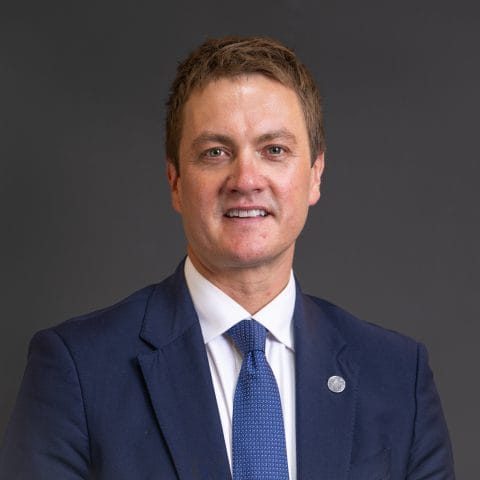
Sara Hurley looks beyond the announcement to consider James Frith MP, the new minister with responsibility for dentistry: what his record tells us, what he brings to the brief and why the profession should be interested
They say a week is a long time in politics. One week in July 2026 certainly proved the point. Andy Burnham became Prime Minister, Yvette Cooper took over at the Department of Health and Social Care (DHSC), and a new multidisciplinary team of health and social care ministers arrived shortly afterwards, followed by the distribution of policy portfolios.[1,2]
Dentistry, however, was kept waiting rather longer to discover whose ministerial in-tray the brief had landed in. It was not until the second week of August that the profession finally had confirmation that responsibility sat with James Frith MP for Bury North.[2] I’d like to imagine ministers clamouring for the dentistry brief; the reality may have been closer to a polite game of ministerial poker, each waiting to see who blinked first.
Regular readers may remember that back in May I borrowed from Yes Minister to imagine the latest custodian of the NHS dental reform file being introduced to a problem that has survived rather more ministers than solutions.[3] Three months on, the cast has changed again. The file, unsurprisingly, remains.
There is an interesting bit of history here. Yvette Cooper is not entirely unfamiliar with NHS dentistry. As a junior Health minister more than two decades ago she was answering questions about dental access, workforce and inequalities. In 2002, she was talking in Parliament about increasing access to NHS dentistry in low-income communities and acknowledging the need to address inequalities.[4] Then, she was holding the cards she had been dealt. Now, as Secretary of State, she is much closer to dealing them.
Andy Burnham’s connection is different. The new GDS and PDS contractual arrangements had already taken effect on 1 April 2006 when Burnham subsequently joined the Department of Health as a minister later that year.[5,6] He was therefore not one of the architects of the contract, and Cooper had left the Department several years before its introduction. So describing this as returning to the scene of the crime would be entertaining, but rather unfair.
Neither was holding the pen. Both, however, have lived through the consequences. Here we are twenty years later, and many of the same questions about access, workforce and reform remain stubbornly familiar. The difference now is that Burnham and Cooper have their hands on some rather important levers.
And now we know the name holding the dental brief beneath them: James Frith MP for Bury North. So who is he, and what might the profession make of him?
Not his first encounter with dentistry
Frith is not discovering NHS dentistry for the first time with his ministerial red box. During his first spell as MP for Bury North, back in 2018, he was already asking some surprisingly detailed questions about the service: Units of Dental Activity, NHS contract delivery and the delays experienced by overseas-qualified dentists trying to obtain performer numbers.[7]
These were not simply the familiar lines from a stakeholder briefing sheet. They were questions rooted in how the service actually works: workforce bottlenecks, undelivered activity and whether the system is doing what it says it is doing. That suggests something useful about Frith. He has previously been prepared to look past the headline and ask what is happening underneath it.
Those questions also went to the economics of NHS dental provision and the gap between activity commissioned on paper and care actually delivered. That will sound familiar to many in the profession. Commissioning intent is one thing; turning it into real capacity is another. Funding does not, by itself, produce the workforce, premises or willingness to take on more NHS care. The gap between allocation and delivery remains as relevant today as it was then and now sits squarely within James Frith’s ministerial brief.
Bury North may be useful preparation
There is another thread through Frith’s political record which should interest dental professionals. He talks about health inequality, and not simply as an abstract national problem.
Frith has used his own constituency to illustrate the stark differences in health experienced by communities living remarkably close to one another. In January 2025, he told Parliament that a difference of just a mile between postcodes in Bury North could mean seven years’ difference in male life expectancy and five years for women.[8]
Dental professionals will recognise the pattern immediately: a socioeconomic gradient written into geography. The burden of oral disease is not evenly distributed, and neither is access to care. In too many places, the ability to pay privately has become the dividing line between securing treatment and simply going without.
National statistics matter, of course, but they can flatten very different local realities. NHS dentistry does not really have one access problem; it has many, often concentrated in the same communities already carrying the greatest burden of poor health and disadvantage.
That is why Frith’s focus on inequality matters. A minister who asks who is missing out, where and why? may get closer to the problem than one satisfied merely with national activity totals.
Not the usual route to the dental brief
Frith has not followed the traditional route into health policy. Before moving to DHSC, he held ministerial responsibilities across digital government and technology. His official biography describes a background in social enterprise and advocacy, and his current portfolio includes NHS data and technology, medtech, medicines, research and innovation, and major and long-term conditions alongside dentistry.[2]
He is also a musician, an avid sports fan and, more recently, something of a fitness convert. Frith has spoken publicly about losing 20kg over the past year, making regular training part of his life and preparing for a HYROX Mixed Doubles event later this year for charity.[2,9]
Perhaps not the conventional apprenticeship for overseeing NHS dentistry, although a sense of rhythm, some endurance and an appreciation that progress is usually built through consistency rather than one dramatic intervention may all prove useful.
More seriously, there is something potentially valuable in his outsider’s perspective. Primary-care dentistry occupies an unusual place in the NHS. Most practices operate as hybrid businesses, combining NHS and private care and constantly balancing public-service commitments with the economics of keeping a practice viable. That balance is as ethical as it is financial. Decisions about how much NHS care a practice can sustain sit alongside obligations to staff, premises, regulation, investment and patients.
Policy can sometimes flatten that complexity. A minister who understands the realities of running a business and a social enterprise, experience that some might see as having parallels with the mixed NHS/private model of primary-care dentistry, may bring something useful to the brief, particularly when it comes to understanding the gap between policy intent and practice viability.
An interesting portfolio
Frith’s portfolio is broad. That creates an obvious risk. Can he get dentistry heard in a department (and a government) with no shortage of competing pressures? Or does it become one small line in a very large ministerial portfolio?
Conversely, that breadth may also be an opportunity. With a background in digital government and public-service delivery, James Frith may come to dentistry asking different questions: Why don’t systems connect better? Why is implementation so slow? And, critically, why are we still much better at counting activity than understanding whether care has actually improved someone’s health?
Perhaps dentistry has acquired a minister whose wider brief gives him permission to take it out of its legacy silo and put it back where it belongs, as an integral part of the NHS. That feels particularly relevant to a government talking about making public services work better and changing how government itself operates.[10]
If dentistry can become a visible part of that wider change (rather than another problem sitting off to one side), there may be reason for some cautious optimism. The challenge for Frith is not only to understand dentistry. It is to make sure it matters on the wider agenda.
A crowded in-tray in more ways than one
The profession has, understandably, been quick out of the blocks. The Association of Dental Groups has already offered to brief the new minister.[11] The British Society of Paediatric Dentistry has written openly about the unfinished business in children’s oral health.[12] The BDA has published its own “to do list” for Frith, alongside the wider Fix and Fund NHS Dentistry NOW! campaign.[13,14] This is not simply professional pressure: as at 13 August, the accompanying public petition stood at 43,535 of its 45,000-signature target.[14]
The queue for James Frith’s attention started before the desk was properly set up. There is no shortage of people ready to explain what is wrong with NHS dentistry, what must change and what should happen next. He should listen, but perhaps the more interesting question is whether Frith retains enough of his outsider’s curiosity to listen beyond the familiar briefing lines and to ask what a better service might actually look like. His earlier record suggests that he may.
He is not starting from zero
Frith does not inherit a service in which nothing has happened. Stephen Kinnock deserves credit for keeping dentistry on the political agenda and moving the latest quality and payment changes through the system. Shiv Pabary, Chair of the BDA’s General Dental Practice Committee, captured the position rather neatly when he described them as “the biggest tweaks this failed contract has seen in its history.”[15] So maybe some of the roughest edges of the 2006 contract have been sanded down, but its foundations remain largely untouched. There is useful work on which to build and no shortage of unfinished business.
The detail of what comes next deserves a separate conversation. For now, the more interesting question is what sort of minister James Frith intends to be.
Perhaps give Jo a ring
There is, incidentally, one former dental minister he might usefully speak to. Jo Churchill held responsibility for dentistry between 2019 and 2021.[16] In my experience, she was one of the few recent ministers who really began to get under the skin of NHS dental policy.
She listened to and understood both the patient and the profession, but she had little patience for policy bluster. When the machinery around her presented dentistry as too difficult, too complex or too awkward to change, she kept pushing for answers, options and action. That matters. Ministers do not need to arrive with every answer, but they do need the persistence to challenge explanations that too easily become excuses for inaction.
There is also a rather apt coincidence in the constituencies they have represented: Bury St Edmunds and Bury North. Churchill’s former constituency sits in a region all too familiar with severe NHS dental access problems.[16] So perhaps the MP for Bury North might give the former MP for Bury St Edmunds a ring. Not because she solved NHS dentistry — she didn’t. None of us did, given the odds we were up against, but Jo Churchill understood that sometimes a minister has to do rather more than read the briefing. Sometimes they have to challenge it.
Ask not…
So what should the profession make of James Frith? Certainly not that another minister has arrived carrying an instant solution. NHS dentistry has proved rather resistant to those.
However, there are reasons to be interested. He has looked beneath the dental headlines before. He has seen health inequality through the experience of his own constituency. His background in digital government may encourage him to look at systems rather than simply structures, and his broader portfolio could allow him to reconnect dentistry with parts of the NHS from which it has been separated for too long.
What matters now is that the political levers are unusually well aligned. Frith holds the dental brief. Yvette Cooper leads the Department. Andy Burnham sits in Number 10. Between them, there is no shortage of experience of the NHS, health inequalities or the consequences of poor access.
So perhaps the challenge for our new minister is an inversion of that famous Kennedy line:
Ask not what NHS dentistry can do for your ministerial tenure,
ask what you can do for NHS dentistry.
And perhaps start with three fairly simple disciplines:
Follow the patient. Follow the data. Follow the money.
- Follow the patient beyond the headline appointment and ask what actually happened to them.
- Follow the data far enough to understand who is getting care, who is not and whether the things we count tell us anything meaningful about health.
- Follow the money — not simply how much has been allocated, but where it goes, whether it is spent and what it actually buys.
None of that requires Frith to arrive with an instant solution. It requires curiosity, an appetite to get beneath the briefing and enough ministerial support to keep asking the next question.
There is one further reason why delivery matters. Raj Rattan has described the risk of “hope fatigue” in NHS dentistry, the point at which repeated promises of reform are met not with optimism, but with frustration and scepticism.[17] It is a phrase that feels particularly apt.
Andy Burnham ended his first speech as Prime Minister by talking about making Britain “believe again” and bringing back hope.[10] For NHS dentistry, that is quite a test. Hope has been offered before. What restores it is not another promise of reform, but evidence that things are actually changing.
James Frith has inherited an old and difficult brief, but perhaps also a rather unusual opportunity. Dentistry could easily remain one small problem on an overcrowded agenda. Or Frith could use it as an early example of what better looks like: an essential service brought back into the wider NHS, and a system capable of turning good ideas into actual delivery.
That might just begin to turn hope fatigue back into hope.
References
- Prime Minister’s Office, 10 Downing Street. Ministerial appointments: July 2026 [Internet]. London: GOV.UK; 2026 [cited 2026 Aug 13].
- Department of Health and Social Care. James Frith MP [Internet]. London: GOV.UK; 2026 [cited 2026 Aug 13]. Available from: https://www.gov.uk/government/people/james-frith
- Hurley S. The Dental Reform Brief [Internet]. The Probe. 2026 May 22 [cited 2026 Aug 13]. Available from: https://the-probe.co.uk/blog/2026/05/the-dental-reform-brief/
- UK Parliament. Health: House of Commons debate, 22 January 2002 [Internet]. London: Hansard; 2002 [cited 2026 Aug 13].
- UK Government. Explanatory memorandum to the National Health Service (Dental Charges) Regulations 2005 [Internet]. London: The Stationery Office; 2005 [cited 2026 Aug 13]. Available from: https://www.legislation.gov.uk/uksi/2005/3477/pdfs/uksiem_20053477_en.pdf
- House of Commons Health Committee. Responsibilities of the Minister of State for Delivery and Quality: oral evidence, 26 October 2006 [Internet]. London: UK Parliament; 2006 [cited 2026 Aug 13]. Available from: https://publications.parliament.uk/pa/cm200506/cmselect/cmhealth/1691/6102601.htm
- UK Parliament. Written questions submitted by Mr James Frith: Dental Services; Dentistry: Migrant Workers [Internet]. London: UK Parliament; 2018 [cited 2026 Aug 13].
- UK Parliament. NHS Backlog: House of Commons debate, 6 January 2025 [Internet]. London: Hansard; 2025 [cited 2026 Aug 13].
- Frith J. The difference a year makes: 20kg lighter [Internet]. LinkedIn; 2026 Aug [cited 2026 Aug 13]. Available from: https://www.linkedin.com/posts/jamesfrith_the-difference-a-year-makes-20kg-lighter-activity-7492120847265058816-xUrY
- Prime Minister’s Office, 10 Downing Street. Andy Burnham’s first speech as Prime Minister: 20 July 2026 [Internet]. London: GOV.UK; 2026 [cited 2026 Aug 13].
- Association of Dental Groups. ADG welcomes new DHSC leadership and urges inclusion of dentistry as a priority [Internet]. 2026 Aug [cited 2026 Aug 13]. Available from: https://the-probe.co.uk/blog/2026/08/adg-welcomes-new-dhsc-leadership-and-urges-inclusion-of-dentistry-as-a-priority/
- British Society of Paediatric Dentistry. Open letter welcoming Yvette Cooper MP and James Frith MP to ministerial roles covering dentistry [Internet]. 2026 Aug [cited 2026 Aug 13].
- British Dental Association. To do list for the new minister for dentistry, James Frith MP [Internet]. LinkedIn; 2026 Aug 12 [cited 2026 Aug 13].
- 38 Degrees. Fix and fund NHS Dentistry NOW! [Internet]. 2026 [cited 2026 Aug 13]. Available from: https://you.38degrees.org.uk/petitions/fix-and-fund-nhs-dentistry-now
- British Dental Association. England: interim change may help but cannot be end of the road [Internet]. London: BDA; 2025 Dec 16 [cited 2026 Aug 13].
- Department of Health and Social Care. Jo Churchill [Internet]. London: GOV.UK; [cited 2026 Aug 13].
- Rattan R. Views from the profession: an interview with Raj Rattan MBE [Internet]. Christie & Co; 2025 May 10 [cited 2026 Aug 13].
About the author
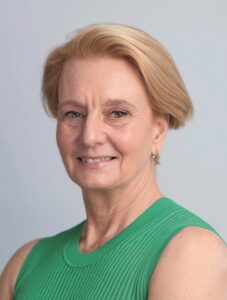 Sara Hurley CBE served as Chief Dental Officer for England from 2015 to 2023. During those eight years she worked under five Secretaries of State and eight ministers responsible for dentistry, and at times, continuity itself felt like a policy ambition. She now enjoys advising, writing and working with the profession, bringing a clinician’s eye to policy, and where useful, shining a light into some of its darker corners.
AI declaration
Generative AI (ChatGPT, GPT-5.6 Sol) was used as an editorial aid for formatting, reference organisation and proofreading. All concepts, analysis, argument development, factual selection and interpretation are my own. I reviewed and approved the final text and take full responsibility for its content and accuracy.