Accurate diagnosis is the foundation of dentistry – and for good reason. Every treatment decision starts there. Before you make plan or pick up a handpiece, you assess what’s really going on and communicate that clearly and concisely to the patient.
When the clinical assessment is thorough, everything that follows tends to run more smoothly. When it isn’t, uncertainty can easily creep in – and that can affect the entire course of care.
Today’s dentistry leaves very little room for guesswork. Implant placement requires accurate evaluation of bone volume and the position of vital structures. Endodontics depends on a clear understanding of canal morphology. Orthodontic planning hinges on careful assessment of skeletal relationships and, increasingly, airway considerations. Across all disciplines, precision matters.
For decades, clinicians relied on two-dimensional imaging to interpret three-dimensional anatomy. While the technology served the profession well, 2D imaging has limitations: structures overlap, subtle pathology can be missed, and appreciating spatial relationships can be challenging.
As treatments have advanced, expectations around diagnostics have evolved too.
3D imaging has changed how many clinicians approach complex cases. Rather than estimating depth or proximity to critical structures, it allows them to evaluate and measure directly and accurately. It reduces uncertainty and improves decision-making.
Take implant planning. Being able to assess bone height, width and density accurately – and clearly visualise vital structures such as the inferior alveolar nerve or maxillary sinus – supports safer surgical planning. In endodontics, a detailed view of canal anatomy can help reduce the risk of missed canals or perforations, with CBCT imaging significantly enhancing diagnostic accuracy.[i] In orthodontics, evaluating impacted teeth or skeletal discrepancies in 3D supports more predictable outcomes and more streamlined chair time.[ii]
In each case, better imaging supports better-informed clinical decisions. There’s also a communication benefit. Patients today want clear explanations and greater involvement in their care. When they can see their own anatomy in detail, conversations about treatment options become more straightforward. Visual information can make complex plans easier to understand, supporting informed consent and building trust. The literature also shows that visual-based tools are effective for improving health literacy among patients and improving their understanding of the information provided.[iii]
From a practical perspective, efficiency matters too. Streamlined imaging workflows reduce disruption within the practice, limit the need for retakes and support appropriate radiation protocols. This necessitates equipment that is easy to implement with existing workflows, simple to set-up and use, and connected to other technologies in the practice. In a busy clinical environment, reliable systems with a relatively small learning curve make a tangible difference.
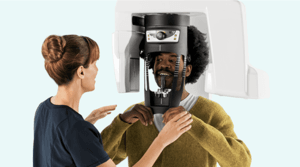
Solutions such as the CS 8200 3D Advance Edition from Carestream Dental reflect this move towards adaptable, precise diagnostics. The 4-in-1 compact unit blends high-quality panoramic technology, CBCT imaging, 3D model scanning and optimal cephalometric imaging. It allows clinicians to select the appropriate field of view for the task at hand – capturing the necessary detail without unnecessary exposure. Intuitive software and straightforward workflows help integrate advanced imaging into daily practice without adding complexity.
There will always be variables in healthcare. Biology is not entirely predictable, and patient responses can differ. But many risks can be minimised through comprehensive assessment and careful planning.
Diagnosis may not be the most visible part of dentistry, but it is one of the most important. Investing in high-quality imaging and continuing professional development helps ensure that treatment decisions are based on the clearest possible understanding of each case.

For more information, contact Carestream Dental on 0800 169 9692 or
visit www.carestreamdental.co.uk
For the latest news and updates, follow us on Twitter @CarestreamDentl
and Facebook
Author: Nimisha Nariapara – Trade Marketing Manager at Carestream Dental covering the UK, Middle East, Nordics, South Africa, Russia and CIS regions

[i] Hora BS, Varghese AS, Patil P, Anbalagan S, Chandarani S, Shaik N. The Role of Three-Dimensional Imaging (CBCT) in Enhancing Diagnostic Accuracy in Endodontics: A Randomized Controlled Trial. J Pharm Bioallied Sci. 2024 Feb;16(Suppl 1):S871-S873. doi: 10.4103/jpbs.jpbs_1066_23. Epub 2024 Feb 29. PMID: 38595528; PMCID: PMC11001081.
[ii] Alshammery FA. Three dimensional (3D) imaging techniques in orthodontics-An update. J Family Med Prim Care. 2020 Jun 30;9(6):2626-2630. doi: 10.4103/jfmpc.jfmpc_64_20. PMID: 32984098; PMCID: PMC7491840.
[iii] Galmarini E, Marciano L, Schulz PJ. The effectiveness of visual-based interventions on health literacy in health care: a systematic review and meta-analysis. BMC Health Serv Res. 2024 Jun 11;24(1):718. doi: 10.1186/s12913-024-11138-1. PMID: 38862966; PMCID: PMC11165863.