


Minor chips to dentition are extremely common, with trauma itself affecting approximately 1 billion people worldwide.[i] Though they may seem insignificant clinically, to a patient, it can feel critical. Small changes to the smile can greatly impact confidence and the trauma caused is often both dental and emotional. No matter how small the chip, the effects can lead to social anxiety and distorted self-assurance.
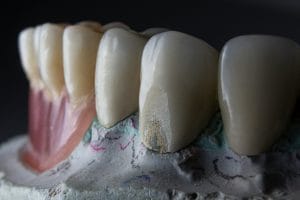
In the majority of cases, the structure of the tooth itself remains well intact, with no requirement for extensive intervention.[ii] However, for patients – and subsequently, clinicians – the focus remains on restoring the appearance of the tooth seamlessly into the surrounding dentition. For clinicians, managing a minor chip offers the opportunity to deliver exceptionally high aesthetic results through remarkably straightforward procedures. Despite this, the most natural of restorations depend upon both technique, and material choice.
Everyday causes of chipped teeth
The first thing most might think of at the mention of a chipped tooth is that of a physical accident. One example of this is sports injuries, especially when mouthguards are not consistently or appropriately worn in contact sports. Studies suggest that approximately 39% of dental injuries in adolescents are sport-related.[iii] Other examples include accidents through intoxication, making teenagers – who statistically drink more alcohol – more common to experience a chipped tooth.[iv] Additionally, children, who naturally have more energetic lifestyles and a lack of coordination, are more prone to chipped teeth too. [v]
Bruxism is another contributing factor to seemingly spontaneous tooth chipping; over time, as the parafunctional habit places continuous pressure to the enamel, it weakens until eventually, a small amount can break away. Even the most minor of knocks can cause tiny cracks in the enamel which become much clearer, particularly to the patient themselves, once the tooth dries.
However, despite the unforeseen events that can lead to tooth chips, they very rarely occur through these accidents alone.[vi] More often than not, they develop through the mundane – everyday activities that place ongoing pressure on the dentition. This includes using teeth as tools (such as opening bottles or wrappers), biting into hard foods, accidental contact with metal utensils, and even chewing ice. Each of these events can easily lead to a small fracture at the edge of an anterior tooth.
Age-related impact
Of course, age-related wear is also a contributing factor too, with thinning enamel over the years making teeth much more susceptible to minor fractures that might once have caused no damage. The reality is that less enamel means less durability, and regardless of the size of the chip, the repercussions for patients’ confidence can be severe, particularly when visible in the anterior region.
Achieving seamless results chairside
Early intervention is vital as leaving the treatment of a chipped or cracked tooth any later than immediate can only exacerbate complications. As such, minor chip repairs are most commonly completed in a single appointment, meaning that efficiency is integral for the benefit of both the dental professionals and patient. Despite this, speed should not compromise the precision and excellence of the final result.
The final polish is especially important as the texture of the surface influences not only aesthetics, but the longevity of the restoration too.
Supporting aesthetic outcomes with advanced materials
As such, material choice is immensely important in defining the success of these types of restorations, which are minute, yet highly visible. Regarding handling, the material chosen must offer good wettability, with minimal stickiness to the instrument, to ensure a professional and streamlined experience and should also afford sculptability for the same reasons. Composites for anterior restorations should offer polishability that mimics that of regular dentition too, ensuring that light is reflected aesthetically to match natural enamel.

One remarkable example of an ideal product is the BRILLIANT EverGlow from COLTENE, which delivers all the aesthetic qualities that clinicians seek in a material. The universal submicron hybrid composite offers smooth handling characteristics that make sculptability and form stability simple and excellent. The sophisticated shade system affords versatility in shading, with exceptional polishing and long-lasting brilliance. The combination of handling ease with finishing performance and aesthetics makes the BRILLIANT EverGlow a brilliant choice for delivering natural results in an efficient workflow.
A lasting confidence
Although minor chips might seem a simple to treat and minimally consequential in comparison to other oral health problems, they can have huge implications for the confidence and wellbeing of patients. They should be treated with urgency, precision, and the right materials to ensure patient satisfaction with the result and treatment experience. Balancing efficiency with a durable finished look is imperative, and highly influenced by the right choice of material.

Author: Vik Sharma Sales Director Coltene Group

[i] Oral Health (no date) World Health Organization. Available at: https://www.who.int/news-room/fact-sheets/detail/oral-health#:~:text=Oro%2Ddental%20trauma%20results%20from,development%20and%20quality%20of%20life. (Accessed: 12 March 2026).
[ii] Patnana AK, Brizuela M, Kanchan T. Tooth Fracture. [Updated 2025 Feb 17]. In: StatPearls [Internet]. Treasure Island (FL): StatPearls Publishing; 2026 Jan-. Available from: https://www.ncbi.nlm.nih.gov/books/NBK551650/
[iii] Young, E. J., Macias, C. R., & Stephens, L. (2015). Common Dental Injury Management in Athletes. Sports health, 7(3), 250–255. https://doi.org/10.1177/1941738113486077
[iv] de Paiva HN, Paiva PCP, de Paula Silva CJ, et al. Is There an Association between Traumatic Dental Injury and Social Capital, Binge Drinking and Socioeconomic Indicators among Schoolchildren? PLOS ONE. 2015;10(2):e0118484
[v] Lam, R. (2016). “Epidemiology and outcomes of traumatic dental injuries: a review of the literature.” Australian Dental Journal, 61, 4–20
[vi] Juneja P, Kulkarni S, Raje S. Prevalence of traumatic dental injuries and their relation with predisposing factors among 8-15 years old school children of Indore city, India. Clujul Med. 2018 Jul;91(3):328-335. doi: 10.15386/cjmed-898. Epub 2018 Jul 31. PMID: 30093813; PMCID: PMC6082603.