Dr Karolina Michalak presents a BACD award-winning case of a single tooth composite.
A middle-aged female patient presented at the practice following a referral from another dentist in the clinic. She had first been seen for teeth whitening and had raised concerns regarding the appearance of her anterior teeth. A major motivating factor was that she was preparing for her wedding abroad – this made time a limiting factor.
A comprehensive dental examination was performed by my colleague. The patient had stable oral health, with no caries or active periodontal problems present. She was also a smoker, and aware of the subsequently higher risk of staining on the composite.
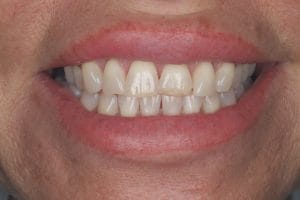
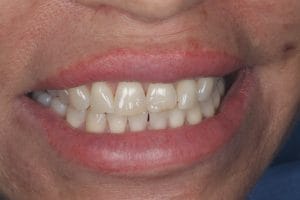
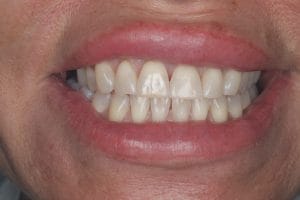
The patient had an existing worn composite filling on the incisal edge of the UL1 and there was slight asymmetry due to the shortened edge length. Occlusally, there was a misalignment, with a crossbite in the posterior area and a Class III incisor with almost edge-to-edge contact. Without the time for any orthodontic realignments, this placed a limit on the length of the restorations and increased the risk of fracture.
Quick fix challenges
The patient was looking for a quick fix solution ready for her wedding. However, because of the restricted timeframe, she was initially advised to return after the wedding so there were no time pressures and a broader range of treatment options could be considered. These options would include orthodontics to address the underlying bite issue, porcelain veneers, and no treatment at all – none of the options met the patient’s needs and she maintained her deadline of before the wedding. She requested the placement of composite on the UL1 as the only treatment, but later decided to add composite placement on the UR1 for a more harmonious outcome.
After tooth whitening, which achieved a uniform, brighter baseline shade, the patient was referred to me for the composite work. The wedding was 3 weeks from this first appointment together.
Treatment begins
The treatment was designed to be minimally invasive, focused, and time-efficient because of the impending deadline. This entailed the replacement of the old composite restoration on the incisal edge of UL1, minimal edge bonding on the UR1 to correct edge discrepancy and improve symmetry, and the preservation of the enamel and natural morphology through direct adhesive techniques.
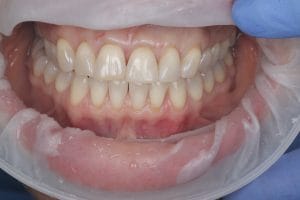
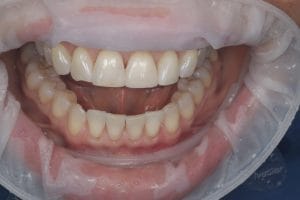
For the edge bonding, the composite colour was selected and then the old composite was carefully removed using fast and slow handpieces. The margins were reshaped and the enamel needed bevelling, particularly on the labial side to achieve a seamless blend of the composite in the aesthetic area. Venus Pearl Paste and Diamond Flow composite were used for incremental build ups, with discs used to reshape. To create some secondary and tertiary anatomy, a red thin diamond bur on a longer base was used on slower speed without water. Polishing started with a white finishing disc, then a full polishing disc kit provided the full gloss.
The composite restoration blended seamlessly with the surrounding dentition; the edge bonding balanced the incisal symmetry and proportions. The natural brightness from the whitening further enhanced the overall aesthetic appearance. Treatment completed well ahead of the patient’s wedding, and she was satisfied with the result, ensuring confidence for her special occasion.
Time-sensitive treatments
Considering this as a temporary, quick and easy targeted treatment, with minimal room to lengthen the tooth and a high risk of chipping (which the patient may have had to repair whilst abroad), the decision to restore everything using a single shade composite kept the treatment as simple and efficient as possible.
The case highlights the effectiveness of simple and minimally invasive composite procedures combined with pre-restorative whitening in delivering a high-impact aesthetic improvement in a short timeframe. Strategic replacement of an old filling and subtle edge bonding transformed the patient’s smile, fulfilling her expectations for a confident and natural appearance on her wedding day.

 Bio: Dr Karolina Michalak won the 2025 BACD Award for Single Tooth Composite. Having graduated from Jagiellonian University in Kraków, Poland, Dr Michalak delivers stunning natural smile treatments at Billericay Dental Care, Essex, and Bespoke Smile Cosmetic & Implant Clinic.
For further information and enquiries about the British Academy of Cosmetic Dentistry visit www.bacd.com