

A reported 3.5 billion people suffer from oral diseases such as caries and periodontitis, creating a demand for consistent and effective oral hygiene solutions.[i] But technological innovations and expensive gadgets cannot reliably enhance oral health; it is instead far better to improve each patient’s daily habits and make them more proactive in preventing the risk of oral disease in the first place.
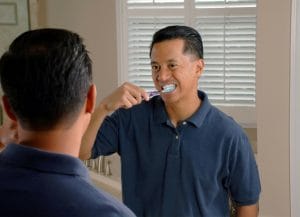
The toothbrush is the most widely accepted and affordable way of removing bacterial plaque and can have various configurations and design elements to optimise oral prophylaxis.[ii] Finding the best toothbrush is a crucial step in a patient’s journey to being more proactive with their oral hygiene, but there are several elements to consider when choosing one, and each can lead to different cleaning outcomes for the patient:
Bristle type
The material of a toothbrush’s bristles makes a considerable difference. Hard and firm bristles are rough on the teeth, removing plaque and stains but also damaging the enamel and aggravating the gingivae when used regularly – these should be avoided in favour of softer bristles. Patients who report severe tooth sensitivity, bleeding gingivae and any discomfort should opt for ultra-soft toothbrushes for a gentler and more pleasant cleaning experience. What’s important is explaining to patients that using soft bristles does not mean they have to brush harder for plaque to be removed; gentle brushing that reaches every tooth surface is far more reliable for targeting harmful bacteria.
Brush head
The shape of the brush head and the formation of the bristles are crucial too. For instance, electric toothbrushes may have rounded heads that can clean each tooth individually, as well as improving access to the posterior teeth, whereas manual toothbrushes are likelier to have longer shaped heads for greater surface area coverage. This accommodates the conventional back-and-forth brushing motion, though this is less effective than doing smaller circular rotations with a rounder brush head.[iii]
Handle size
Many patients may hold a toothbrush with all their fingers wrapped around the handle, gripping it tightly and therefore brushing with excessive force. It may surprise patients when you show them how to hold a toothbrush properly – like a pen. This looser grip lends itself to superior control and easier, smaller circular motions on each tooth. Toothbrushes with flat handles are uncomfortable to hold like so; rounded handles are more comfortable and angled ones, such as an octagonal handle, provide ample grip and guide patients to the correct brushing angle.
Aesthetic design
Whereas the bristles, brush head and handle are all associated with function, the look and style of the toothbrush plays a vital part: if a patient likes their toothbrush, they are more inclined to use it. This is especially true for paediatric patients, with a study finding that children aged 3-5 preferred animal shapes or cartoon characters on the brush and packaging, as well as any interactive features like lights and sounds; 6–8-year-olds still enjoyed bright colours and playful features but also had an increased interest in functionality; and 9–12-year-olds sought more mature designs with sleek, modern aesthetics.[iv]
When to replace
No matter the design and features of a toothbrush, patients must ensure that they rinse their toothbrush, shake the excess water off, and allow it to air dry after every use. This reduces the risk of bacteria settling on the bristles.[v] Soaking the brush head in an antibacterial mouthwash can eliminate any pathogens too.
Indicators that a toothbrush needs changing should be explained to patients:
- Ragged and frayed bristles that have lost their shape
- The brush is odorous
- The teeth don’t look or feel clean after each brush
An approximate lifespan for a manual toothbrush is around 3-4 months, though this depends on brushing technique and the quality of the brush itself. A well-made toothbrush that is used gently on the teeth and gingivae can therefore last a long time without compromising oral hygiene outcomes.
Count on Curaprox
The Curaprox CS 5460 toothbrush delivers a high standard of care through its sleek, science-based design that optimises handling and improves overall brushing technique. Using densely packed ultra-fine Curenâ filaments to gently remove food particles and stains, the CS 5460 is now an MTickâ certified product, recognising it as a menopause friendly dental hygiene product that optimises the wellbeing of patients with sensitive gingivae.
How a patient brushes the teeth ultimately defines the quality of their oral health. As incorrect cleaning techniques, old toothbrushes and inadequate bristles all increase the risk of oral disease, dental practitioners must demonstrate to patients how to improve their daily oral hygiene routine and recommend the solutions that enables them to be more proactive in protecting their oral health.

To arrange a Practice Educational Meeting with your Curaden Development Manager please email us on sales@curaden.co.uk
For more information, please visit www.curaprox.co.uk and www.curaden.co.uk
Andrew Turner – Curaden UK Head of Marketing UK & Ireland

[i] News Medical (2025). News-Medical. [online] News-Medical. Available at: https://www.news-medical.net/news/20251205/Research-examines-oral-health-benefits-of-toothbrush-choice-and-brushing-duration.aspx [Accessed 31 Mar. 2026].
[ii] Thomassen, T.M.J.A. (2025). Oral disease prevention: Primum est dentes purgare. Dare.uva.nl. [online] doi:https://hdl.handle.net/11245.1/c51e4217-353a-45ba-8bb5-72fc6dd75889.
[iii] Deinzer, R., Weik, U., Zdenka Eidenhardt, Leufkens, D. and Sälzer, S. (2024). Manual toothbrushing techniques for plaque removal and the prevention of gingivitis—A systematic review with network meta-analysis. PloS one, 19(7), pp.e0306302–e0306302. doi:https://doi.org/10.1371/journal.pone.0306302.
[iv] Wang, L., Xiong, J. and Ruan, C. (2024). A Study on Emotionally Engaging Toothbrush Design for Children: An Empirical Approach Based on Child Psychology and Cognitive Development. Heliyon, 10(20), pp.e39508–e39508. doi:https://doi.org/10.1016/j.heliyon.2024.e39508.
[v] Gray, R. (2025). Your toothbrush is bristling with bacteria – is it time to change it? [online] Bbc.co.uk. Available at: https://www.bbc.co.uk/future/article/20251017-why-you-might-want-to-clean-your-toothbrush-more [Accessed 31 Mar. 2026].