Making a strong first impression with patients begins well before the initial handshake in the practice room. Equally, a positive and lasting impression extends well beyond the appointment itself. From marketing and practice aesthetics to the overall patient experience and follow-up care, each stage of the patient journey plays a significant role in shaping the impact you and your practice make.

Pre-screening from patients
Patients rarely arrive without first forming an impression of a practice, often relying on online sources to find, research, and evaluate providers before booking or attending an appointment. For this reason, it’s vital that your practice’s online presence delivers clarity and coherence in both information delivered and aesthetic. The website and social media channels should remain consistent across the board to ensure a straightforward and informative process.
Poor navigation and monotonous content are amongst the top reasons that customers leave a website within the first 15 seconds.[i] Not only does a well-designed and inviting website support increased patient uptake and a strong reputation, it also sets a positive tone for the patient’s experience with your practice, before they have even set foot inside.
As well as the website, when marketing to patients through online channels or physical copy, every detail matters towards making an impression. From the colour scheme choices and images selected, to phrasing and content, they represent the outlook that your practice seeks to promote. The tone and identity should remain consistent and tailored to your ethos, delivering professionalism with personality.
Accommodating aesthetics
The congruity in aesthetics is equally as important in-person too, and should flow from the page into the practice. The way the practice looks is more important than many realise. Approximately 25% of people experience dental anxiety, and many patients opt for a practice that makes them feel safe and comfortable over a clinical outlook.[ii]
Furthermore, lasting impressions can be left by offering something that patients either don’t expect, or have not experienced in other dental practices. This includes a well-designed space, which has the ability to reduce dental anxiety. As coined by renowned behavioural scientist, Roger Ulrich, PhD, “supportive design” enhances the patient experience by eliminating environmental sources of anxiety and stress in the context of healthcare; and incorporating characteristics that support the patient’s ability to cope with stress.[iii]
In the dental setting specifically, this can mean removing or minimising environmental sources of anxiety such as clinical odours or daunting noises from equipment, slamming doors, or overwhelming conversations. It can also mean accommodating additions like a water source for anxiety-induced xerostomia,[iv] or higher-quality seating to encourage comfort.
Encouraging interaction
Each patient interaction with a staff member at your practice has an impact upon them. From the tone of the person answering phone calls and the first point of contact at the reception desk, to the facial expressions of the dental nurses and confidence of the clinicians, everyone has a role to play in the patient experience. Research shows that patient satisfaction with medical staff is the most significant factor which has a positive effect on satisfaction in healthcare, including trust and good communication skills.[v]
This also supports the practice’s future, as building meaningful relationships with patients often encourages their long-term commitment to you and the practice. Additionally, word-of-mouth recommendations are much more likely to result from strong patient-practitioner relationships than they are from patients who feel inauthentically cared for and have a lack of trust in their clinician.
Keeping up with the modern workflow
The patient experience is also influenced by the tools and equipment within the practice. Those with broken down equipment for example can lead to more cancellations and a growing distrust in the practice. Furthermore, outdated technology or tools inevitably leads to a lack of patient confidence in the practice – who might believe it to be less capable and advanced than other practices with more modern, faster-workflow-turnaround technology.
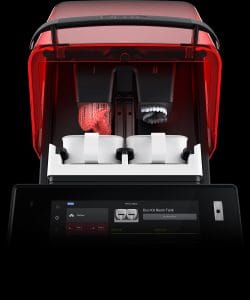 At the rate that digital advancements are happening, it’s vital for your practice to keep up, or quite literally fall behind. Some, like in-house CBCTs for example, are not going to inhibit your practice’s progression if you don’t invest. However, owning others like treatment planning software and 3D printers will absolutely set your practice apart from others – leaving your patients with an unforgettably positive impression.
One particular company ahead of the curve is SprintRay – positioning practices at the forefront of digital dentistry. Specialising in dental-specific 3D printers and specifically formulated resins, the latest innovation, the Pro 2 3D printer, raises the benchmark. It has the ability to 3D print 6+ full arch dental models in a single job and supports more than 15 workflows across a variety of specialities.
Positive patient impressions
Creating a lasting positive impact on your patients involves a plethora of specific adjustments and considerations. Ensuring that all staff members are giving their all to customer service, that marketing remains coherent, and investing in innovative technology each contribute to an impressionable practice.

For more information on the 3D printing solutions available from SprintRay, please visit https://sprintray.com/en-uk/
Author: Ross Phillips – SprintRay Area Manager UK & Nordics

[i] Kretchmer, J. (2021) Gone in 15 seconds: The top 3 reasons people leave your website, MarTech. Available at: https://martech.org/gone-15-seconds-top-3-reasons-people-leave-website/ (Accessed: 14 April 2026).
[ii] Hoffmann B, Erwood K, Ncomanzi S, Fischer V, O’Brien D, Lee A. Management strategies for adult patients with dental anxiety in the dental clinic: a systematic review. Aust Dent J. 2022 Mar;67 Suppl
[iii] Ulrich, R.S. (1991) Effects of interior design on wellness: Theory and recent scientific research. Journal of Healthcare Interior Design
[iv] Gholami N, Hosseini Sabzvari B, Razzaghi A, Salah S. Effect of stress, anxiety and depression on unstimulated salivary flow rate and xerostomia. J Dent Res Dent Clin Dent Prospects. 2017 Fall;11(4):247-252. doi: 10.15171/joddd.2017.043. Epub 2017 Dec 13. PMID: 29354252; PMCID: PMC5768958.
[v] Gavurova, B., Dvorsky, J., & Popesko, B. (2021). Patient Satisfaction Determinants of Inpatient Healthcare. International Journal of Environmental Research and Public Health, 18(21), 11337. https://doi.org/10.3390/ijerph182111337