It takes both the patient and the dental team to maximise oral health outcomes, and ensure individuals receive the care they need. This includes preventive treatments, which anticipate points of concern and do their best to minimise such risk, or eliminate it entirely. Effective oral hygiene routines are a cornerstone of this, but every clinician will understand that the chosen elements – toothbrush, toothpaste, mouthwash, interdental cleaning device – will all make a unique difference.
When assessing toothpastes, for example, fluoride is a key recommendation. It forms an essential part of NHS recommendations, with fluoride solutions of 1,350 parts per million (ppm) thought to be suitable for most adults.[i] This does not wholly change for paediatric patients, with the NHS advising toothpastes with between 1,350ppm and 1,500ppm, but a lower amount of at least 1,000ppm may still be suitable for many.[ii]
There are more ways for clinicians to be able to support patients by increasing fluoride intake, but first, it is vital to understand how fluoride reacts positively with the dentition, any concerns to be aware of, and how patients can be best advised on its implementation.

Understanding fluoride efficacy
The safe intake of fluoride has been approved by the professional dental community and wider public for quite some time, and whilst there are some voices of concern, the evidence typically supports its use in safe quantities. Regular exposure allows for fluoride deposits to form within the plaque biofilm, encouraging remineralisation of the tooth surface.i It’s judged that the most effective methods of fluoride delivery are those that can be incorporated into everyday life;i toothpastes are an obvious choice, but the fluoridation of drinking water is another key step.
Approximately 10% of England’s population has access to fluoridated water thanks to active schemes implemented most prominently in the West Midlands and the North East of England, amongst others.i Whilst Scotland, Wales and Northern Ireland do not have these, some patients will find their water supply contains naturally occurring fluoride – local water suppliers will be able to advise on if a given area’s supply is fluoridated.
Some people express concerns with this. Potential risks of fluoride consumption include dental fluorosis, which affects the appearance of the tooth enamel, and links to larger health conditions. The risk of the latter is not strongly established.[iii] Fluorosis is a concern especially for children during tooth formation, and the volumes of fluoride recommended in toothpaste and already present in water supplies does factor in such an issue.i It should be noted that an association between fluoridated water and dental fluorosis has been found, with just a 12% chance of people having dental fluorosis that may cause cosmetic concern.[iv]
Introducing fluoride into the water supplies aims to reduce the risk of dental caries. A 2024 review found that water fluoridation may lead to a reduction in instances of decayed, missing or filled primary teeth, and an increase in children who are caries-free. The size of the latter effect was deemed “small but important”.[v]
Extra support
Despite the various ways in which fluoride can be provided to the dentition, a volume of patients will inevitably be affected by dental caries. For at-risk or already impacted individuals, extra steps may be required.
Topical fluoride treatment is paramount for many individuals. A varnish is recommended to increase the availability of fluoride regardless of the pre-existing levels in local water supplies, with strong recommendations for paediatric patients.i Use of fluoride varnish is found to reduce decayed, missing and filled teeth surfaces by an average of 46% for the permanent dentition, and 33% for the deciduous dentition.[vi] These can have an enormous impact in just a single appointment, and choosing this minimally invasive oral hygiene addition can maximise a patient’s chances of optimal long-term oral health.
The choices of restorative material can also aid the provision of fluoride to the surrounding dentition. Glass ionomer cements release fluoride consistently over considerable periods of time, which in turn has an anti-caries effect.[vii] This has been observed by studies to produce detectable adverse effects on caries-causing bacteria.[viii] In addition, research also finds that glass-ionomers can have sufficient fluoride release to also prompt the remineralisation of teeth, playing a key role overall in counteracting caries – though this is also supported by additional sources of fluoride.
An addition to rely upon
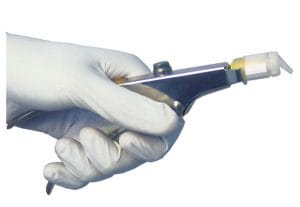
Choosing effective additions to the dental restorative armoury is key, and the new Diamond Rapid Set Capsules from Kemdent are an ideal solution that maximises the presence of fluoride following restorations. The radiopaque material is available in pre-dosed capsules for direct placement, with 50 capsules per pack, and produces a high compressive strength. Alongside an optimised formulation that aids enamel and dentine bonding, clinicians will also rely on a consistent fluoride release. No activator is required, ensuring ease of use in every workflow.
Access to fluoride is without doubt important for patients. Understanding how patients might achieve this, and how treatment plans can be designed to maximise it, is vital for improving long-term oral health outcomes.

For more information about the leading solutions available from Kemdent, please visit www.kemdent.co.uk or call 01793 770 256
Author: Alistair Mayoh – Marketing Director Kemdent

[i] Department of Health & Social Care, NHS England, (2025). Guidance, Chapter 9: Fluoride. (Online) Available at: https://www.gov.uk/government/publications/delivering-better-oral-health-an-evidence-based-toolkit-for-prevention/chapter-9-fluoride [Accessed June 2026]
[ii] NHS, (2025). Children’s teeth. (Online) Available at: https://www.nhs.uk/live-well/healthy-teeth-and-gums/taking-care-of-childrens-teeth/ [Accessed June 2026]
[iii] The Academy of Medical Sciences, (2026). Water fluoridation in the UK: what the latest evidence tells us. (Online) Available at: https://acmedsci.ac.uk/more/news/water-fluoridation-uk-latest-evidence [Accessed June 2026]
[iv] Iheozoe-Ejiofor, Z., et al., (2015). Water fluoridation for the prevention of dental caries. (Online) Available at: https://www.cochranelibrary.com/cdsr/doi/10.1002/14651858.CD010856.pub2/full [Accessed June 2026]
[v] Iheozor-Ejiofor, Z., Walsh, T., Lewis, S. R., Riley, P., Boyers, D., Clarkson, J. E., … & O’Malley, L. (2024). Water fluoridation for the prevention of dental caries. Cochrane database of systematic reviews, (10).
[vi] Marinho VCC, Worthington HV, Walsh T, Clarkson JE. Fluoride varnishes for preventing dental caries in children and adolescents. Cochrane Database of Systematic Reviews. 2013(7).
[vii] Sidhu, S. K., & Nicholson, J. W. (2016). A review of glass-ionomer cements for clinical dentistry. Journal of functional biomaterials, 7(3), 16.
[viii] Nicholson, J. W., Sidhu, S. K., & Czarnecka, B. (2023). Fluoride exchange by glass-ionomer dental cements and its clinical effects: a review. Biomaterial Investigations in Dentistry, 10(1), 2244982.