Endodontic success is fundamentally dependent on microbial control within the root canal system. As the majority of pathogens responsible for periapical disease originate from oral commensals, strict aseptic technique is essential to prevent further contamination during treatment. The use of rubber dam is therefore widely regarded as a prerequisite for successful outcomes.[i] Isolation is not optional; it is fundamental and omitting it is considered inexcusable by most dental defence organisations.
Despite being taught in dental schools, its use in general practice remains inconsistent.[ii] Studies comparing the quality of endodontics between students, specialist practices and general clinicians highlight discrepancies in infection control standards, with direct implications for treatment outcomes.[iii] Epidemiological studies report a high prevalence of apical periodontitis associated with root-filled teeth, suggesting that achieving effective disinfection during treatment remains a critical challenge in general practice.[iv]

Asepsis and success
Pulpal necrosis is most commonly the result of bacterial invasion, whether through caries, trauma or microleakage. Once infected, microorganisms migrate apically, leading to inflammation of the periapical tissues and ultimately apical periodontitis. During endodontic treatment, failure to adequately reduce the microbial load usually results in persistent and recurring infection, post-operative symptoms and long-term failure.[v]
In real terms, this can mean repeat appointments, complex retreatment, or ultimately extraction. These outcomes are frustrating for clinicians and, more importantly, distressing and costly for patients. Achieving asepsis at the outset is therefore critical for long-term prognosis, but also for patient experience and trust.
Working within a controlled field
Rubber dam has been part of dentistry for over 150 years, yet its role in endodontics is still sometimes underestimated. Firstly, it provides effective cross-infection control by preventing microorganisms in the oral environment from entering the root canal system. Secondly, it protects the patient by isolating the operative field and reducing the risk of aspirating or ingesting debris, medicaments, instruments, or irrigants. Given the risks associated with dental accidents, this is an important medico-legal consideration. Finally, it greatly enhances clinical efficiency.
By improving visibility, reducing flooding and mirror fogging, retracting soft tissues, as well as eliminating interruptions such as swallowing, sitting to expectorate, or talking, dental dam allows clinicians to work more effectively within a controlled environment.[vi] Patients generally tolerate it well, with studies demonstrating high levels of comfort, despite common assumptions to the contrary.[vii] Ultimately, the use of rubber dam makes treatment smoother for the patient, clinician and assisting dental nurse.
Materials matter
While the importance of dental dam is well-established, not all materials perform equally in clinical practice. Latex allergy remains a concern, particularly where patients have undiagnosed sensitivities. Contemporary synthetic dams have been known to perform poorly in comparison where elasticity and tear resistance are critical for achieving an effective seal, particularly when stretching over clamps and tight molar contact points without compromising integrity and seal. In addition, resistance to unpleasant endodontic irrigants such as sodium hypochlorite and EDTA is essential to maintain a reliable barrier throughout treatment.
Ease of handling and placement also plays a significant role. Clinical frustrations often arise from poorly positioned dams, whether due to inaccurate hole punching or difficulty in placement. A compromised seal or even dislodgement during treatment can lead to leakage or tears, increasing the risk of contamination and undermining the effectiveness of isolation.
Making isolation easier
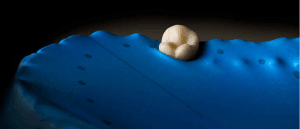
In response to these clinical challenges, materials such as HySolate SyntX Dam from COLTENE have been developed, offering a latex-free polyisoprene solution with high elasticity, tear resistance, and reliable chemical barrier properties. Designed for ease of placement and consistent performance, it supports clinicians in achieving effective isolation throughout endodontic treatment, without unnecessary complexity. This is particularly supported with the pre-printed template on one side which streamlines the preparation process.
Small steps, big impact
Effective isolation not only facilitates asepsis but also improves clinical efficiency by reducing interruptions and maintaining a clear working field. This allows clinicians to focus on the debridement, irrigation and obturation of the root canal while ensuring patient safety and comfort throughout the procedure.
Asepsis is not a complex concept, nor is the application of dental dam a technically demanding step, although it can be fiddly. The evidence suggests that the discrepancy between expected standards and clinical reality is not due to lack of knowledge, but inconsistency in its application. In busy clinical practice, even small barriers – time, handling, or material limitations – can influence whether these principles are applied consistently. Simplifying isolation, through technique and material choice, may therefore play a greater role in supporting high standards of care.
Asepsis remains the cornerstone of successful endodontic treatment. The use of dental dam is non-negotiable in modern ethical practice and choice of material can significantly influence both clinical efficiency and treatment outcomes.

For more information, visit https://products.coltene.com/EN/CH/products/treatment-auxiliaries/dental-dam/standard-non-latex-dental-dam/hysolate-syntx-dam email info.uk@coltene.com or call 0800 254 5115.
Author: Vik Sharma – Sales Director, Coltene Group

[i] European Society of Endodontology (2006), Quality guidelines for endodontic treatment: consensus report of the European Society of Endodontology. International Endodontic Journal, 39: 921-930. https://doi.org/10.1111/j.1365-2591.2006.01180.x
[ii] Whitworth, J. M., Seccombe, G. V., Shoker, K., & Steele, J. G. (2000). Use of rubber dam and irrigant selection in UK general dental practice. International endodontic journal, 33(5), 435–441. https://doi.org/10.1046/j.1365-2591.2000.00329.x
[iii] Malmberg, L. et al. (2023) ‘Endodontic operative field asepsis: a comparison between general dentists and specialists’, Acta Odontologica Scandinavica, 81(8), pp. 603–608. doi: 10.1080/00016357.2023.2232855.
[iv] Tibúrcio-Machado CS, Michelon C, Zanatta FB, Gomes MS, Marin JA, Bier CA. (2021) The global prevalence of apical periodontitis: a systematic review and meta-analysis. International Endodontic Journal, 54, 712–735.
[v] Prada, I., Micó-Muñoz, P., Giner-Lluesma, T., Micó-Martínez, P., Collado-Castellano, N. and Manzano-Saiz, A., 2019. Influence of microbiology on endodontic failure. Literature review. Medicina oral, patologia oral y cirugia bucal, 24(3), p.e364.
[vi] Ahmad, I. A. (2009). Rubber dam usage for endodontic treatment: a review. International endodontic journal, 42(11), 963-972.
[vii] Kapitan, M., Hodacova, L., Jagelska, J., Kaplan, J., Ivancakova, R. and Sustova, Z., 2015. The attitude of C zech dental patients to the use of rubber dam. Health expectations, 18(5), pp.1282-1290.