Dr Jurgita Sybaite presents a case of selective additive composite bonding.
A female patient presented following completion of orthodontic treatment. She requested an aesthetic refinement of the anterior dentition using composite bonding. From an aesthetic perspective, residual asymmetry, incisal wear, failing restorations, and black triangle formation were identified. A mild occlusal plane cant contributed to the smile’s imbalance. The patient’s oral hygiene was good.
Biologically respectful planning
Rather than addressing the individual anterior teeth in isolation, facially generated smile design was used to guide treatment planning and digital planning tools were used as visual aids to assess proportional relationships and treatment extent. The final decisions were dictated by anatomical feasibility and the existing tooth morphology.
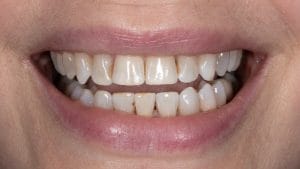
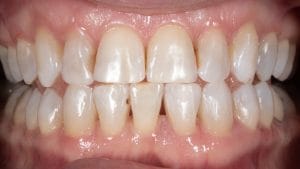
Two key principles governed the restorative approach. The first was selective additive augmentation – composite resin was to be used as an additive material only so as to avoid unnecessary full labial coverage. The second principle was morphology-driven design – the tooth shapes were not idealised but instead derived from existing morphological cues present in the patient’s dentition. This approach recognises the importance of identifying existing natural tooth forms and characteristics and seeks to enhance, harmonise, and preserve inherent dental character rather than replacing, masking, or overlaying it.
The digitally planned smile design was transferred to a diagnostic wax-up, which then served as a guide for composite resin layering during the restorative appointments.
Treatment starts
Eight maxillary anterior teeth were restored to replace failing restorations, improve symmetry, and visually level the occlusal plane. The mandibular anterior teeth were treated to harmonise incisal edges and close interproximal embrasures. Maxillary and mandibular restorations were completed in separate appointments using a natural layering approach with a homogeneous nano-hybrid composite resin system (Inspiro, Edelweiss). Enamel, body, and effect shades were combined to recreate internal optical depth and surface characteristics. Black triangles were managed using a modified injectable composite technique (CG Injectable Composite) with sectional matrices (Bioclear Black Triangle Kit), integrated with conventional layering to allow controlled anatomical contouring.
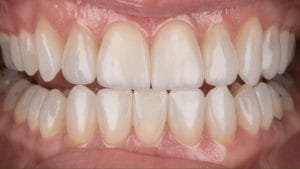
All procedures were performed under rubber dam isolation. Composite resin was used strictly as an additive material, deliberately avoiding full labial overlays. Extensive natural enamel exposure was maintained, particularly adjacent to soft tissues, with papillary contact limited to essential areas required for black triangle closure.
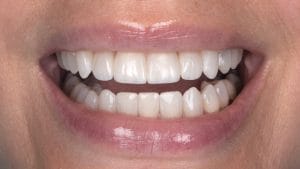
The final evaluation was performed eight weeks after treatment concluded. A clinical examination demonstrated excellent biological integration, with healthy soft tissues and stable gingival margins. Restorations showed seamless marginal adaptation and favourable optical behaviour, including appropriate translucency, opalescence, and internal depth under varying lighting conditions. Aesthetic integration was achieved without masking natural tooth character, and occlusal relationships remained stable. The patient reported high satisfaction and improved confidence with a result perceived as natural rather than restorative. Compliance with the post-treatment maintenance was excellent.
Case discussion
This case illustrates that predictable outcomes in direct composite smile rehabilitation depend less on the material itself and more on structured decision-making and morphological control. Central to the success of this treatment was mastery of tooth morphology. Deliberate control of primary anatomy (three-dimensional tooth form), secondary anatomy (macrotexture and line angles), and tertiary anatomy (microtexture and surface detail) was essential to achieving lifelike results.
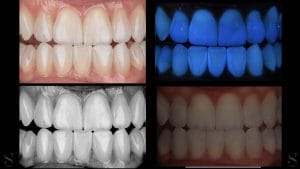
Tooth shapes were not arbitrarily designed or idealised but selected based on existing morphological cues within the patient’s dentition. This approach acknowledges that natural tooth forms are inherently adapted to the individual’s facial features and smile dynamics, and that respecting these cues leads to more harmonious and believable outcomes. By employing composite resin selectively as an additive material rather than a replacement veneer, biological integrity was maintained, enamel dominance preserved, and optical integration optimised.
Reflections
This case reinforces the principle that direct composite bonding, when guided by facially driven planning, morphological understanding, and conservative execution, can deliver stable, natural, and biologically compatible aesthetic outcomes that meet the British Academy of Cosmetic Dentistry’s (BACD) standard of ethical excellence.
Direct composite bonding represents an effective, biologically conservative, and aesthetically powerful option for post-orthodontic smile refinement when biological, functional, and occlusal conditions are favourable. This case report presents a structured decision-making framework for anterior composite rehabilitation that prioritises facially driven planning, respects natural tooth morphology, and employs selective additive augmentation rather than full-coverage composite overlays.

For further information and enquiries about the British Academy of Cosmetic Dentistry visit www.bacd.com
 Bio: Dr Jurgita Sybaite, BDS MSc Restorative Dentistry, is a restorative and aesthetic dentist based in Harley Street, London. Dr Sybaite is also a lecturer and educator, helping to shape the future of dentistry.