Teeth don’t stay still. Over the course of a lifetime, they drift, shift, and tilt, and they tend to do it slowly enough that it goes unnoticed at appointments. However, over time it can become significant enough to cause serious problems.

Dr Tif Qureshi coined the term ‘dental tectonics’. Just like the geological forces that shape continents, the forces acting on teeth are constant and largely invisible.
Dr Tif Qureshi and Dr Shiraz Khan
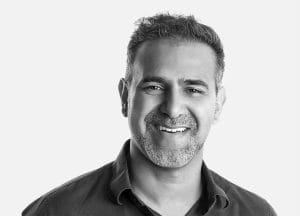
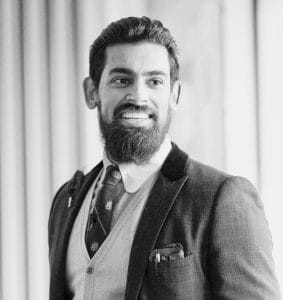
This concept sat at the heart of a session Dr Qureshi delivered alongside Dr Shiraz Khan at the British Dental Conference & Dentistry Show 2026 (BDCDS) in Birmingham. Compressing ideas they generally explore over the course of two days into an energetic 45 minute talk, the pair presented ideas united by a central theme: prevention is key. Not prevention in the narrow sense of fluoride and cleaning, but prevention understood as a whole-mouth, whole-career philosophy. Protecting teeth, restorations, and occlusion over decades.
Occlusal thinking at every check-up
One of the session’s deepest observations was deceptively simple: Ortho-restorative thinking should be applied to every patient at every check-up, not only when there is an obvious and pressing problem. Issues within the mouth are generally not isolated – research suggests that around 85% of cases of overcrowding will deteriorate further over time.[i][ii]
This is where the concept of the envelope of function becomes crucial to consider. This describes the range of movement the mandible makes during normal function. When it comes to restorations, orthodontic positioning, and composite survival, they must sit within this envelope. Work that encroaches on this area, therefore, will fail. Even more crucially, when anterior guidance is compromised, a destructive load is placed on the posterior teeth.
Anterior guidance and posterior disclusion
The principle of anterior guidance underpins much of what Drs Qureshi and Khan discussed. The anterior teeth, especially the canines, ideally bear the forces of jaw movement and disclude the posterior teeth. When anterior guidance fails, posterior teeth take the load, and wear, fracture, and restorative failure follow. The implication is that treating the upper arch without addressing the lower, or improving the aesthetics of anterior teeth without fully considering their function, should not be considered a complete treatment.
A useful tool for communicating this information to patients is the masticatory tooth movement itself. Demonstrating the way their teeth actually move is the way to make an abstract concept understandable. Dr Khan also made a strong case for the clinical photograph over the digital scan when it comes to patient communication. Scans, however precise, can lack realism and therefore make it more difficult for the patient to feel a personal connection to the information they display. On the other hand, a clear photograph at the right angle – including the overjet angle, which Drs Khan and Qureshi endorse – will show patients their own teeth in a way they can immediately understand.
Composite, the Dahl principle, and prevention
The session also touched on the creative possibilities that open up when clinicians think occlusally from the outset. Adding millimetres of canine length with composite to create or restore posterior disclusion is a minimally invasive form of intervention with significant benefits, but it requires the clinicians to have assessed TMJ health first, to understand the envelope of function, and to plan the case rather than just respond to the presented complaint. The Dahl principle – the use of an occlusal appliance or direct composite to intrude posterior teeth and create space – offers another example of occlusal thinking applied practically yet conservatively.
The broader point that Drs Qureshi and Khan returned to throughout: when teeth are straightened, occlusion is addressed, bonding is completed, and the envelope of function is respected, the longevity of the teeth approaches that of ceramic implants. Prevention, therefore, should be acknowledged as one of the most technically demanding yet rewarding things a dentist can deliver.
IAS Academy provides structured training in orthodontic and occlusal thinking for GDPs, including the principles of assessment, diagnosis, and treatment planning that underpin the functional approach discussed by Drs Qureshi and Khan at the BDCDS. Courses range from introductory aligner programmes through to advanced diplomas covering fixed appliances and complex restorative cases.
Teeth are always moving. The question is whether a clinician is watching closely, and thinking occlusally, enough to get and stay ahead of it.
For more information or to book a course, visit https://courses.iasortho.com/courses or call 01932 336470 (Press 1)
[i] Crowded Teeth Problems | The Modern Dentist. The Modern Dentist. Published 2025. Accessed May 22, 2026. https://www.themoderndentist.co.uk/blog/crowded-teeth-treatment
[ii] Patano A, Malcangi G, Inchingolo AD, et al. Mandibular Crowding: Diagnosis and Management-A Scoping Review. J Pers Med. 2023;13(5):774. Published 2023 Apr 29. doi:10.3390/jpm13050774