

Dental professionals want to give their patients the best restorations possible. This means enhanced aesthetics that not only look natural within the dentition, but also make a person feel confident in their smile. Function is also a priority – a restoration should stand both the test of time and the test of everyday life, standing up to masticatory forces as well as some expected parafunctional habits.
To achieve these goals, a clinician will look for well-regarded, effective materials, and wonder how to make the most of them. In the world of composites, flowable solutions have increasingly gained popularity, now making up a core part of everyday restorative care.
Clinicians should understand what a flowable solution could contribute to their workflow, which elements to look out for when identifying additions to their arsenal, and how they can use them to their greatest potential.

Behind the flow
Flowable composites offer improved ease of use, handling, and wetting properties compared to conventional composite resins.[i] Their reduced viscosity also allows good adaptability to cavity walls, whilst a considerable filler content – often around 61% to 71% of its weight – ensures high occlusal loads can be managed.i An increased wetness aids conformity to every irregularity in the tooth structure, minimising gaps that may be a target for further problems.
Amongst their many indications, the literature has shown they are an especially preferred material for pit and fissure sealants, with increased retention when compared to conventional resin-based sealants.[ii]
Some professionals may implement them in the bonding of orthodontic brackets and lingual orthodontic retainers, denture repairs, and for repairing ditched amalgam margins, crown margins, and composite restoration margins. Each solution’s potential impact will differ, and looking at the recommended indications is key.
As for the elements to look out for, an increased depth of cure is pivotal for bulk fill solutions. High-quality aesthetics will ensure patients leave their appointment happier, and this can either be achieved through a wider range of shades being available or, more simply, an adaptive system that can cover the VITA shade guide in as few as three options. To simplify the restorative process, it may also be useful to find solutions that do not even need a blocker in order to achieve the desired aesthetic results; this creates a smaller inventory, with less waste produced, and more straightforward care.
What can a warmed composite do for you?
Composite warming can have a fantastic effect on the application of some flowable composite restoratives. First, it’s vital to ensure that the solution is manufacturer-approved for this process, with the relevant testing for its safety and efficacy. Choose clinically-proven solutions from reliable material providers, and be sure to also select compatible composite warmers that allow for direct control over the temperature of the restorative material – maximising safety and predictability. With this in place, it’s possible to begin to get much more from your materials.
Preheating increases the fluidity of composite resins.[iii] An increased adaptability to the cavity wall and better edge closure means clinicians can expect reduced microleakage.iii Studies also show an increased monomer conversion when a composite resin is warmed prior to light curing.iii
The final aesthetic result may also benefit from composite warming as a method of material preparation. The literature notes that prewarming dental composites not only enhances the mechanical properties of a solution, but decreases its susceptibility to colour change.[iv] The higher degree of conversion reduces the risk of discolouration as a result of environmental exposure and ageing, ensuring restorations look better for longer – and flowable composites appear to benefit the most.iv
See it to believe it
With their improved adaption to the walls of a restoration site, and the potential for improved outcomes with composite warming, it’s no surprise that many clinicians use flowable solutions frequently in their care.
One of the more complex challenges facing composite use is always high-quality aesthetics. Clinicians will want to match the surrounding dentition colour whilst replicating the aesthetic of dentine underneath enamel that dissipates near the bevel and incisal edge. This can, with some composite systems, be particularly difficult. The change in shades may require multiple composites layered to create a natural appearance.
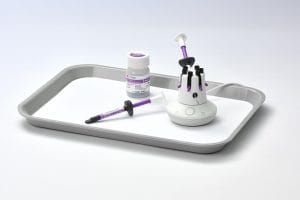
This isn’t the case with the new Solventum™ Filtek™ Easy Match Flowable Restorative, which uses just 3 shades – Natural, Bright, and Warm – to match the entire VITA classical shade guide. A naturally-adaptive opacity ensures clinicians can replicate the visual anatomy of the natural dentition, whilst its flowable properties allow for a wide range of treatment applications. The solution is also able to be pre-warmed for enhanced outcomes, up to one hour at a time, and up to 25 times overall.[v] Clinicians can use the new Solventum™ Filtek™ Composite Warmer for speed, simplicity, and reliability. The solution has been rigorously tested to ensure you can maximise results without compromising on composite physical properties.
Flowable composite materials are an effective addition to the modern dental inventory. Choosing a solution that optimises aesthetics, application and longevity ensures patients have the best experience in the dental chair, and for many years after.

To learn more about Solventum, please visit https://www.solventum.com/en-gb/home/oral-care/
For more updates on trends, information and events follow us on Instagram at @solventumdentalUK and @solventumorthodonticsemea
©Solventum 2026. Solventum, the S logo and Clarity are trademarks of Solventum and its affiliates. 3M is a trademark of 3M company.
About Solventum
Solventum, enabling better, smarter, safer healthcare to improve lives. As a new company with a long legacy of creating breakthrough solutions for our customers’ toughest challenges, we pioneer game-changing innovations at the intersection of health, material and data science that change patients’ lives for the better while enabling healthcare professionals to perform at their best. Because people, and their wellbeing, are at the heart of every scientific advancement we pursue. We partner closely with the brightest minds in healthcare to ensure that every solution we create melds the latest technology with compassion and empathy. Because at Solventum, we never stop solving for you.
[i] Tzimas, K., Pappa, E., Fostiropoulou, M., Papazoglou, E., & Rahiotis, C. (2025). Highly filled flowable composite resins as sole restorative materials: A systematic review. Materials, 18(14), 3370.
[ii] Baroudi, K., & Rodrigues, J. C. (2015). Flowable resin composites: a systematic review and clinical considerations. Journal of clinical and diagnostic research: JCDR, 9(6), ZE18.
[iii] Bhopatkar, J., Ikhar, A., Chandak, M., Mankar, N., & Sedani, S. (2022). Composite pre-heating: A novel approach in restorative dentistry. Cureus, 14(7).
[iv] Ersöz, B., & Arı, B. (2025). The Effect of Heat Application on Dental Composite Materials. Composite Materials-Science and Engineering: Science and Engineering, 79.
[v] Solventum internal data.