


For dental practitioners beginning their journey with clear aligners, or those seeking to refine their approach, proper case selection is the foundation of success.
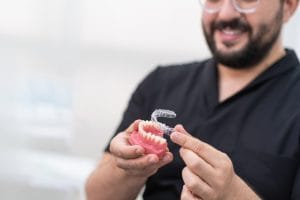
Though the technology driving modern aligner systems continues to advance, even the most effective treatment planning cannot account for poor initial case assessment. Having a clear understanding of cases to accept, which to approach with caution, and which to refer onwards to other practitioners or orthodontic specialists represents one of the most critical skills for clinicians.
The diagnostic framework
Comprehensive diagnosis forms the cornerstone of appropriate case selection. A thorough diagnostic approach must consider facial aesthetics, occlusal relationships, periodontal health, as well as the patient’s expectations. This assessment relies on both digital records, including photographs, radiographs, and intraoral scans, and a meticulous clinical examination to identify subtle issues that may complicate treatment.
This assessment should evaluate the patient’s chief complaints, including aesthetic concerns. It should consider what the realistic outcomes may be. For example, a patient seeking minor anterior alignment may be an excellent candidate for clear aligners, while one expecting more dramatic changes may require alternative treatments.
Arch evaluation and space analysis
Critical to case selection is careful evaluation of the upper and lower dental arches. Practitioners must assess whether adequate space exists for alignment, whether interproximal reduction (IPR) can create the required space, or whether extraction may be indicated. Simple cases with mild crowding (typically under 4–5mm) often respond excellently to clear aligner therapy combined with strategic IPR.[i] However, severe crowding, significant rotation – particularly of the canines[ii] – or cases requiring substantial skeletal changes, often call for additional considerations and a different treatment approach.
The evaluation must also review the root position, attachment points and periodontal health. Compromised periodontal health and short or otherwise non-ideal root positions may not respond as predictably to a clear aligner treatment as when used for patient with healthy structures and roots.[iii]
Similarly, assessing the occlusal scheme, particularly the posterior support and anterior guidance, is crucial for ensuring that the proposed treatment will lead to a result that is both stable and functional.
Identifying suitable cases
For practitioners new to clear aligner therapy, starting with simple to moderate cases allows skills to develop while maintaining predictability of outcomes as well as patient satisfaction. Ideal cases typically involve mild to moderate anterior crowding, space closure, minor rotations of incisors and premolars, and Class I malocclusions with good skeletal relationships.[iv] These cases allow practitioners to become familiar with treatment planning software, IPR and attachment placement without the complexity of dramatic tooth movement or bite corrections.
Conversely, certain presentations should prompt referral. These include severe skeletal discrepancies, impacted teeth, significant vertical dimension problems, severe rotations, cases requiring en masse retraction, and patients with poor compliance indicators.[v] Understanding these boundaries protects both practitioner and patient, ensuring that treatment remains within the scope of experience and avoiding potentially suboptimal outcomes.
A minimally invasive philosophy
Modern clear aligner therapy fits the principles of minimally invasive aesthetic dentistry. By addressing malocclusion before considering more invasive procedures, practitioners can often preserve tooth structure. The ‘align, bleach, bond’ philosophy exemplifies this approach: orthodontic alignment creates an improved foundation, whitening enhances aesthetics, and composite bonding addresses remaining discrepancies. A sequential approach like this frequently delivers transformative results while maintaining maximum tooth structure.[vi]
This philosophy extends to case selection and treatment planning. A pragmatic approach ensures that treatment objectives remain achievable.
Occlusal planning and retention
The most successful case selection stems from solid forward planning. Assessment must include occlusal planning from the diagnostic phase, considering how all functional movements will be affected. Cases ending in unstable occlusal relationships carry a high relapse risk.[vii]
The retention strategy influences case selection in other ways too. Patients unable to commit to long-term retention may not be suitable candidates. Similarly, cases with high relapse potential require careful discussion about lifelong retention needs.
Continuing development
For practitioners considering building their confidence with clear aligners, structured mentorship and clinical support prove invaluable. Many experienced clinicians have found that formal training programmes offering case mentoring and assessment, and troubleshooting support significantly shorten the learning curve.
The IAS Academy’s Clear Aligners Level 1 certification course provides exactly this framework, combining theoretical foundations with hands-on experience and ongoing mentorship through monitored cases. The course is designed so that dental practitioners with any level of expertise in orthodontics can get started immediately, with support every step of the way. IAS Academy is committed to combining a holistic and ethical approach to minimally invasive dentistry with academic rigour, and this ethos is reflected throughout all courses.
Excellence in clear aligner therapy begins with pragmatic case selection. Comprehensive assessment and an honest appraisal of case complexity form the foundation successful outcomes are built on. For practitioners committed to offering orthodontic treatment, investing time in developing case selection criteria will prove far more valuable than any technological advancement.
For more information or to book the course, visit https://courses.iasortho.com/courses or call 01932 336470 (Press 1)
 Author: Dr Tif Qureshi founder and a clinical director of IAS Academy
Author: Tif Qureshi
[i] Miranda E Paulo D, Moreira-Santos LF, Tavares MC, Weir T, Meade MJ, Flores-Mir C. Clear aligner therapy practices among orthodontists practicing in Canada. Prog Orthod. 2024;25(1):27. Published 2024 Jul 8. doi:10.1186/s40510-024-00525-3
[ii] Rossini G, Parrini S, Castroflorio T, Deregibus A, Debernardi CL. Efficacy of clear aligners in controlling orthodontic tooth movement: a systematic review. Angle Orthod. 2015;85(5):881-889. doi:10.2319/061614-436.1
[iii] Lamani E, Feinberg KB, Kau CH. Short Root Anomaly – A Potential “Landmine” for Orthodontic and Orthognathic Surgery Treatment of Patients. Ann Maxillofac Surg. 2017;7(2):296-299. doi:10.4103/ams.ams_128_16
[iv] Katib HS, Hakami AM, Albalawei M, et al. Stability and Success of Clear Aligners in Orthodontics: A Narrative Review. Cureus. 2024;16(1):e52038. Published 2024 Jan 10. doi:10.7759/cureus.52038
[v] Tamer İ, Öztaş E, Marşan G. Orthodontic Treatment with Clear Aligners and The Scientific Reality Behind Their Marketing: A Literature Review. Turk J Orthod. 2019;32(4):241-246. Published 2019 Dec 1. doi:10.5152/TurkJOrthod.2019.18083
[vi] Qureshi T. Minimally invasive cosmetic dentistry: alignment, bleaching and bonding (ABB). Dent Update. 2011;38(9):586-592. doi:10.12968/denu.2011.38.9.586
[vii] [vii] Chacón-Moreno A, Ramírez-Mejía MJ, Zorrilla-Mattos AC. Relapse and inadvertent tooth movement post orthodontic treatment in individuals with fixed retainers: A review. Rev Cient Odontol (Lima). 2022;10(3):e116. Published 2022 Sep 28. doi:10.21142/2523-2754-1003-2022-116