

Dietary habits have changed considerably in recent years, as the increased consumption of acidic foods and drinks have become a routine part of daily life for many individuals.[i] From carbonated drinks and fruit juices to sports beverages and condiments like ketchup, acid exposure is no longer limited to occasional indulgence – it’s a normality. The influx in consumption of these products has contributed to the growing prevalence of erosive tooth wear.[ii]
Although early identification and the preventive care of erosion is crucial, some patients may only present at the dental practice once the damage has already occurred. In such cases, restorative treatment is necessary, and clinicians are in the unique position to support patients and manage compromised tooth structure before further dental erosion occurs.
Understanding erosion in the context of modern lifestyles
Dental erosion is a process affected by multiple factors, including dietary choices, lifestyle and behavioural factors like aggressive toothbrushing or bruxism,ii and environmental or habitual influences like frequent swimming in chlorinated waters.[iii] Often, patients might be unaware of the accumulative effects of frequent acid exposure, especially when it occurs in small but frequent amounts throughout the day rather than as singular events, for example sipping a bottle of soda throughout the day rather than one small can in an isolated sitting.[iv] The impact mounts up gradually, making it difficult for patients to notice the damage before it’s early enough to prevent damage.
Additionally, certain acid exposure associated with reflux or eating disorders can also contribute greatly to enamel loss. For clinicians, this highlights the importance of assessing erosion risk through a broader medical and lifestyle perspective.[v]
Clinical implications of erosive tooth wear
With the progressive loss of enamel, dentine becomes exposed, causing tooth sensitivity and increasing the patient’s susceptibility to further deterioration.[vi] Posterior teeth – which are subject to higher occlusal loads due to their proximity to the muscle force vectors – are inherently more vulnerable once structural integrity is compromised.[vii] Frequently, restorations are not only required to support symptoms like sensitivity, but also to protect tooth structure and function.viii
Restorative decision-making
Restoring teeth affected by erosion requires a careful balance between minimal intervention and function.[viii] Where possible, clinicians should aim to preserve the tooth structure whilst restoring form and occlusion.
Material choice is hugely important when managing erosive tooth wear as restorative materials must adapt well to compromised tooth surfaces, cure reliably, and allow for controlled handling.[ix] Furthermore, when margins are wider or the amount of enamel is limited, predictable placement becomes especially important.
Patients with ongoing and long-term acid exposure pose a higher-risk for restorative failure, regardless of the material choice. Even the most well-placed restorations with the best materials can be challenged if dietary habits, reflux, or other acid-inducing factors remain unchanged and unmanaged. This reinforces the absolute importance of combining restorative treatment with relevant preventive advice – supporting patients in their long-term oral health.
From a clinical perspective, consistency and predictability are both integral. Materials that offer consistent dependability during placement allow clinicians to focus on the job in hand rather than being distracted with whether the material will remain reliable. This all supports a stronger workflow and higher patient satisfaction.
Restorative solutions
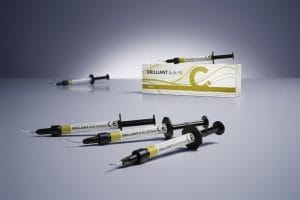 When managing posterior restorations to rehabilitate tooth structure that has been weakened by acidic erosion, materials that support predictable placement and lifelike results can be particularly useful.
One product designed specifically for this level of excellence is the BRILLIANT Bulk Fill from COLTENE – created for dependable results with predictable handling and an efficient workflow. Increments up to 4mm thickness are reliably cured in just 20 seconds which, combined with the surface wettability and flowability of the material, streamlines the process. Better yet, the need for a top layer is removed entirely due to the product’s high abrasion resistance properties – allowing quality restorations in one simple step.
Supporting patients with acidic habits
Acidic diets, and both external and intrinsic exposure to acid continue to augment the prevalence of erosive tooth wear in modern dentistry. As more patients present with compromised tooth structure, dental professionals must offer restorative intervention which holds an important role in maintaining function, comfort, and oral health.
Selecting materials that allow complete focus on the treatment, as well as reliable and efficient results not only increases patient satisfaction, but improves practitioner satisfaction and work enjoyment too.

For more on COLTENE, visit https://colteneuk.com/BRILLIANT-bulk-fill-flow email info.uk@coltene.com or call 0800 254 5115.

Author: Vik Sharma Sales Director Coltene Group
[i] Sato T, Fukuzawa Y, Kawakami S, Suzuki M, Tanaka Y, Terayama H, Sakabe K. The Onset of Dental Erosion Caused by Food and Drinks and the Preventive Effect of Alkaline Ionized Water. Nutrients. 2021 Sep 28;13(10):3440. doi: 10.3390/nu13103440. PMID: 34684439; PMCID: PMC8537624.
[ii] Manaf ZA, Lee MT, Ali NH, Samynathan S, Jie YP, Ismail NH, Bibiana Hui Ying Y, Wei Seng Y, Yahya NA. Relationship between food habits and tooth erosion occurrence in Malaysian University students. Malays J Med Sci. 2012 Apr;19(2):56-66. PMID: 22973138; PMCID: PMC3431744.
[iii] Favero R, Nicetto M, Barone M, Dorigotti A, Volpato A, Tosco V. Dental Erosion in Competitive Swimmers and Preventive Treatments: An In Vitro Study. Dent J (Basel). 2024 Sep 11;12(9):289. doi: 10.3390/dj12090289. PMID: 39329855; PMCID: PMC11431830.
[iv] Sosa, A. C., Solis, J. M., Fierro, N. C., López, S., & Nakagoshi, S. (2014). Dental Erosion: Causes, diagnostics and treatment. Journal of Oral Research, 3(4), 257-261.
[v] Chakraborty A, Anjankar AP. Association of Gastroesophageal Reflux Disease With Dental Erosion. Cureus. 2022 Oct 17;14(10):e30381. doi: 10.7759/cureus.30381. PMID: 36407174; PMCID: PMC9667903.
[vi]Martin Addy, Tooth brushing, tooth wear and dentine hypersensitivity — are they associated? International Dental Journal, Volume 55, Supplement 4, 2005, Pages 261-267, ISSN 0020-6539, https://doi.org/10.1111/j.1875-595X.2005.tb00063.x.
[vii] Themes, U. (2024) Occlusal Plane, Pocket Dentistry. Available at: https://pocketdentistry.com/occlusal-plane/ (Accessed: 28 January 2026).
[viii] Paryag A, Rafeek R. Dental Erosion and Medical Conditions: An Overview of Aetiology, Diagnosis and Management. West Indian Med J. 2014 Sep;63(5):499-502. doi: 10.7727/wimj.2013.140. Epub 2014 May 15. PMID: 25781289; PMCID: PMC4655683.
[ix] Maan M. AlShaafi, Factors affecting polymerization of resin-based composites: A literature review, The Saudi Dental Journal, Volume 29, Issue 2, 2017, Pages 48-58, ISSN 1013-9052, https://doi.org/10.1016/j.sdentj.2017.01.002.