


Dentistry is a profession that demands continuous decision-making. This applies from the very beginning of a dental professional’s career to the very end; from choosing a specialty or navigating geographically where is best for their career, to within specific treatments or managing CPD – each decision is a long-lasting commitment.
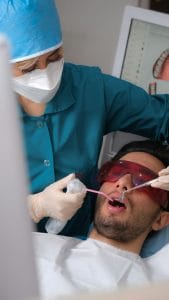
Patient care involves a plethora of choices: treatment planning, material selection, time management, patient communication, and more – clinicians must make effective decisions throughout the working day.[i] While many of these are compulsory and routine, the collective demand it holds on a clinician can grow to become significant, particularly in busy practice environments.
The hidden cognitive load of clinical dentistry
Decision fatigue refers to the gradual decline in decision-making quality after prolonged periods of cognitive effort.[ii] In clinical settings, this can present as hesitation, reduced confidence, or reliance on habit rather than judgement. Although often discussed in relation to healthcare more broadly, decision fatigue is highly relevant to dentistry, where procedural complexity and time pressure frequently intersect.[iii]
Typical clinical requirements are far more than solely technical skill, but an amalgamation of assessments and decisions throughout the day and within individual workflows. Dental professionals must constantly assess risk as a continuum and adapt to varying patient needs, whilst being prepared to respond to the unexpected challenges that often arise. Each additional choice, even those that seem minor, contributes to overall cognitive load.
Quite often, it is not the complexity of one singular procedure that causes difficulty and strain, but the accumulation of such decisions across multiple workflows or hours within a day. When clinicians are required to frequently switch between materials, techniques, tools, or patient expectations, there is an inevitable likelihood of increased stress and of reduced focus.
Why endodontics amplifies decision fatigue
Endodontic treatment is renowned for its requirements of extreme skill and technique, often feared by patients due to its intricate nature. It is for these reasons that professionals carrying out root canal therapy are also particularly susceptible to decision fatigue. Root canal treatments require a series of sequential judgements, often made under time pressure and with limited visual information. Decisions around access, working length, instrumentation, irrigation, and further steps require sustained concentration.
Furthermore, for general dental practitioners, performing endodontic treatment might not be common, further increasing the cognitive demand. Limitations in experience or familiarity can increase stress and causes clinicians to focus more energy on decisions within the process than focusing on the execution of treatment.
The impact of too much choice
Modern dentistry offers an extensive range of materials, tools, and techniques. Though this might seem like a benefit of advancements in the field – supporting personal reference and adaptability – the excess of variation can posit uncertainty. Clinicians that rely on multiple systems or work with a plethora of materials within similar workflows might find that decision making overshadows the treatment. This adds to complexity, particularly when plans don’t go exactly to plan.
For example, pausing to reconsider instrument selection can break concentration, subsequently increasing stress, and chair time for the patient. The snowball effect might leak onto other appointments, which augments anxiety even further as the work-load accumulates.
The role of systems and tools in reducing mental load
Well-designed and organised clinical systems can support decision-making by ensuring structure and clarity. Tools that are arranged around the logical sequences associated with root canal therapy reduce the number of active decisions that must be made during treatment. Instead, they offer predictability so that choices are already pre-made. This allows clinicians to focus on clinically-specific present time changes or variations, rather than external issues.
Applying structure
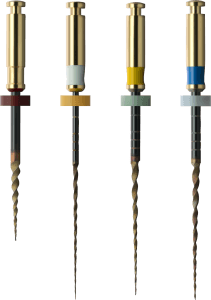
Structured instrumentation can hugely improve decision-making, and make the task in-hand far more efficient and simplified – augmenting both patient and practitioner satisfaction. The HyFlex EDM OGSF sequence from COLTENE is engineered for endodontic excellence, created for predictability, control, and consistency in every treatment. The four stages are cleverly structured into four stages: The Opener, Glidepath, Shaper, and Finisher, each step supports the next. The natural progression throughout the workflow facilitates decision-making greatly.
Supporting sustainable clinical practice
The effects of decision fatigue in endodontics will never be solved by attempting to eliminate complexity altogether, but rather about recognising methods of management that reduce complexity without compromising care. The field comes with a constant cognitive demand, making mentally-preserving strategies integral for the best clinical results and professional wellbeing.
Utilising the best tools for the job offers simplicity without affecting the outcome success, ensuring that decision-making never has to be prioritised over clinical focus.

For more information, visit https://colteneuk.com/HyFlex-EDM email info.uk@coltene.com or call 0800 254 5115.
 Author: Vik Sharma – Sales Director Coltene Group
[i] Murdoch AIK, Blum J, Chen J, Baziotis-Kalfas D, Dao A, Bai K, Bekheet M, Atwal N, Cho SSH, Ganhewa M, Cirillo N. Determinants of Clinical Decision Making under Uncertainty in Dentistry: A Scoping Review. Diagnostics (Basel). 2023 Mar 13;13(6):1076. doi: 10.3390/diagnostics13061076. PMID: 36980383; PMCID: PMC10047498.
[ii] Maier M, Powell D, Murchie P, Allan JL. Systematic review of the effects of decision fatigue in healthcare professionals on medical decision-making. Health Psychol Rev. 2025 Dec;19(4):717-762. doi: 10.1080/17437199.2025.2513916. Epub 2025 Jul 1. PMID: 40591577.
[iii] Nakhapaksirat, D. (2021) Exploring clinical decision-making processes in dentistry. Available at: https://era.ed.ac.uk/items/f0e7ac2b-7d5e-4caf-b547-6e95c78d0213 (Accessed: 27 January 2026).