Treatment planning for orthodontic care requires incredible time and thought to be dedicated to each patient.
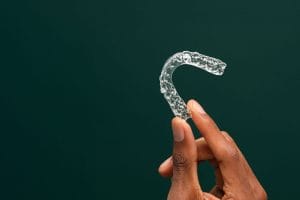
In more complex cases, traditional fixed appliances may be preferred, but for many cases clear aligners will be appropriate. The use of both in one comprehensive plan is not unheard of, and can combine the ability to complete complex orthodontic tooth movements with the advantages of improved aesthetics and oral hygiene access, at different stages of treatment.
No matter the chosen treatment approach, clinicians should be aware of the solutions available to them that aid the customisation of care, and ensure patients receive predictable, effective treatment plans.
Understanding hybrid care
The advantages of both fixed and removable orthodontic appliances are recognised by dental professionals. The latter often create improved aesthetics and comfort throughout active treatment, improving patient confidence, but exemplary compliance is crucial.[i] Conventional fixed brackets and wires, however, are helpful when improving movement accuracy in complex cases.i To use both in a hybrid approach allows professionals the ability to maximise results and treatment experience, increasing success in a variety of clinical and non-clinical parameters. It must be noted, however, that this isn’t always necessary, or appropriate – effective case selection is vital, and is down to the discretion of the dental practitioner.

Further customisation of each technique will come with individualised appliances and accessories, such as attachments for clear aligners. These aid orthodontic tooth movement by guiding the forces created by clear aligners. Traditionally, these are made of composite, and are placed onto the tooth with the help of an attachment template. Professionals need to accurately produce an appropriate amount of composite at the site for the best possible outcomes. Unnecessary excess will create flash, which can cause irritation of the gingiva, increase plaque retention, and increase the incidence of white spot lesions.[ii] This, of course, must be removed. Too little composite, and there is the risk of the attachment not being sufficient for controlling the forces applied. Clinicians must also design the shape and placement sites of the attachments with care, as these will each affect the control of the forces that affect the dentition.
In the age of digital dentistry, it is no surprise that the provision of attachments has been optimised to increase predictability. Innovative 3D printing processes create new opportunities for accurate attachment creation, and personalised attachment trays may help to ensure that placement is even closer to a digital plan. To optimise the final outcomes, however, this plan must be consulted throughout the process.
Streamline with digital
Digital orthodontic planning uses leading software to design more effective courses of care for patients. Used frequently today, the digital approach enables improved communication, as plans can be simply shared amongst professionals – for example, the leading clinician and a dental technician, or a referral dentist. The insights provided have proven impact on clinical decision-making; one study in the literature found that access to a digital set-up significantly changed treatment plans in 9.2% of cases, and prompted a partial change in 14.4% of cases.[iii]
For hybrid orthodontic cases, digital treatment planning allows professionals to closely track the progression of treatment, understanding when fixed and removable appliances will play an effective role in the overall level of care. This creates well-informed treatment plans, which may be presented to patients prior to the first bracket or attachment being placed. This plan can then be used for the fabrication of high-quality aligners, and accurate bracket and attachment placement systems.
Find effective solutions
When choosing upgrades to the orthodontic workflow, it’s important to find workflows that optimise predictability and efficiency in everyday care.
Solventum presents Clarity™, with a range of orthodontic solutions designed to shape future smiles with improved efficiency. Clarity™ Portal helps to streamline treatment planning workflows, with the ability to craft personalised cases with ease. Additional solutions such as Clarity™ Digital Bonding allow for full-arch bracket placement in a single step, and Clarity™ Precision Grip Attachments use innovative 3D-printing software for accurate attachment placement without risk of composite flash.
With the latest advancements in orthodontic solutions, professionals have the ability to provide more predictable, personalised treatments with confidence. The use of hybrid approaches can optimise outcomes and the patient experience, and the development of a digital workflow makes each step – from planning, to monitoring, to finalisation – completely seamless.

To learn more about Solventum, please visit https://www.solventum.com/en-gb/home/oral-care/
For more updates on trends, information and events follow us on Instagram at @solventumdentalUK and @solventumorthodonticsemea
©Solventum 2024. Solventum, the S logo and Clarity are trademarks of Solventum and its affiliates. 3M is a trademark of 3M company.
About Solventum
Solventum, enabling better, smarter, safer healthcare to improve lives. As a new company with a long legacy of creating breakthrough solutions for our customers’ toughest challenges, we pioneer game-changing innovations at the intersection of health, material and data science that change patients’ lives for the better while enabling healthcare professionals to perform at their best. Because people, and their wellbeing, are at the heart of every scientific advancement we pursue. We partner closely with the brightest minds in healthcare to ensure that every solution we create melds the latest technology with compassion and empathy. Because at Solventum, we never stop solving for you.
[i] Lombardo, L., Palone, M., Carlucci, A., & Siciliani, G. (2020). Clear aligner hybrid approach: A case report. Journal of the World Federation of Orthodontists, 9(1), 32-43.
[ii] Erbas, S., & Atik, E. (2025). In vitro comparison of different composite resins for aligner attachment production: Amount of adhesive flash, flash removal time, and shear bond strength. Journal of Orofacial Orthopedics/Fortschritte der Kieferorthopädie, 1-9.
[iii] Hou, D., Capote, R., Bayirli, B., Chan, D. C., & Huang, G. (2020). The effect of digital diagnostic setups on orthodontic treatment planning. American Journal of Orthodontics and Dentofacial Orthopedics, 157(4), 542-549.