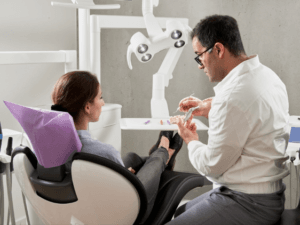
Dental professionals spend a significant amount of time discussing oral hygiene with patients, offering preventive advice and simple additions to hygiene routines. From brushing technique to flossing, educational support that is routinely delivered chairside is a vital way to enhance long-term oral health outcomes.
However, despite regular and well-delivered instruction, many patients continue to demonstrate signs that the advice given might not have been as beneficial as it could have been, presenting with persistent plaque accumulation, gingival inflammation, or even signs of disease. The disconnect proposes an inquisition into why oral hygiene advice so often fails to translate into meaningful change with real, positive results.
Understanding and bridging this gap is crucial for preserving the oral health of so many patients. Whilst the content of oral hygiene advice is usually more than adequate, it is arguably the way in which it is delivered, received, and implemented that significantly influences whether it is acted upon and if oral hygiene is to see positive change.
Information does not mean action
A challenge in oral hygiene guidance – and many forms of education – is in assuming that simply providing information will naturally lead to behaviour change and see encouraging results. So frequently, patients are merely told what they should be doing, without the consideration of additional factors like individual motivation or learning types. Advice is almost always delivered efficiently and accurately, but without sufficient reviewing of patients’ lifestyle or habits.
Even patients with strong intentions of compliance can struggle to apply what they have learned from dentists without an overtly clear understanding. It can be when advice feels overwhelming that patients are less likely to sustain the habits.
Bite-sized advice
Volume of advice can sometimes exacerbate these feelings. In just a single appointment, patients are filled with new knowledge – from treatment planning to preventive technique guidance, and much more – which can be difficult to digest all at once. This can lead to patients missing out on information or forgetting advice completely, holding comfort solely in the safety of their existing routine.
These challenges can be overcome by delivering advice in retainable chunks rather than accumulative overloads.
Individual barriers to compliance
There are a variety of barriers that might influence a patient’s ability to maintain effective oral hygiene routines. Firstly, patients are not always aware of the telling factors of poor or deteriorating oral health, and rather, only seek support reactively, or based on appearance alone. Preventive support goes a long way, as well as explaining the signs to observe before invasive treatments are required.
Another example is patients that have limited time within existing busy schedules – sometimes positioning oral care lower on the priority list for some. Dexterity challenges are another inhibiting factor for many, who may have good intentions to improve their oral health, but lack the physical capability or confidence without specific guidance.
Due to these varied particularities, generic advice does not always translate to every patient. This reiterates the importance of tailoring advice to the individual patient, such as recommending simpler or more ergonomic tools or adapting techniques to individuals.
Demonstration over instruction
The delivery of advice can be just as important as the information being shared. Everyone has their preferred learning method, meaning that verbal instruction alone may not be sufficient for many patients, especially when communicating oral hygiene techniques that they are unfamiliar with. According to research, 65% percent of the population are visual learners,[i] meaning demonstrations – whether chairside, using models, videos or specific tools – can significantly bridge the gap in mistranslated information.
Supporting effective interdental cleaning
Interdental cleaning is one of the most overlooked, yet essential methods of improving oral hygiene as research suggests that toothbrushing alone removes only 42% of plaque on teeth.[ii] This makes interdental brushing crucial to tackling the areas that traditional toothbrushing cannot reach. Despite this, challenges remain, as patients may find themselves unsure on how to navigate interdental brushing.
The TANDEX FLEXI Educator Kit is the perfect solution to actively support patients in implementing interdental cleaning. The set allows practitioners to work alongside patients in deciding which brush is the right fit for them, and also comes with a handy card that reminds them of which fit best, as well as their next appointment. The FLEXI interdental brushes offer a thorough clean of the hardest-to-reach areas, and offer support for limited dexterity with an extendable cap feature and ergonomic grip.
Conclusion
Supporting patients with practical, achievable changes to their oral hygiene routine, whilst ensuring a tailored approach with appropriate tools is always the best approach towards improving compliance and good habits. The right advice, tailored specifically to them, can take long-term oral health to the next level.
TANDEX are giving dental professionals the opportunity to win a FREE FLEXI Educator Kit by answering just a few questions! Enter the quiz by scanning the code or following this link https://form1.tandex.de/

For more information on Tandex’s range of products, visit https://tandex.dk/
Our products are also available from DHB Oral Healthcare https://dhb.co.uk/
 Author: Jacob Watwood on behalf of Tandex – Rodericks Dental Partners Associate dentist at Fieldside Dental Practice
[i] Jawed S, Amin HU, Malik AS, Faye I. Classification of Visual and Non-visual Learners Using Electroencephalographic Alpha and Gamma Activities. Front Behav Neurosci. 2019 May 7;13:86. doi: 10.3389/fnbeh.2019.00086. PMID: 31133829; PMCID: PMC6513874.
[ii] Slot D E, Wiggelinkhuizen L, Rosema N A, Van der Weijden G A. The efficacy of manual toothbrushes following a brushing exercise: a systematic review. Int J Dent Hyg 2012; 10: 187–197