


Increasing your practice’s capacity for referrals can be a rewarding endeavour, growing the patient base and making the most of clinical time, so that it is spent supporting as many individuals as possible. However, ensuring this aspect of the business is built for optimal outcomes isn’t simple, and requires a financial and time investment to see effective results.

Before contemplating social media campaigns and spreading the word to local practitioners that you are taking on patients for referrals, it’s important to understand the responsibilities of a referral dentist. This includes ensuring the dental team has the appropriate training and data safeguarding procedures in place, as well as effective imaging systems to give patients and other practitioners the full picture in every treatment.
Supporting patients with unique needs
Referrals are a core aspect of modern dental care. The systems in place ensure patients have access to clinicians who are best suited to meet their clinical needs, even if this is not their general dental practitioner. This applies to a variety of clinical skills; the General Dental Council’s ‘Standards for the Dental Team’ notes that a referral to a colleague should be considered if one cannot make reasonable adjustments to a patients care which are required due to a disability.[i] Such adjustments may include increased wheelchair accessibility for necessary parking or toilet facilities, or dedicated clinicians who are trained to support individuals who may find it difficult to stay still during dental treatment, putting themselves at risk of harm.[ii]
A referral for treatment under general anaesthesia may be required for patients who need reasonable adjustments for anxiety management, especially if they require a large amount of dental treatment or the care required is especially complex. Other anxiety management techniques should be considered, and practices should try to support patients however they can, but a referral may end up being best for all involved.[iii]
For a practice looking to take on more referrals, it may be worthwhile assessing ways to increase accessibility. This may require changes to the building itself, for example by implementing wheelchair ramps or lifts, or engaging with further clinical training to support individuals with advanced clinical needs.
New skillsets
Another key reason for a referral is that a dental professional does not have the adequate training to provide predictable, safe care. This is often the case in more advanced treatments, such as endodontic therapy or long-term orthodontic care, as well as surgical needs such as dental implant placement or tissue augmentation. A referral must always be in the patient’s best interests, and here this means receiving the most appropriate quality of care.i
As the dental practice accepting the referral, education is the key to casting a wider net. A professional must have the knowledge and skills to carry out the care they are being asked to provide.i On a personal level, a clinician may wish to advance their skillset in one area of dental care, such as clear aligner orthodontics or implant placement, and advertise their services in this specific field. Continuous education will ensure that patients can be accepted to undergo the latest treatments, and will show dental colleagues that you are prepared to support such patients.
At a wider scale, the practice could diversify the skills of the professionals that work under its roof to increase the range of patients they could support. For example, with one clinician able to provide orthodontic treatment, another for endodontic care, and another with implant dentistry skills, a singular practice can attract referrals across a number of disciplines.
Advancing technology
The digital systems used within the dental practice is another key differential for referrals. Dental radiography and CBCT systems in particular can be an effective addition for a practice, supporting other clinicians who may not be able to invest in a specialised solution.
When choosing a unit for the practice, its vital to focus on quality, patient safety, and versatility. A multi-modal system will serve as a solution for a variety of patients, and once again increase the range of referrals that can be accepted. Digital systems also enable fast and safe data sharing between clinicians, ensuring that the dentist presiding over care has all relevant information available to them.
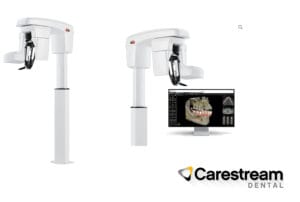
The CS 8200 3D Access from Carestream Dental is an ideal addition to any practice looking to increase referrals, as a versatile 4-in-1 system. Clinicians can utilise panoramic technology, CBCT imaging, 3D model scanning and cephalometic imaging in a variety of workflows, and its smart design means that it can be adjusted for patients that can remain standing, as well as those requiring accommodations for wheelchair use. The CS 8200 3D Access is built on an open platform, with simple sharing of 3D treatment data through CS 3D Imaging Premium.
There are many ways to make the practice more suitable for referrals. The key, however, could be taking steps to support a wider array of patients, whether through clinical accommodations, improved training, or new and improved technology throughout the site.

For more information on Carestream Dental visit www.carestreamdental.co.uk
For the latest news and updates, follow us on Facebook and Instagram @carestreamdental.uk
 Author: Nimisha Nariapara – Trade Marketing Manager at Carestream Dental covering the UK, Middle East, Nordics, South Africa, Russia and CIS regions.
[i] General Dental Council, (2019). Standards for the Dental Team. (Online) Available at: https://www.gdc-uk.org/standards-guidance/standards-and-guidance/standards-for-the-dental-team [Accessed October 2025]
[ii] Scope, (2025). Dentists for disabled adults and children. (Online) Available at: https://www.scope.org.uk/advice-and-support/dental-care [Accessed October 2025]
[iii] NHS England, (2024). Clinical standards for dental anxiety management. (Online) Available at: https://www.england.nhs.uk/long-read/clinical-guide-for-dental-anxiety-management/ [Accessed October 2025]