


Clinicians that narrow their practice to or specialise in endodontics understand that technical competence is a contributing factor in treatment outcomes. However, experience, repetition within the field, and well-practised protocols mean that the technicalities of endodontic treatment are deeply ingrained for clinical success.

The differentiating factor between a relatively straightforward case and more demanding ones, is beyond solely the access, shaping, irrigation, and obturation of the canal, but rather involves the cognitive demand that builds during the treatment itself. Respective anatomy, case history, and more must be regarded – which each introduce their own level of uncertainty. Infrequently considered and discussed, the mental load of endodontic care holds a significantly defining role in the planning, speed, and execution of cases – specifically more complex ones.[i]
Continuous decision-making
Endodontic treatment requires a continuum of decision-making throughout the entire process. Most of the considerations – such as working length, and resistance – must be continuously assessed, with judgments being made on them as information and changes occur.[ii] Even in the most familiar of cases, each decision must adapt to the influences of resistance or angulation changes and differing tactile sensation.
Workflow and cognitive stability
One of the most effective ways clinicians manage cognitive demand is by reducing the amount of decision-making required throughout procedures. This can be supported through working with pre-established routines and consistency in instrument behaviour – each contributes to professional attention remaining focused on treatment rather than system management. This is particularly valuable in endodontics, as aberrations can occur at any point – requiring urgent clinical assessment.
Unstable or inconsistent workflows inherently increase cognitive stress.[iii] Between unfamiliarity in systems and unexpected deviation, if the clinician must divide their attention between the treatment and managing the tools and variations themselves, rhythm can be disrupted and fatigue increased throughout the session. Practitioners should therefore opt to work with familiar systems that offer simple integration into existing workflows – assisting professional performance through supported efficiency.
Case history, context, and patient expectations
The level of cognitive demand required also extends to the history of the tooth and surrounding teeth. Where treatment has failed, there are limited restorative options, or a history of tenacious symptoms, this can often induce more stress and inhibitions in the clinician.iiii These more complex cases propose additional difficulties when errors or complications arise, which subconsciously influences decision-making cautiousness and perhaps even a clinician’s approach to the treatment throughout.[iv]
Additionally, time pressures can augment this effect further – even with the most experienced clinicians. Extrinsic factors – such as patient expectations, tight schedules, or simply the importance of an efficient yet thorough workflow – can each add to the mental effort required to attain the highest level of care. These external pressures compounded with other unavoidable complexities mean an enhanced level of focus and mental energy is required for success.
Instrument behaviour
One of the most central aspects of success is trusting in your instruments – outlining the level of confidence that clinicians have in their work. Instruments should support the treatments, and should respond predictably, track canal curvature smoothly, and provide consistent tactile feedback to the clinician to minimise continuous requirement for reassessment.[v]
Without confidence in the behaviour and reliability of instruments – particularly under pressure – success can be slowed down or inhibited entirely.[vi] The uncertainty leads to slower progression that must be overcompensated with more checks, or instrument replacement – each disrupting the rhythm of the procedure and building up the mental cost for the clinician.
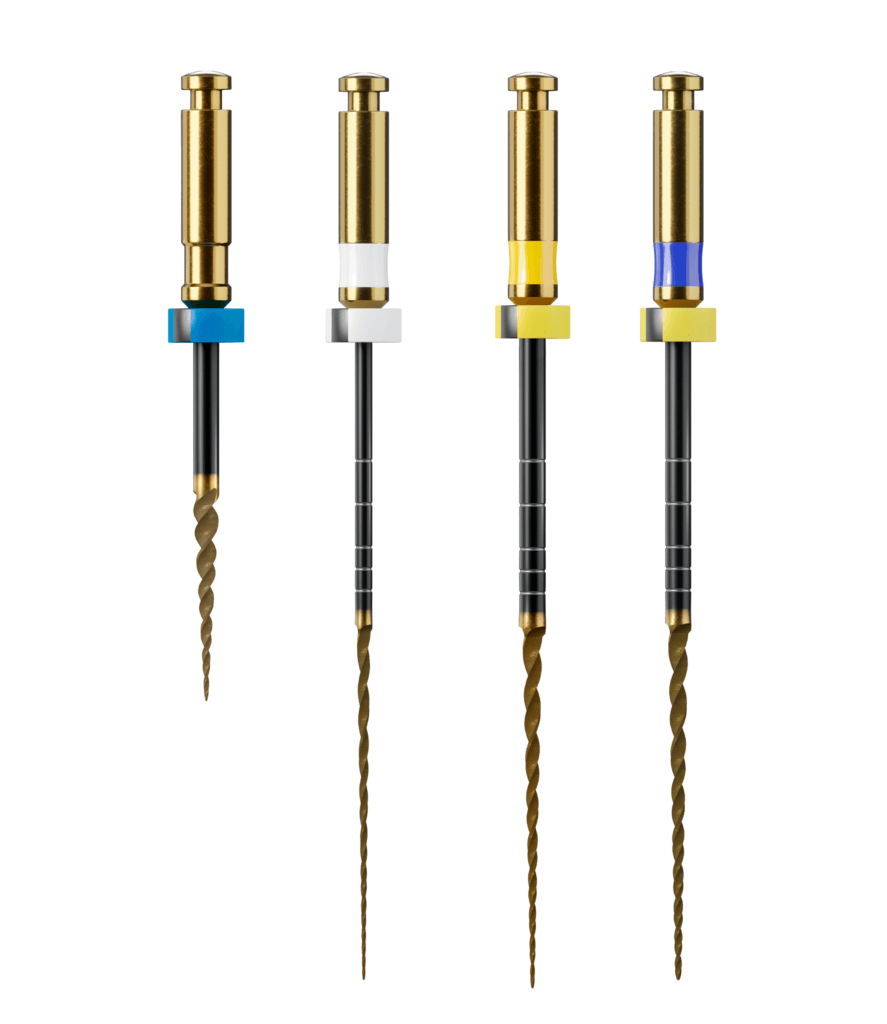
The tools for predictable endodontics
The HyFlex EDM OGSF File Sequence from COLTENE is a defined treatment procedure making preparation easy and the learning curve short. It is designed to support predictable, stable workflows in endodontic practice – offering efficiency even in the most complex of cases. The high fracture resistance and flexibility allow the files to adapt to canal anatomy, making procedures more streamlined and reducing the mental load required and supporting smoother treatment. HyFlex supports confident endodontics, whilst being easy to integrate into existing workflows.
Reducing mental load to improve clinical outcomes
Endodontic success is supported, of course, by technical skill, but also by cognitive management of stress and mental load too. One of the greatest challenges involves navigating the continuous and ever-changing decision-making under pressure, despite uncertainty, time pressures, and variability within treatment.
As case complexity increases, so too does the clinician’s mental pressures – which can impact focus, efficiency, and ultimately clinical results. Different methods can be used to reduce the unnecessary cognitive stresses through using predictable and supportive instruments, consistent and stable workflow routines, and of course, experience in varying clinical situations.

For more information, visit https://products.coltene.com/EN/GB/products/endodontics email info.uk@coltene.com or call 0800 254 5115.
 Author: Vik Sharma Sales Director Coltene Group
[i] Abdulaziz Abdulrahman Almalki, Khaled Saleh Al Ageel, Faisal Mohammed Almutairi, Adel Mohammed A Almubadel, Mousa Ali Haddadi, Saad Mohammed Alqahtani, Saeed Ali Bin Saeed Al Qaflah, Mohammed Abdullah Alghamdi, Tariq Ibrahim Alqunayan. (2024). Exploring the Influence of Cognitive Load on Clinical Decision-Making in Dentistry: A Theoretical Approach. Journal of International Crisis and Risk Communication Research , 1973–1987. https://doi.org/10.63278/jicrcr.vi.2392
[ii] Essam, O., Umerji, S. & Blundell, K. Endodontic assessment, complexity, diagnosis and treatment planning. Br Dent J 238, 441–447 (2025). https://doi.org/10.1038/s41415-025-8452-6
[iii] Kalakoski, V., Selinheimo, S., Valtonen, T. et al. Effects of a cognitive ergonomics workplace intervention (CogErg) on cognitive strain and well-being: a cluster-randomized controlled trial. A study protocol. BMC Psychol 8, 1 (2020). https://doi.org/10.1186/s40359-019-0349-1
[iv] Essam, O., Kasperek, D., Boyle, E. et al. The epidemiology of endodontic complexity in general dental practice: a prevalence study. Br Dent J (2022). https://doi.org/10.1038/s41415-022-4405-5
[v] Yörel Vİ, Ocak M, Selvi-Kuvvetli S. Evaluation of the shaping effectiveness of three different rotary systems and hand files in primary molars: a micro-CT in vitro study. BMC Oral Health. 2025 May 26;25(1):803. doi: 10.1186/s12903-025-06208-7. PMID: 40420116; PMCID: PMC12107985.
[vi] Srivastava, S. (2024). Root canal instrumentation: Current trends and future perspectives. Cureus, 16(4).