


Diagnostic confidence is a continuous fundamental of modern dentistry, with an ongoing pursuit for better accuracy, speed, and patient outcomes. For these kinds of results, clinicians often rely on their experience, training, and intuition to interpret information and present informed decisions for the best patient experience. However, even the most experienced clinicians face uncertainty.
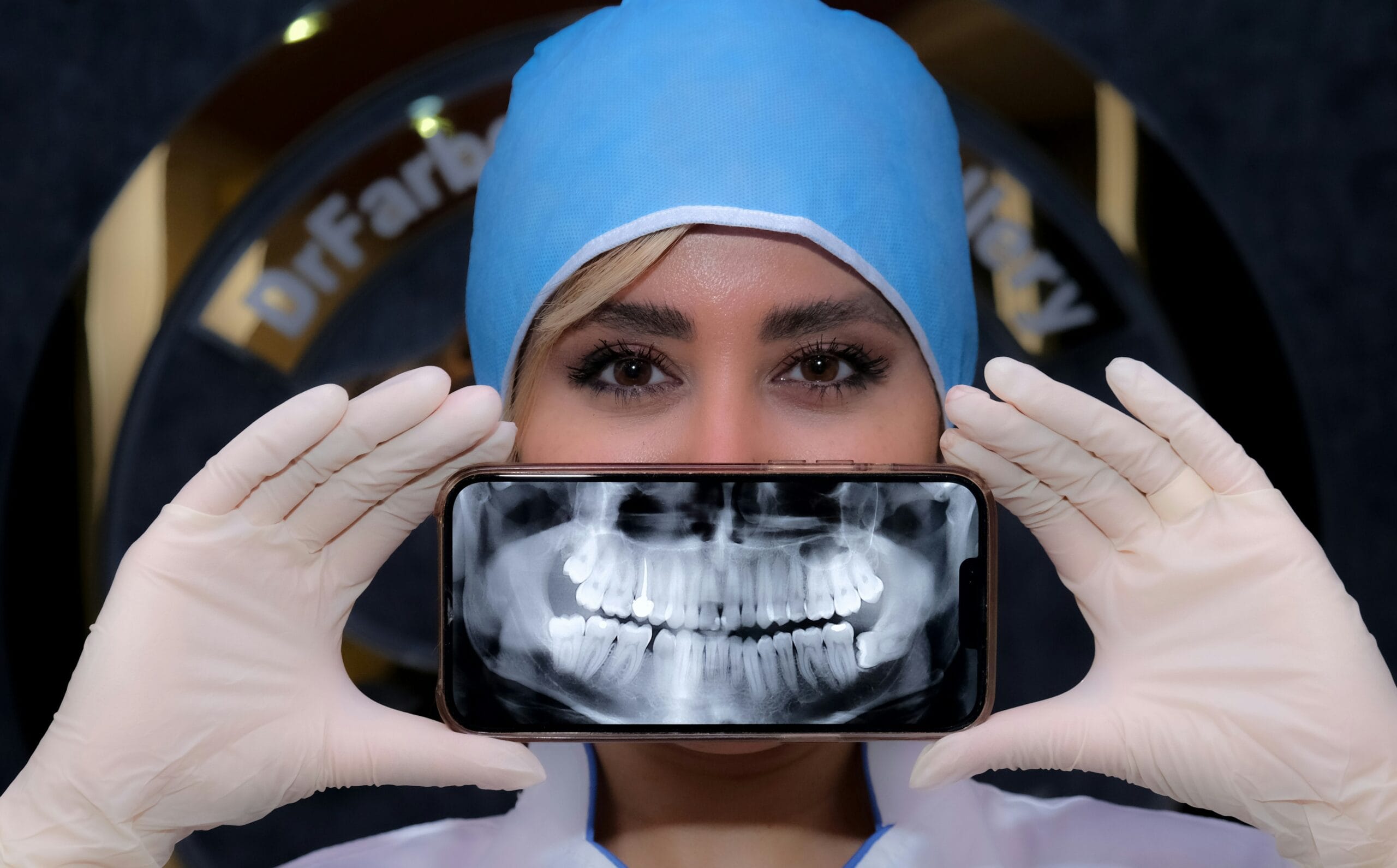
Recent years have seen the emergence of artificial intelligence (AI), being one of the most revolutionary tools in the reduction of uncertainty and the streamlining of workflows. The increased assurance that comes with AI does not replace clinical understanding, but rather, strengthens it – automating processes, supporting the speedy identification of dental imagery, and streamlining analytics – AI encourages and assists consistency, clarity, and diagnostic confidence.
Dependable decisions with data
Modern dentistry produces more digital data than ever before – from CBCT scans and intraoral images to patient records and practice management statistics. Clinicians are juggling huge amounts of information that can be difficult to process quickly in real time. AI, however, thrives with this, using systems that can analyse vast data sets not only with ease, but with speed too – all whilst identifying anomalies and other aspects that clinicians alone may overlook or struggle in managing.
For example, in endodontic workflows, select AI models can be used to assist the automatic mapping of root canals or morphology, and in orthodontics, occlusion or skeletal symmetry can be analysed and assessed with the click of a button. Each of these things merely scratch the surface of the extent that AI can support workflows with increased speed – leaving the clinicians with more time and energy to focus on treatment planning rather than data handling. Furthermore, dental professionals can verify and validate their results against the support of AI, creating more confident, reinforced diagnoses.
Reducing variability
Even amongst the most highly skilled professionals, human interpretation can vary due to multiple factors – lighting, experience level, or even external factors like mood, sleep, or time of day.[i] Hence, AI represents a stabilised, dependable second opinion based on a vast, controlled data set – performing a repeatable analysis – guaranteeing standardisation across both cases and practices.
In CBCT imaging, for example, this could represent how AI supports consistency in tracing panoramic curves without deviation between each scan; in caries treatment, it might involve the pixel-level recognition of lesion patterns to build upon and hasten a clinical understanding. Furthermore, between practices, AI offers comparative results through shared digital systems and reduced result uncertainty.
Supporting preventive intervention
AI also offers the power of reflection whereby potential clinical issues can be more easily recognised and flagged before becoming critical. For example, AI has the ability to utilise a plethora of prior stored data – such as scans and outcomes – to help to detect early indications of bone loss or decay before symptoms develop into something catastrophic.
This early detection permits timely intervention, both minimising invasiveness of care and in-turn, providing improved patient outcomes and augmenting assurance.[ii]
Promoting patient trust
Confidence matters both clinically and through communication with patients. In the modern field, many patients rightfully expect more informed involvement in their care; they expect to understand their diagnosis and treatment clearly and visually.[iii]
Utilising AI-assisted imaging enables clinicians to tangibly demonstrate to patients everything that their treatment will encompass – presenting to them exactly what to prepare for and the ideal outcome. Furthermore, such technology allows clinicians to build confidence and reduce patient inhibitions through shared decision-making – something invaluable within the field.[iv]
Empowering diagnostics
Leading the pathway of AI integration in dentistry is the CS 3D Imaging Premium software from Carestream Dental. Designed to deliver the consistent accuracy, with unmatched efficiency, the CS 3D Imaging Premium software accelerates implant workflows beyond all else. The system allows clinicians to dedicate less to time-consuming tasks through benefits like machine-driven data matching, automated virtual crown and implant placement, sharing of 3D cases between clinicians, and facilitated implant planning data exportation.
The integration also offers premium software updates, and a free trial with non-commitment necessary – giving practices the option to decide for themselves how remarkable the latest innovations truly are.
Smart collaboration
AI in dentistry does not mean the overriding of clinical judgement, but rather the establishing of a partnership between professionals and AI – utilising it as an extension of one’s toolkit to amplify workflows and outcomes. AI empowers clinicians to make more informed decisions using faster, more consistently reliable diagnostic data – producing clarity and certainty.
As dentistry progresses, AI models will too, emphasising the growing importance of dental professionals’ relationship with the technology. Collaboration between the two is vital for continuous success in the field – with human skill being guided and supported by artificial intelligence.

For more information, contact Carestream Dental on 0800 169 9692 or visit www.carestreamdental.co.uk
For the latest news and updates, follow us on Twitter @CarestreamDentl and Facebook
 Author: Nimisha Nariapara – Trade Marketing Manager at Carestream Dental covering the UK, Middle East, Nordics, South Africa, Russia and CIS regions
[i] Taylor-Phillips S, Stinton C. Fatigue in radiology: a fertile area for future research. Br J Radiol. 2019 Jul;92(1099):20190043. doi: 10.1259/bjr.20190043. Epub 2019 May 14. PMID: 30933540; PMCID: PMC6636274.
[ii] Hung M, Licari FW, Lipsky MS, Moffat R, Cheever VJ, Mohajeri A, Stewart M, Orton D, Stewart D. Early Preventive Dental Visits: Do They Reduce Future Operative Treatments? Dent J (Basel). 2022 Mar 31;10(4):53. doi: 10.3390/dj10040053. PMID: 35448047; PMCID: PMC9026330.
[iii] Ho JCY, Chai HH, Luo BW, Lo ECM, Huang MZ, Chu CH. An Overview of Dentist-Patient Communication in Quality Dental Care. Dent J (Basel). 2025 Jan 14;13(1):31. doi: 10.3390/dj13010031. PMID: 39851608; PMCID: PMC11763373.
[iv] Abbasgholizadeh Rahimi S, Cwintal M, Huang Y, Ghadiri P, Grad R, Poenaru D, Gore G, Zomahoun HTV, Légaré F, Pluye P. Application of Artificial Intelligence in Shared Decision Making: Scoping Review. JMIR Med Inform. 2022 Aug 9;10(8):e36199. doi: 10.2196/36199. PMID: 35943793; PMCID: PMC9399841.