


Whether attending a gig, using heavy machinery or experiencing prolonged exposure to sirens or alarms, a ringing ear after can be painful reminder. With few ways to remedy it, waiting out a ringing ear can be a frustrating experience. But if it persists for three months or longer this is classed as chronic tinnitus.[i]

Awareness of tinnitus is high because it is common and mostly self-diagnosed; it is the name for hearing noises that do not come from an outside source, therefore only you can know if you have it. What is less known is the association between tinnitus and temporomandibular disorder (TMD), another complex condition. By better understanding the two ailments, a solution to tinnitus may be determined, improving quality of life.
Tinnitus troubles
Whilst a ringing ear is a common symptom of tinnitus, patients may also hear other phantom sounds like buzzing, whooshing, humming, hissing, throbbing or singing in both ears and/or in the head.[ii] The exact cause of this has yet to be determined, but a leading theory is that damage to the inner ear changes the signal carried by the nerves. It is therefore the brain that generates the phantom sounds in the auditory cortex.i
Chronic tinnitus can have several causes and risk factors, including:
- Hearing loss
- Meniere’s disease
- Diabetes
- Anxiety and depression
- Certain medications, such as chemotherapy medicinesii
Tinnitus can affect any person at any age, with a reported 10-25% of adults experiencing it. For some patients with tinnitus, moving the head, neck or eyes may change the quality of the sound. Time is often the best cure, however, the condition may improve or deteriorate in the long term.i This can impact mood, disrupt sleep, increase the risk of anxiety and depression, and ultimately inhibit quality of life.
From jaw to ear
Problems with the temporomandibular joint (TMJ) can be a risk factor for tinnitus. Among TMD patients, 87% experience otologic symptoms like dizziness, loss of balance and deafness. Tinnitus is the most common, with 25-65% of TMD patients reporting it.[iii] The association is evident yet not fully explained; the close proximity between the TMJ and the ear may mean that clenching and bruxing damages the tissue surrounding the jaw joint and the ear, worsening tinnitus.i
Research on the association between the two medical issues found that patients with both tinnitus and TMD had superior hearing function than patients with just tinnitus. Moreover, the phantom sound could be modulated by moving the jaw and neck, highlighting the TMJ’s role in the persistence of tinnitus. Of the patients with both TMD and tinnitus, 54% were women, identifying them as being slightly more at risk.iii
Another study found that young women most often reported somatosensory tinnitus – the sounds heard are influenced by movements or pressure in the head, neck and jaw. In this group, the prevalence of TMD complaints was greater among patients with severe tinnitus (36%) than those without tinnitus (19%).[iv] Stress was also given as a leading cause of tinnitus.
Managing tinnitus
If phantom sounds are heard through a stethoscope, it is considered objective tinnitus, making it easier to be identified and treated. There are many ways in which tinnitus patients can reduce the aural sensation, from relaxation techniques like yoga to improved sleep patterns, reducing stress and avoiding noisy environments, such as concerts.
Whilst the exact link between TMD and tinnitus remains elusive, the clear association shows that treating the former may subsequently treat the latter. Through reducing clenching and bruxing habits, such as by sleeping with a mouthguard and practising relaxation, patients can reduce aggravation to the TMJ.[v] By placing less stress on the jaw joint, the neighbouring tissues, including those near the ear, can repair. This may then reduce tinnitus.
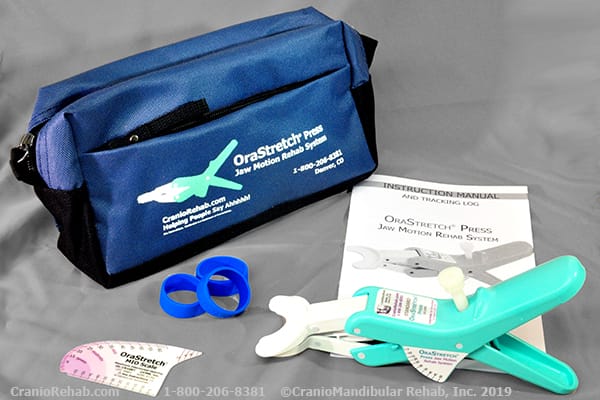
An excellent treatment for TMD patients is the OraStretch® Press Rehab System from Total TMJ. Available in five versions to maximise the number of patients it can help, the device offers a simple yet efficient way to restore strength and function to the TMJ. To be used daily, following the recommended exercises of a healthcare professional, the OraStretch® Press mobilises the jaw joint and stretches the orofacial tissues for improved outcomes.
Tackling the two Ts
Despite its high prevalence, tinnitus is still shrouded in mystery. Its clear association with TMD demands further research so that the connection is better understood and afflicted patients are able to manage both conditions. By acknowledging the correlation between the two, patients can be set on the path to a quality of life away from jaw pain and ringing ears.

For more details about Total TMJ and the products available, please email info@totaltmj.co.uk
 Author: Karen Harnott Total TMJ Operations Director
[i] National Institute on Deafness and Other Communication Disorders (2023). Tinnitus. [online] NIDCD. Available at: https://www.nidcd.nih.gov/health/tinnitus.
[ii] NHS (2024). Tinnitus. [online] NHS. Available at: https://www.nhs.uk/conditions/tinnitus/.
[iii] Inchingolo, A.M., Inchingolo, A.D., Settanni, V., De Leonardis, N., Campanelli, M., Garofoli, G., Benagiano, S., Malcangi, G., Minetti, E., Palermo, A., Inchingolo, F., Dipalma, G. and Patano, A. (2023). Correlation between Temporomandibular Disorders and Tinnitus and Possible Treatment Strategies: Comprehensive Review. Applied Sciences, [online] 13(15), p.8997. doi:https://doi.org/10.3390/app13158997.
[iv] Edvall, N.K., Gunan, E., Genitsaridi, E., Lazar, A., Mehraei, G., Billing, M., Tullberg, M., Bulla, J., Whitton, J., Canlon, B., Hall, D.A. and Cederroth, C.R. (2019). Impact of Temporomandibular Joint Complaints on Tinnitus-Related Distress. Frontiers in Neuroscience, [online] 13. doi:https://doi.org/10.3389/fnins.2019.00879.
[v] NHS Choices (2020). Temporomandibular disorder (TMD). [online] NHS. Available at: https://www.nhs.uk/conditions/temporomandibular-disorder-tmd/.