

In today’s fast-paced world, saving time isn’t purely about efficiency – it’s also about reducing stress. Recent research shows that 36% of people who rely on time-saving products and services do so primarily to make their lives easier and less stressful.[i]
This impatience is especially clear in the world of e-commerce. In 2023, despite the pandemic, just 20% of consumers were forgiving of delivery delays caused by supply chain issues,[ii] showing that tolerance for waiting is diminishing. In both shopping and healthcare, how time is managed can have a powerful impact on satisfaction and perceived value.
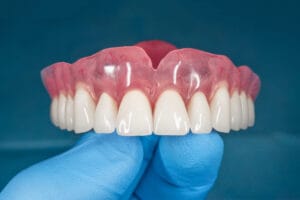
Within the clinical environment, extended treatment timelines increase chair time, multiply appointments and place additional pressure on both clinical teams and patients. Nowhere is this arguably more apparent than in denture workflows, where the average time from impression to delivery remains around 18.5 days.[iii]
As dentistry continues to modernise to manage ever-increasing demands from patients, clinicians are challenged to examine not only how they work, but how long each stage of treatment takes – and whether or not that time is being used most productively.
Time lost in traditional denture processes
Traditional denture fabrication remains heavily dependent on sequential analogue processes. Physical impressions are taken, transported to the laboratory, cast, adjusted, and refined through multiple manual stages. While clinically established, this workflow introduces unavoidable delays, particularly once physical impressions are transported to the lab.
Once an impression leaves the practice, clinicians lose visibility of progress and limited opportunities exist to identify issues early. If inaccuracies are discovered at a later stage, the result is frequently additional appointments, remakes and prolonged treatment timelines. From a patient perspective, this can erode confidence. For clinicians, this creates an operational burden in an already time-pressured environment.
Digital dentistry and the question of speed
The adoption of digital dentistry has been driven in part by the promise of faster workflows. Intraoral scanners (IOS) have reduced data capture time in many restorative cases and improved communication between practices and laboratories.
In more complex cases, digital scans may not be appropriate, especially when recording impressions of edentulous arches,[iv] where intraoral scanners are unable to record accurate data. Should inaccuracies occur, the process would take far longer, requiring impressions to be retaken and, ultimately, restarting the process.
Time, accuracy and clinical confidence
In dentistry, of course, accuracy and time are closely linked. Incorrect data almost always results in time lost through additional appointments, corrections or remakes. For complex restorative cases, clinicians often continue to rely on conventional impressions to capture soft tissue detail, functional extension and anatomical nuance with confidence.
The challenge, therefore, is removing the time penalties historically associated with the traditional workflow, including transporting physical impressions to the lab for casting. Dentists are increasingly seeking ways to preserve clinical certainty while streamlining the journey from impression to restoration.
The role of rapid digitisation
One of the most effective ways to shorten treatment timelines is to eliminate delays between analogue and digital stages. The ability to convert a physical impression into a detailed digital model within minutes allows restorative workflows to progress immediately, without waiting for transport or manual duplication.
Digital files can be reviewed quickly, shared instantly with laboratories, and incorporated directly into design and manufacturing processes. Issues with data capture can be identified earlier, reducing the likelihood of remakes and helping to keep treatment on schedule. When implemented effectively, this approach benefits every stakeholder: laboratories can begin work sooner, practices regain predictability and patients experience shorter, more coherent treatment journeys.
Designing workflows around time
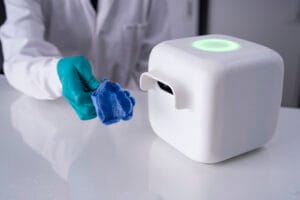 Technologies developed with workflow timing in mind are beginning to influence how practices approach restorative cases. Systems such as Cubit360™, designed by the research team at Mimetrik™, focus on reducing friction at the point where analogue accuracy meets digital efficiency.
By enabling rapid, free-hand digitisation of impressions, models and dentures, this technology removes the mechanical constraints and sequential delays associated with traditional scanning methods. The compact design also allows digitisation to occur chairside within the practice, enabling immediate file transfer and earlier laboratory engagement – particularly in cases where intraoral scanning is not suitable.
Time as a measure of quality
In today’s dentistry landscape, quality is increasingly measured by clinical outcomes as well as how efficiently and predictably those outcomes are achieved. Time saved through better workflow design can be reinvested into patient care, clinical focus and professional satisfaction.
As practices continue to evolve, re-evaluating how time is used across prosthodontic workflows may prove as important as adopting new materials or techniques. When time is treated as a clinical resource rather than an operational inconvenience, the result is dentistry becomes better aligned with modern expectations of care.

For more information about Mimetrik, please visit https://mimetrik.tech/
 Author: Alyn Morgan
[i] Global Data. Time security – consumer trendsights report overview. Accessed Jan 26: https://www.globaldata.com/store/report/time-scarcity-consumer-trend-analysis/?_gl=1*f3bsmj*_ga*NTI4NjEzOTczLjE3NjgyMjYxMzE.*_ga_JYSQW15TQG*czE3NjgyMjYxMzEkbzEkZzAkdDE3NjgyMjYxMzEkajYwJGwwJGgw
[ii] Meteor Space. Statistics that prove how your delivery is important. Accessed Jan 26: https://www.meteorspace.com/2025/02/13/statistics-that-prove-how-your-delivery-speed-impacts-your-business/
[iii] Nagar, Priya et al. “Comparative Study of Conventional Impressions vs Intraoral Scanning for Complete Denture Fabrication.” Journal of pharmacy & bioallied sciences vol. 16,Suppl 4 (2024): S3746-S3748. doi:10.4103/jpbs.jpbs_1213_24
[iv] Bohner, L., Gamba, D.D., Hanisch, M., Marcio, B.S., Neto, P.T., Laganá, D.C. and Sesma, N., 2019. Accuracy of digital technologies for the scanning of facial, skeletal, and intraoral tissues: A systematic review. The Journal of prosthetic dentistry, 121(2), pp.246-251.