


For so many practices, the difference between a busy day and a chaotic day is workflow efficiency. Time holds great value – how each minute and hour is used is key to unlocking it.

The concept of improving efficiency means something far different from rushing appointments and diminishing thoroughness. Instead, it is the optimisation of processes, and judicious utilisation of tools, ultimately empowering both your patients and your team to act with confidence and clarity.
Stressed staff means poorer patient care
Growingly complex treatments, higher patient expectations, and less time to focus on everything in-hand are elements which encompass the mounting pressures of modern dentistry. Even the most minor of delays – in areas such as communication, preparation, and more – can cascade into greater impediments throughout the day. This makes well-organised delegation and preparation vital, through the use of more structured approaches and the intentional use of technology, practices are able to ensure that team focus remains on excellent patient care as opposed to recuperating time.
Primarily, a lack of inefficiency contributes directly to increased stress levels for dental professionals and practice staff.[i] Reports describe that health systems under mounting pressures cause professionals to experience greater levels of burnout, poorer mental health, and increased stress as a direct result of their work environment.[ii] Amplified levels of stress in dental professionals impacts the prospects of staff retention – whereby workers seek new, more efficient environments to move to.
Furthermore, the greater the stress levels, the less effective and efficient work will become – something that can affect the patient experience too. Staff burnout leads to reduced work engagement, and influences the behaviour of dental professionals. The unfortunate consequences involve reduced patient interaction, inadequate levels of care, and, in some cases even, malpractice.[iii]
A recent review found that patients have a tendency to supress their needs where they perceive that the staff are busy.[iv] Some patients have even described feeling as though they are treated like parcels due to the busy environment for healthcare workers.iv As small changes and implementations hold great power in ensuring greater patient retention, it is important for your practice to improve the efficiency – protecting its reputation too.
Understanding lost time
Inefficiencies are represented in several ways and productivity will always outweigh busyness. As such, ensuring that internal teams are communicating coherently and impactfully, maintaining necessary planning, and simply staying ahead where possible, can each contribute towards greater efficiency within workflows.
Particularly, when staff are no longer having to navigate delays and confusion, it holds greater space and time to focus on the imperative patient care. The slightest of adjustments can produce the most measurable outcomes; preparing instruments and incorporating digital, replicable templates for routine cases, or organised checklists can save minutes between appointments.
Digital solutions for enhanced productivity
Digital tools have entirely restructured the efficiency of clinical workflows, making them an investment for both your team and the future of your practice. From digitalised scanning and designing to cloud-based programmes and collaboration, the intentional integration of such technologies can provide unmeasurable amounts of productivity. With this, comprehensive training is necessary to achieve the best results, rather than adding the extra burden of training and understanding for staff – meaning that the thoughtful selection of such implementations is very important.
3D printing, for example, has significantly impacted the efficiency of the dental field. Firstly, by having the ability to produce restorations and appliances in-house, the need to wait on the lengthy turnaround times of external labs is reduced immensely. Furthermore, 3D printing with the right equipment can offer ultra-speed, high-quality results with minimal training and setup.
Next level innovation
Taking pixel perfect accuracy and unmatched printing speeds to another level is the SprintRay Pro 2 3D printer Duo Kit. Pioneering in the industry, SprintRay delivers digitally-led efficiency through multi-material 3D printing, with minimal team training required. An incredible amount of time is saved by no longer needing to swap materials over between cases, allowing the production of restorations – such as base and teeth – to run simultaneously. Another upside to the Duo Kit is that of facilitated resin management. Even when operating with just one resin at a time, the smaller tanks offer the convenience of simpler handling, faster material swaps, and less waste.
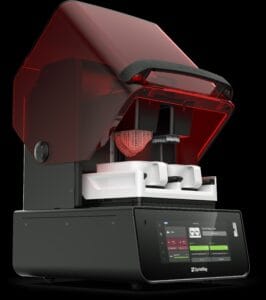
Reducing the additional need for manual handling streamlines production and multi-case workflows, reducing interruptions and wait times for patients, enhancing efficiency insurmountably. Removing the need to ever swap tanks, the Duo Kit allows clinicians to focus their time and energy on more complex tasks and excellent patient care, without the stresses of accounting for lost time in waiting.
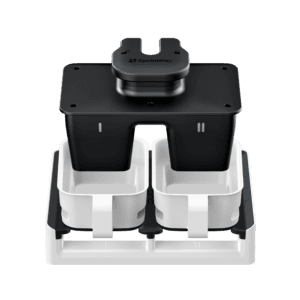
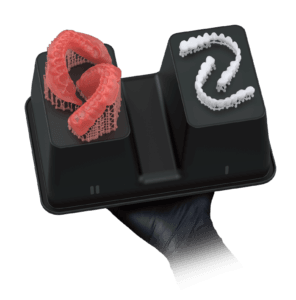
With the potential to print 2 resins at one time, what would you print?
Striving for efficient excellence
Without compromising quality, practices should strive for efficient workflows that push their practice future and staff in a more confident direction. Maintaining structure, investing in the right training, and the thoughtful integration of technology, can each optimise operational proficiency. The strategic use of such tools and implementations can reduce staff stress, support the increasing patient expectations, and reinforce the sustainability of your practice.

For more information on the 3D printing solutions available from SprintRay, please visit https://sprintray.com/en-uk/
 Author: Ross Phillips SprintRay Area Manager UK & Nordics
[i] Karatuna, I., Owen, M., Westerlund, H., & Berthelsen, H. (2022). The Role of Staff-Assessed Care Quality in the Relationship between Job Demands and Stress in Human Service Work: The Example of Dentistry. International Journal of Environmental Research and Public Health, 19(19), 12795. https://doi.org/10.3390/ijerph191912795
[ii] Health Education England . Health Education England; Birmingham: 2019. NHS Staff and Learners’ Mental Wellbeing Commission.https://www.hee.nhs.uk/sites/default/files/documents/NHS%20%28HEE%29%20-%20Mental%20Wellbeing%20Commission%20Report.pdf Available at. (Accessed: 18 October 2020)
[iii] Bieber, J.C. (2024) What is dental malpractice? definition & examples, Forbes. Available at: https://www.forbes.com/advisor/legal/personal-injury/dental-malpractice/ (Accessed: 19 November 2025).
[iv] Maben, J., Peccei, R., Adams, M., Robert, G., Richardson, A., Murrells, T., & Morrow, E. (2012). Exploring the relationship between patients’ experiences of care and the influence of staff motivation, affect and wellbeing. London: National Institute for Health Research.