


For countless patients, hearing the words “root canal therapy” can be daunting and trigger intense apprehensions about the treatment in-hand, before it has even begun. Despite progression in the field, endodontic procedures have gained the reputation of bringing discomfort and uncertainty, even among the most confident patients. Though technique, technology, and hence, outcomes have improved significantly over the years, the emotional factors must still be handled with care and consideration

Additionally, the right tools and materials can assist in the diminishment of anxieties –providing reassurance to unsure patients with evidence-based success. Building trust is integral in achieving the best results – combining clinical confidence with the right tools can influence both compliance and the quality of treatment. Thus, it is vital that practitioners are supported by their instruments and systems to care for patients sufficiently.
Patient apprehension
Dental anxiety is experienced by approximately 25% of the population – defined as the fear, stress, or dread induced before, during or after dental treatment.[i] Endodontic treatment anxiety exceeds this statistic entirely due to being heavily associated with pain. A recent study found that 62% of patients awaiting treatment felt anxious,[ii] with another study finding that 13% of 200 patients cancelled an endodontic appointment due to fear of pain.[iii]
Endodontic success – referred to as a favourable endodontic outcome, and defined as the absence of symptoms and clinical signs of disease – has vastly increased over time.[iv] Despite these vast improvements in clinical outcomes – resulting from innovations like 3D imaging, biocompatible materials, and technological irrigation advancements – it is seemingly only after face-to-face reassurance that patient anxieties are reduced. Compared to the initial 62% of patients experiencing anxiety for endodontic treatment, only 39% of returning patients felt the same. This is likely associated with the beneficial discussion of their fears with dental professionals, undergoing part of the treatments, and truly understanding the reality of the procedures.
Clinician confidence
Patients demonstrate a direct response to the demeanour and approach of their clinician. It is argued that a practitioner exhibiting confidence and who can assertively explain the expected clinical outcome, has an increased chance of gaining patient cooperation and compliance.[v] Essentially, the more assured the clinician, the more comforted and assured the patient becomes.
Confidence is exuded through a combination of attributes – professional experience makes for a strong case in encouraging a patient. However, it is also influenced by the reliability of the systems, materials, and tools that have been trusted by the practitioner. Investments in high performance instruments that create simplified, more efficient, and more minimally invasive procedures – whilst reducing any associated risks – directly reinforce clinical confidence.
Patients may generally have little interest in the specifics of materials like gutta percha, or instruments like rotary files or apex locators, but they will respond positively to knowing that their clinician is self-assured by using tools that are high-grade, and have been specially selected to improve clinical outcomes.
Great tools improve confidence
Equipment that is designed for predictability – and additionally those made for fast preparation – assist in the streamlining of workflows and hence, reduce chair time. A recent study explores how anxious patients already overestimate pain, and end up spending a significant amount of the time spent in the chair focusing on stress reduction. This can further increase the stress levels felt by both the patient and dental professionals, creating a dangerous cycle.[vi] The right tools can establish a shorter, more efficient appointment, reducing this accumulated stress and lost time – improving the patient experience.
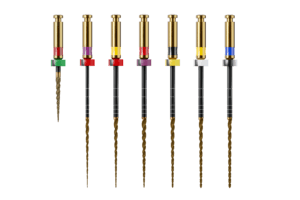 One of the best examples of endodontic instruments that transform workflows and patient experience is the Hyflex EDM file system from COLTENE. The sequence includes four files that work in organised harmony with powerful cutting performance to deliver fast and consistent preparation of endodontic cases. The tools permit the full reach of working length within just a few strokes – meaning less insertions and greater patient safety. COLTENE’s remarkable fracture resistant design and reproducible protocol renders a comfortable clinical environment – patients find confidence in their practitioner utilising instruments designed and developed for safety and precision.
Reassuring patients for great clinical outcomes
When patients feel anxiety towards endodontic treatment, it is both the duty of and in the best interest of the practitioner to ease these feelings. The fear of pain has long posed a threat to patients, and despite the revolutions in the field – through practical, technological, and research-based advancements – these inhibitions remain.
As a clinician, these worries can be best supported by demonstrating emotional support, reinforced by the reassurance of excellent materials and tools. The appropriate selection of such affords greater confidence for dental professionals, which then reflects onto the patient – establishing a more patient-centric and comfortable clinical environment.
 Author: Vik Sharma Sales Director Coltene Group
For more information, visit https://colteneuk.com/hyflex-edm-ogsf email info.uk@coltene.com or call 0800 254 5115.

[i] Hoffmann B, Erwood K, Ncomanzi S, Fischer V, O’Brien D, Lee A. Management strategies for adult patients with dental anxiety in the dental clinic: a systematic review. Aust Dent J. 2022 Mar;67 Suppl 1(Suppl 1):S3-S13. doi: 10.1111/adj.12926. Epub 2022 Jul 12. PMID: 35735746; PMCID: PMC9796536.
[ii] Alroomy R, Kim D, Hochberg R, Chubak J, Rosenberg P, Malek M. Factors Influencing Pain and Anxiety Before Endodontic Treatment: A Cross-Sectional Study Amongst American Individuals. Eur Endod J. 2020 Dec;5(3):199-204. doi: 10.14744/eej.2020.17363. PMID: 33353908; PMCID: PMC7881385.
[iii] Wali, A., Siddiqui, T. M., Gul, A., & Khan, A. (2016). Analysis of level of anxiety and fear before and after endodontic treatment. J Dent Oral Health, 2(3), 19-21.
[iv] European Society of Endodontology (2006), Quality guidelines for endodontic treatment: consensus report of the European Society of Endodontology. International Endodontic Journal, 39: 921-930. https://doi.org/10.1111/j.1365-2591.2006.01180.x
[v] Ibrahim Mohammed Rifan Alyami, Khalid Mohammed Ali Abumilhah, Turki Mohammed Alshehri, Abdulmonem Abdulaziz Al Hweadi, Ibrahim Ali Alqarni , Fahad Abdullah Alqahtani, Hamed Hamdan Almutairi, Fawaz Abdulhamid Farrash. (2024). Enhancing Trust and Communication in Dentist-Patient Relationships: A Pathway to Improved Dental Care and Patient Outcomes. Journal of International Crisis and Risk Communication Research , 581–587. https://doi.org/10.63278/jicrcr.vi.1788
[vi] Alroomy R, Kim D, Hochberg R, Chubak J, Rosenberg P, Malek M. Factors Influencing Pain and Anxiety Before Endodontic Treatment: A Cross-Sectional Study Amongst American Individuals. Eur Endod J. 2020 Dec;5(3):199-204. doi: 10.14744/eej.2020.17363. PMID: 33353908; PMCID: PMC7881385.