


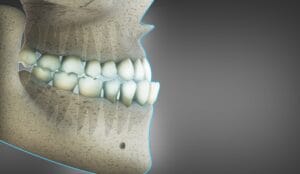
Through both genetic and environmental influences, many patients can develop class III malcoclussions, characterised by a mesial molar relationship, often accompanied by anterior crossbite.[i] Studies assessing the incidence of such malocclusions in relation to different geographic regions suggest that 3-5% of people in the United Kingdom are affected.[ii]
When looking to develop orthodontic skills, it’s paramount to invest time into learning how to treat such complications. This requires an understanding of how patients develop a class III malocclusion, as well as appropriate treatment approaches, whilst confidently managing other oral health needs. Clinicians will need to look to the literature for guidance, before embarking on effective training courses for expert support and hands-on training opportunities.
Clinical manifestations
Class III malocclusions can result from mandibular prognathism or maxillary hypoplasia and retrognathism, or both in equal measure.[iii] Whilst familial experience with malocclusions can indicate whether a young patient is likely to develop this occlusal complication, environmental factors from an early age can also be impactful. This could include everything from enlarged tonsils, chronic mouth breathing that leads to downward and backward growth of the mandible, abnormal tongue and mandibular posture, trauma,iii and prolonged sucking or resting tongue habits.ii The latter behaviours provide opportunity for intervention at a young age, but clinicians should expect to encounter class III malocclusions that have not been intercepted.
Patients may present with complications such as deteriorated chewing efficiency. Those with anterior cross bite are found to have their chewing ability reduced by half compared to those with standard occlusion.i Individuals could also have issues with the articulating certain letters, such as “s” and “z”; abnormal tooth wear between incisors, prompting pulpitis, occlusal trauma, and an increased risk of periodontal disease; as well as the development of temporomandibular joint disorder.i Each of these may not only have a prominent and direct impact on everyday life through increased risk of injury and pain, and difficulties communicating with others, but also on an individual’s mental health. Visually prominent occlusion is also suggested to be a risk factor for bullying among children and adolescents, creating the risk of emotional harm.
Treatment considerations
Early intervention for class III malocclusion is preferable, avoiding surgical intervention and therefore reducing the invasive nature of treatment overall.[iv] For paediatric patients, this also creates a favourable environment for growth and improves the occlusal relationship, with orthodontic care helping to guide the development of the permanent dentition as it comes through.
Results have previously shown that the early introduction of protraction headgear can successfully reduce the perceived need for orthognathic surgery, minimising instances of such intervention by 3.5 times.[v] However, the study only made final assessments with patients at 15 years of age, and judging the need for surgery can be subjective.[vi]
Treatment can also include conventional orthodontic solutions, aiming to bring the upper anterior dentition forward, whilst retracting the lower anterior teeth.[vii] In some instances, this can be paired with surgical intervention, with the placement of metal miniplates and miniscrews into the maxilla and mandible.[viii] These can anchor elastics, enabling clinicians to exert another force on the maxillofacial structure.
The use of both straightforward and complex orthodontic approaches for class III malocclusion requires an exceptional level of care, attention to detail, and time. Dental professionals need to be able to confidently predict the effects of movements of both individual teeth, and the larger skeletal structure; this comes with engaging in effective courses, reading clinical literature, and gaining hands-on experience.
Clinical understanding
When a patient presents with class III malocclusion, no matter its stage of development, a clinician must be able to appropriately guide the individual for effective support. If the dental professional is not confident that they have the necessary training and competence to carry out effective care, they must refer the patient to an appropriately trained colleague, as per the Standards for the Dental Team laid out by the GDC.[ix]
For clinicians that want to take on such cases, training can take many forms. Most importantly, dental professionals should have the opportunity to practice with hands-on sessions, supported by leading tutors, whilst having a comprehensive knowledge of orthodontic treatment surrounding class III malocclusions alone.
The IAS Advanced Diploma course from IAS Academy is a comprehensive orthodontic course than enables clinicians to manage more complex malocclusions, including class I, class II div 1, class II div 2, and class III cases. Dental professionals take on 6 multi-day courses as part of the Diploma, for a total of 154 verifiable CPD hours. Teaching consists of interactive lectures, hands-on practical sessions, webinars and reviews of the literature – for a complete understanding.
Class III malocclusions are often complex cases, and require high levels of clinical knowledge. Professionals should take time to understand aetiologies, treatment options, and long-lasting care in order to support the individuals that require such great intervention.
For more information on upcoming IAS Academy training courses, please visit www.iasortho.com or call 01932 336470 (Press 1)
 Author: Dr Tif Qureshi founder and a clinical director of IAS Academy
[i] Zhou, X., Chen, S., Zhou, C., Jin, Z., He, H., Bai, Y., … & Chen, L. (2025). Expert consensus on early orthodontic treatment of class III malocclusion. International Journal of Oral Science, 17(1), 20.
[ii] Zere, E., Chaudhari, P. K., Sharan, J., Dhingra, K., & Tiwari, N. (2018). Developing Class III malocclusions: challenges and solutions. Clinical, cosmetic and investigational dentistry, 99-116.
[iii] Ngan, P., & Moon, W. (2015). Evolution of Class III treatment in orthodontics. American Journal of Orthodontics and Dentofacial Orthopedics, 148(1), 22-36.
[iv] Woon, S. C., & Thiruvenkatachari, B. (2017). Early orthodontic treatment for Class III malocclusion: A systematic review and meta-analysis. American Journal of Orthodontics and Dentofacial Orthopedics, 151(1), 28-52.
[v] Mandall, N., DiBiase, A., Littlewood, S., Nute, S., Stivaros, N., McDowall, R., … & Doherty, B. (2010). Is early Class III protraction facemask treatment effective? A multicentre, randomized, controlled trial: 15‐month follow‐up. Journal of Orthodontics, 37(3), 149-161.
[vi] Cobourne, M. (2016). Early treatment for class III malocclusion. Journal of orthodontics, 43(3), 159-160.
[vii] Owens, D., Watkinson, S., Harrison, J. E., Turner, S., & Worthington, H. V. (2024). Orthodontic treatment for prominent lower front teeth (Class III malocclusion) in children. The Cochrane Database of Systematic Reviews, 2024(4), CD003451.
[viii] Owens, D., Watkinson, S., Harrison, J. E., Turner, S., & Worthington, H. V. (2024). Orthodontic treatment for prominent lower front teeth (Class III malocclusion) in children. The Cochrane Database of Systematic Reviews, 2024(4), CD003451.
[ix] General Dental Council, (2019). Standards for the Dental Team. (Online) Available at: