


Each dental discipline is in constant forward motion – every decade brings smarter technology and more developed materials, each contributing to more refined workflows and better clinical results. Endodontics is no exception, evolving from arguably one of the most complex and time-consuming treatment areas into one guided by precision.
This evolution continuously supports clinicians by improving clinical accuracy, efficiency, convenience, and patient experience.
Complexity to clarity
From the 1943 formation of The American Root Therapy Association to the introduction of the microscope and ergonomic tools within practice,[i] each advancement – both minor and major – has led to the increasingly innovative landscape that endodontics represents.[ii]
Endodontics was historically a much less predictable process than it is today. In previous years, the field relied heavily on endurance – particularly that of the clinician, as procedures were extended, with an extreme level of meticulousness was required.[iii]
Furthermore, the long treatment time meant uncomfortable periods of standing for clinicians, leading to cramping muscles and exhaustion, which could – and likely would – cause greater complications within treatment.[iv] Without these, only clinician experience and skill would generally have set success apart from failure. While these qualities of the clinician remain vital today, the developments in modern materials, instruments, and imaging equipment have gradually created a more predictable, slightly less technique-sensitive workflow.[v]
Intricate workflows and product developments
The introduction of the operating microscope has revolutionised endodontic care, particularly in comparison to loupes which were limited by their weight and lens capacity.[vi] Microscopes provide enhanced magnification and illumination without ergonomic compromise.[vii] Additionally, the parallel orientation of the microscope binoculars adheres to the forward gaze of professionals in practice – reducing strain on the eyes and enabling longer working hours.[viii]
With all this said, even supported by the improved magnification and advanced ergonomics, the challenge of workflow complexity remains. There are multiple individual approaches to file selection, torque variation, and irrigation settings – each leading to specific outcomes. Treatment success therefore depends on consistencies within the workflow.[ix][x]
Other recent decades of technological advancements have accelerated progress in the streamlining of systems. With additions such as CBCT imaging and apex locators, practitioners have gained the ability to visualise root canals fully before beginning treatment – improving accuracy and reducing risk.[xi] This introduction of digitalised workflows has created more consistent and refined protocols, which can be delivered more efficiently for better patient outcomes and increased satisfaction, every time.[xii]
Streamlined sequences
Along with the digital insights that the field’s evolution affords, there is a more streamlined clinical sequence. Endodontics has drifted away from single-step procedures and into fully integrated workflows – where each stage supports the next.[xiii] Different obturation materials and file systems are now designed to work together as a collective workflow, meaning less interruptions and smoother transitions between steps.[xiv] This not only means minimised strain on clinicians, but better patient results, and, overarchingly, a clearer structure for the entire dental team to follow.
One significant change in endodontics is, of course, the use of structured file sequences. The simplified system assists by reducing procedural errors and file breakage,[xv] with each sector of the workflow designated appropriately. The use of such establishes more efficient, predictable, and safe results.
The right tools for the job
The great extent of nickel-titanium (Ni-Ti) rotary systems available, as well as the lack of standardisation of these instruments, makes it difficult to choose between them for each case. [xvi] Hence, the development of the most ergonomic tools makes endodontic treatment easier and more convenient, with tailor-made solutions designed to enhance workflow efficiency.
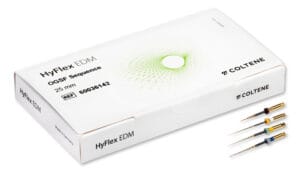
The best example of such is COLTENE’s HyFlex EDM OGSF sequence, offering the fast and reliable preparation of daily endodontic cases. The meticulously structured four-file system supports predictable results and higher patient safety. Each file – consisting of the Opener and Glider to open the glide path, and the Shaper and Finisher for the accurate shaping of the root canal over the full length – has been optimally designed. The files offer controlled torque, high fracture resistance, and durability of EDM-treated Ni-Ti. The COLTENE portfolio has been refined over decades to create, with tools designed as a convenient solution to all ergonomic endodontic requirements.
A continuum of evolution
Endodontics is no longer a field facing unpredictability, nor one that relies on clinician endurance, but rather, it is now optimised by technical advancements and advanced clinical skill.
As endodontic tools, materials and methods continue to advance, so too do the expectations of patients. Fortunately, the latest innovations afford more streamlined workflows and assist in navigating the best treatment outcomes.

For more information, visit https://coltene.group/hyflex-edm-ogsf email info.uk@coltene.com or call 0800 254 5115.
[i] Gutmann, J.L. (1981) ‘Reflections on an endodontic pioneer: Dr. James Roy Blayncy 1889–1980’, Journal of Endodontics, 7(12). doi:10.1016/s0099-2399(81)80218-x.
[ii] Lisican, E. (2021) Endodontic history, American Association of Endodontists. Available at: https://www.aae.org/specialty/endodontic-history/ (Accessed: 24 October 2025).
[iii] Mehta D, Coleman A, Lessani M. Success and failure of endodontic treatment: predictability, complications, challenges and maintenance. Br Dent J. 2025 Apr;238(7):527-535. doi: 10.1038/s41415-025-8453-5. Epub 2025 Apr 11. PMID: 40217035; PMCID: PMC11991907.
[iv] Feige, S., Holzgreve, F., Fraeulin, L., Maurer-Grubinger, C., Betz, W., Erbe, C., Nienhaus, A., Groneberg, D. A., & Ohlendorf, D. (2024). Ergonomic Analysis of Dental Work in Different Oral Quadrants: A Motion Capture Preliminary Study among Endodontists. Bioengineering, 11(4), 400. https://doi.org/10.3390/bioengineering11040400
[v] Ratushnyi R, Stakhanska O. Ergonomic interventions and endodontic treatment outcomes: An analysis of dentist working posture and error rates. Saudi Dent J. 2024 Mar;36(3):466-470. doi: 10.1016/j.sdentj.2023.12.006. Epub 2023 Dec 20. PMID: 38525173; PMCID: PMC10960123.
[vi] Low JF, Dom TNM, Baharin SA. Magnification in endodontics: A review of its application and acceptance among dental practitioners. Eur J Dent. 2018 Oct-Dec;12(4):610-616. doi: 10.4103/ejd.ejd_248_18. PMID: 30369811; PMCID: PMC6178675.
[vii] Hong, S., Park, J., Jeon, MJ. et al. Effect of loupe and microscope on dentists’ neck and shoulder muscle workload during crown preparation. Sci Rep 14, 17489 (2024). https://doi.org/10.1038/s41598-024-68538-w
[viii] Setzer, F. (2017) ‘The dental operating microscope’, Microsurgery in Endodontics, pp. 1–7. doi:10.1002/9781119412502.ch1.
[ix] Srivastava S. Root Canal Instrumentation: Current Trends and Future Perspectives. Cureus. 2024 Apr 11;16(4):e58045. doi: 10.7759/cureus.58045. PMID: 38738101; PMCID: PMC11088362.
[x] Orozco-Gallego, M. J., Pineda-Vélez, E. L., Rojas-Gutiérrez, W. J., Rincón-Rodríguez, M. L., & Agudelo-Suárez, A. A. (2025). Effectiveness of Irrigation Protocols in Endodontic Therapy: An Umbrella Review. Dentistry Journal, 13(6), 273. https://doi.org/10.3390/dj13060273
[xi] Kaur, G., Thomas, A.R., Samson, R.S. et al. Efficacy of electronic apex locators in comparison with intraoral radiographs in working length determination- a systematic review and meta-analysis. BMC Oral Health 24, 532 (2024). https://doi.org/10.1186/s12903-024-04259-w
[xii] P. Soldado‐Cañadas., C. Muñoz‐Garduño, D. Sanz‐Serrano, A. Sánchez‐Torres, M. Mercadé, The Clinical Impact of the Combination of CBCT and Periapical Radiographs on Endodontic Diagnosis and Treatment Planning—A Retrospective Cohort Study, International Endodontic Journal, 10.1111/iej.70050.
[xiii] El-Kishawi M, Khalaf K. An Update on Root Canal Preparation Techniques and How to Avoid Procedural Errors in Endodontics . Open Dent J, 2021; 15: . http://dx.doi.org/10.2174/1874210602115010318
[xiv] Pangire, R.S. et al. (2025) ‘3D fill: Mastering the modern techniques in endodontic obturation’, IP Indian Journal of Conservative and Endodontics, 10(1), pp. 3–8. doi:10.18231/j.ijce.2025.002.
[xv] Jiang J, Sun J, Huang Z, Bi Z, Yu G, Yang J, Wang Y. The state of the art and future trends of root canal files from the perspective of patent analysis: a study design. Biomed Eng Online. 2022 Dec 24;21(1):90. doi: 10.1186/s12938-022-01060-0. PMID: 36566212; PMCID: PMC9789667.
[xvi] Dablanca-Blanco AB, Castelo-Baz P, Miguéns-Vila R, Álvarez-Novoa P, Martín-Biedma B. Endodontic Rotary Files, What Should an Endodontist Know? Medicina (Kaunas). 2022 May 27;58(6):719. doi: 10.3390/medicina58060719. PMID: 35743982; PMCID: PMC9230915.