Dr Raffaele Cedrola details a case that involves replacing a historic veneer and resin-bonded bridge on the lateral incisors.
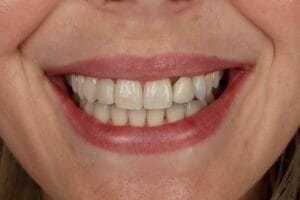
A female patient presented to the practice in April 2025, seeking a minimally invasive cosmetic improvement of her smile ahead of her wedding in six months’ time. She was unhappy with the appearance of an existing resin-bonded bridge replacing the UL2, particularly the dark shadow it created when smiling. She was also dissatisfied with the bulky and discoloured appearance of a veneer on the UR2. The patient was new to the practice but familiar with the type of treatments delivered.
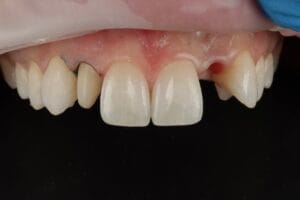
The peg lateral UR2 had previously been restored with a porcelain veneer, later repaired with composite; both colour and form were non-ideal. Aside from recurrent caries at LL6 which we addressed, the dentition was healthy and occlusion was favourable.
As the patient’s primary concerns related to the failed restorations, she requested a low-maintenance treatment with long-lasting results. A dental implant was discussed as an option for replacing the UL2 but was declined due to cost and patient preference, particularly as the existing bridge had functioned for over 10 years. It was therefore agreed to replace the resin-bonded bridge at UL2 and the veneer at UR2. A ceramic veneer was selected to allow a better longevity and a more predictable aesthetic match with the contralateral zirconia pontic.
Preparation begins
Tooth whitening commenced prior to restorative work then the existing resin-bonded bridge was removed and followed by a one-month period of soft tissue conditioning using a partial denture. This appliance was adjusted on a weekly basis over the four-week period until a satisfactory and stable gingival profile was achieved. Patient compliance with the denture was excellent, with the patient finding it easy to adapt to and maintain hygiene throughout the tissue conditioning phase.
Following this, the UR2 was re-prepared for a new veneer and a conservative refinement preparation was also carried out on the UL3 to accommodate the new zirconia resin-bonded bridge.
A full series of clinical photographs, along with shade references, was provided to the dental laboratory. These were used alongside a previously designed wax-up to guide the final shape, proportions and surface characterisation of the restorations.
Final restorations
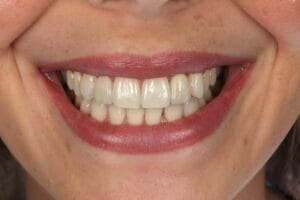
The UR2 was restored with E.max veneer to optimise aesthetics, strength and predictable bonding to the underlying tooth.
For the resin-bonded bridge replacing the UL2, monolithic zirconia was selected and characterised using MIYO liquid ceramics, providing a metal-free alternative. This material choice was driven by the natural translucency of the canine abutment; the previous metal wing had resulted in a metallic shine-through, creating a grey appearance on the UL3. The ceramic solution eliminated this issue.
To preserve natural translucency and avoid excessive opacity, the zirconia wing was kept short of the incisal edge. This allowed the restoration to integrate more seamlessly with the surrounding dentition.
Treatment was completed in September.
Assessing the journey
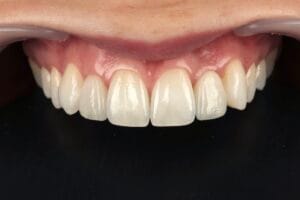
The patient was delighted with the final outcome in time for her wedding, with all initial concerns successfully addressed. The smile was enhanced through corrected tooth form, improved ceramic shade integration and refined proportions of the lateral incisors, resulting in a harmonious smile. Gingival health was excellent at review, with no signs of inflammation around the UR2. The final pontic recreated a more natural emergence profile than the previous bridge.
The focus of treatment was on maintaining the patient’s natural aesthetics – refining rather than reinventing the smile – with a conservative, considered approach that delivered a predictable and durable result.
A key challenge was achieving symmetry and balance between two different restorative materials while ensuring seamless integration with the natural dentition. This was challenging due to the presence of pronounced secondary and tertiary anatomy and bleached tooth shade that required careful replication.
This case highlights the importance of a strong working relationship with the dental technician. Alina Ceclan was the ceramicist for this case, and our long-standing collaboration and clear communication were integral to the final outcome. Being able to discuss, plan and refine cases together and, where possible, having the patient attend the lab in person, ensures precision, predictability and optimal results.
For more information about the BACD, please visit www.bacd.com
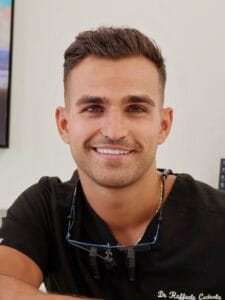 Bio: Dr Raffaele Cedrola graduated with Honours from the University of Birmingham. With a strong interest in cosmetic dentistry, he has completed a Postgraduate Diploma in Aesthetic Restorative Dentistry and provides first-class treatments at Bespoke Dental, Reading and TAHA Dental Excellence, Abingdon. Dr Cedrola was shortlisted for Best Young Dentist at the 2024 and 2025 Private Dentistry Awards.