


In order for practices to improve and expand on the services they provide, investing in and utilising new equipment is important.[i] Dental professionals have a commitment to provide excellent standards of care to their patients. As such, patients must trust clinicians to maintain their oral health and therefore overall wellbeing – with the expectation of safe, effective, and long-term care. However, the ability for professionals to provide these exacting standards of care can come under pressure when balancing costs and benefits. This is because, providing top-quality care can be costly – due to the use of high-quality materials, innovative technology, and advanced skills – both for patients and practitioners.[ii]
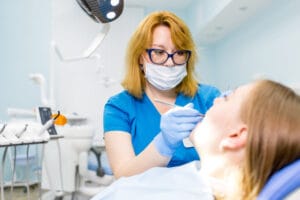
As such, it is important that practices make smart investments in their equipment to help ensure excellent standards are maintained, whilst also being cost-effective. In-practice milling, for example, is a fantastic option for practices who are looking to expand their services, enhance their patients’ experiences, and improve efficiencies – ultimately ensuring money is saved for both their business and their patients in the long-term.
Chairside milling offers a number of benefits, reducing chair times and practice visits, and eliminating the need for cord packing, impression material, and temporary crowns in many cases. By removing the need for return visits within a single course of treatment, tooth sensitivity commonly experienced between appointments is reduced and no additional anaesthetic is required.[iii]
Effective solutions and processes
The chairside milling process is very efficient, incorporating the following steps:
- The clinician uses an intraoral scanner to capture digital impressions of a patient’s mouth – removing the need for conventional impressions.
- The digital impressions are then used to design the restoration using CAD/CAM software – often in just a few clicks. Modern solutions may utilise artificial intelligence (AI) to produce a first proposal, which can then be adjusted by the clinician if needed.
- Finally, the restorative design is sent to the chairside milling unit, and the restoration is manufactured from a material block. This step may vary depending on the material used.[iv]
Time is money
Chairside milling offers several advantages for dental practices, one of the most significant being the speed and convenience it provides. The ability to deliver same-day dentistry significantly reduces the treatment time, therefore improving workflows for dental professionals and experience for patients.
As in any other business type, time is money in the dental practice. This means that the time it takes to produce a restoration using a chairside milling machine should be taken into account. A typical chairside milling workflow can take between 88 and 120 minutes. Milled restorations are precise and consistent, whilst eliminating the delays and potential for errors which are associated with traditional lab fabrication. With CAD/CAM blocks available in multiple materials, chairside milling enables clinicians and patients to select the best option for them, whilst ensuring a durable final restoration. Fabrication processes should be decided on a case-by-case basis to ensure the most appropriate solution is provided for every patient, meaning that lab production may still be required in some situations.iii
Because the initial investment in CAD/CAM solutions can be significant, it is important to seek advice from those who can best support your practice and make appropriate recommendations for you. Practices should also consider the need for ongoing maintenance and support to ensure the longevity and effectiveness of the equipment. Whilst initial investments can be costly, chairside milling machines can soon pay themselves off, by saving in other areas such as laboratory fees and consumables.iii
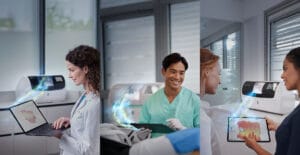
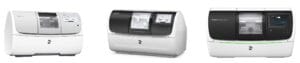
Having worked with dental professionals for over 50 years, the experienced team at Clark Dental is best placed to support your practice in its mission to achieve excellence. Clark Dental’s high-quality portfolio of dental equipment includes the CEREC® range of chairside milling solutions: CEREC® Go, the cost-effective entry to single-visit dentistry; CEREC Primemill® Lite, which makes excellence easy; and CEREC Primemill®, which facilitates premium milling in your practice. Clark Dental is able to support you in your decision making, to ensure you can make the best investment for your unique practice, and its equipment maintenance service will keep your new equipment working long-term.
Offering single-visit dentistry by utilising high-quality dental equipment enables practices to maintain and even elevate the quality of the care they provide, whilst also minimising the time taken to achieve these results and reduce costs for themselves and their patients. In turn, this means more efficient workflows, and enhanced patient experiences.
For more information call Clark Dental on 01268 733 146, email info@clarkdental.co.uk or visit www.clarkdental.co.uk
[i] Tsokov, K., 2023. Dental Equipment: A Factor for Competitiveness of Dental Practice. Int. J. Res. Rep. Dent, 6(1), pp.25-32.
[ii] Wood, N.H., 2024. Beyond the bottom line: Profit and purpose in dentistry. South African Dental Journal, 79(9), pp.463-467.
[iii] Decisions in Dentistry. Return on investment with in-office milling. Accessed Nov 25. https://decisionsindentistry.com/article/return-on-investment-with-in-office-milling/
[iv] Dentsply Sirona. Single Visit Dentistry with CEREC: How chairside milling changed digital dentistry. Accessed Nov 25. https://www.dentsplysirona.com/en-gb/discover/discover-by-topic/by-category/digital-dentistry/single-visit-dentistry-with-cerec.html