


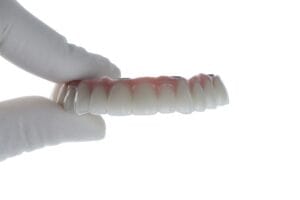
Tooth loss can be a challenging experience for patients. Not only can it affect their confidence, but how they speak and eat. Complete edentulism is irreversible, and is regarded as the ultimate outcome of oral disease.[i] Both caries and periodontal disease, unchallenged, can result in the loss of tooth and bone structure over time. Genetic factors and dental trauma can also play a role, increasing the pool of patients who can be affected by it.i
To support people who live with complete edentulism patients are commonly provided with removable dentures, but full arch dental implants have grown as a recognised approach that can be predictable and effective. It’s the responsibility of the dental professional to assess when a full arch reconstruction can be effective, and to ensure the patient has the best chance at restorative success.
This includes understanding the patient’s oral health needs, how they should look after the solution following placement, and considering the need for referral, or taking on extra training in order to treat such cases.
Before surgery begins
There are many oral health factors that must be controlled to maximise the success of a full arch reconstruction. Firstly, implants will need to be placed in multiple sites across the dentition to hold the fixed denture that will serve as the replacement dentition. However, clinicians have various options for placement and loading protocols. Both immediate and two-stage implant placement procedures can be successful, with the former reducing treatment times and displaying comparable success rates with early and conventional loading, though proper case selection is vital.[ii]
This is an aspect that must balance the suitability for treatment, as well as patient preference. Where an immediate implant loading procedure is viable, patients are thought to favour such a protocol for a fixed, full arch rehabilitation, though the current evidence is not clear.[iii] It can quickly deliver functional and aesthetic restorations in select cases, but professionals must beware the long-term implications, including whether the patient would expect to experience excessive bone loss and mechanical or biological complications.iii
One must also consider whether they can physiologically manage such outcomes. Edentulism results in irreversible alveolar bone resorption, and the amount that has been lost will indicate whether such approaches are feasible. Additional intervention such as guided bone regeneration will be necessary in many instances, and may find the most success with a delayed placement and loading procedure.
Much like standard implant placement procedures, clinicians will also need to maximise the standard of oral health in order to minimise the risk of complications such as peri-implant disease. Managing periodontal disease prior to surgery also helps the clinician more predictably assess the physiological response, and gives a greater chance at long-term success.[iv] For this reason, dental professionals should recommend patients maintain a high-level of oral hygiene, cease smoking, and manage systemic diseases such as diabetes where possible.iv
Minimising infection
Following the placement of implants throughout the arch, patients will continue to require additional advice and support to minimise the risk of early failure, no matter whether an immediate or delayed protocol is used. Conventional tooth cleaning should be supported, aiming to remove plaque and debris from treatment sites. This will reduce the risk of biological compilations as a result of infection and disease.[v]
In order to identify the progression of disease early, professionals should record regular probing depths and radiographs to keep abreast of the progression of disease, should it appear. Baseline probing depths should be measured within 2 weeks after placement to allow for peri-implant soft tissue healing, and radiographs should be retaken in the years that follow, or when signs of infection appear.v
Patients may find oral hygiene routines difficult at first, especially if this is their first fixed dental restoration. The use of floss, interdental cleaners and oral irrigators should be advised, and dental professionals should ensure patients understand how to use each tool properly.
To refer or learn
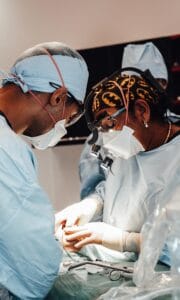
When a patient presents at the practice with the need for a full arch reconstruction, it’s important to recognise the value of referrals. This can ensure the patient receives the highest standard of care, and should be used if a clinician is not suitably trained. However, if such treatment is something a professional wishes to provide, seeking out a high-quality course is vital.
The PG Diploma in Advanced Techniques in Implant Dentistry from One to One Implant Education equips professionals with the skills to plan, provide and manage full arch reconstruction with confidence. Using hands-on sessions and first-hand tutoring, delegates will be able to take on similarly advanced cases, including providing guided bone regeneration, augmentation of the posterior maxilla, and more.
Dental professionals are the primary source of support for patients undergoing full arch reconstruction. Advice and guidance should be provided at all opportunities prior to and following surgery, no matter the chosen protocol.

To reserve your place or to find out more, please visit
https://121implanteducation.co.uk or call 020 7486 0000
Author: Dr Fazeela Khan-Osborne is the founding clinician of the FACE dental implant multi-disciplinary team for the One To One Dental Clinic, London

[i] Chen, H. M., Shen, K., Ji, L., McGrath, C., & Chen, H. (2025). Global and regional patterns in edentulism (1990-2021) with predictions to 2040. International Dental Journal, 75(2), 735-743.
[ii] Daudt Polido, W., Aghaloo, T., Emmett, T. W., Taylor, T. D., & Morton, D. (2018). Number of implants placed for complete‐arch fixed prostheses: A systematic review and meta‐analysis. Clinical oral implants research, 29, 154-183.
[iii] Polido, W. D., & Le, B. (2025). Current Considerations for Full-Arch Fixed Rehabilitations: A Narrative Review. International Journal of Prosthodontics, 38.
[iv] NHS Education for Scotland, (N.D.). Managing peri-implant disease risk. (Online) Available at: https://www.periodontalcare.sdcep.org.uk/guidance/dental-implants/managing-peri-implant-disease-risk/ [Accessed October 2025]
[v] American College of Prosthodontists, (2023). Maintenance of Full-Arch Implant Restorations. (Online) Available at: https://www.prosthodontics.org/about-acp/position-statement-maintenance-of-full-arch-implant-restorations/ [Accessed October 2025]