

 For much of its history, sports dentistry has been practised quietly. Dentists have worked with athletes at major competitions, managed urgent problems behind the scenes and addressed oral disease when it interfered with training or competition for elite sportspeople. Outside a small professional circle, the niche discipline received little attention.
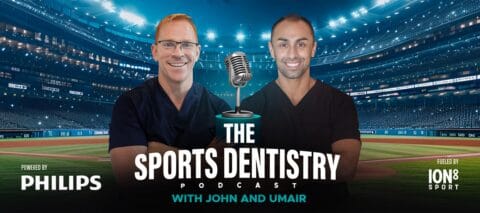
So when dentists Umair Mohammed and John Haughey, both stalwarts of the Sports Dentistry Association, launched The Sports Dentistry Podcast in March 2024, their aim was not to promote a new speciality, but to create a forum for practical, honest discussion. Both had spent years working in sports dentistry, often in isolation, and were aware that many others were dealing with similar clinical challenges without a shared place in which to exchange experience or ideas.
The response surprised them both. Within months, the weekly podcast attracted listeners from more than 50 countries and featured contributors from sports medicine, dental research, elite sport and across the wider dental team. What began as an informal project has developed into a consistent platform for professional discussion and education.
Philips has since become an official sponsor of the podcast and a supporter of the UK Sports Dentistry Association. The involvement reflects a shared emphasis on prevention and professional education.
From isolated practice to shared discussion
The podcast’s origins were unremarkable by design – and that was deliberate. The idea emerged after a rugby match and initially felt more like an experiment than a plan. What followed, however, revealed the extent to which sports dentistry lacked visible infrastructure.
“We realised that although sports dentistry had been around for years, there was no regular, accessible way to talk about it,” Umair explains. “People were doing the work, attending events and building experience, but largely on their own.”
The timing proved significant. Postgraduate education in sports dentistry had become more established, research into athlete oral health was gaining traction, and the European Association for Sports Dentistry had begun to draw clinicians together. The formation of the UK Sports Dentistry Association in 2024 provided further structure. The podcast added continuity, reach and a conversational tone that made the subject more approachable.
Since its launch, the podcast has hosted live recordings at international conferences, in countries including Germany and South Africa, where the hosts supported the establishment of a national sports dentistry association. A global professional network now connects more than 200 clinicians, while recent European meetings have attracted delegates from over 30 countries. “For many of us, this is the first time there has been a sense of belonging to a broader professional group,” says John. “The podcast allows people to listen, reflect and contribute without needing to already be embedded in the field.”
Oral health and the athlete
One recurring theme in podcast discussions is the assumption that elite athletes must have excellent oral health. Research does not support this. Studies conducted over the past decade consistently show that rates of dental decay, gingivitis and periodontal disease among athletes are comparable to, and in some cases higher than, those seen in the general population. That athletes’ oral health is no better than the general population’s, and sometimes worse, remains a striking paradox given their otherwise disciplined approach to physical conditioning.
John, who has worked in sports dentistry for more than 16 years and has supported athletes at events including the London Olympics, the Glasgow 2014 Commonwealth Games and the Rio Olympics, describes this as a persistent blind spot. “Athletes are meticulous about conditioning, nutrition and recovery,” he says. “Oral health is often overlooked, not through disregard, but because it is not fully integrated into performance planning.”
The contributing factors are well-documented; high carbohydrate diets, frequent intake of sports drinks and gels, dehydration, erosion risk and stress-related tooth wear all play a role. In some cases, delayed dental intervention has resulted in missed training or competition, highlighting the wider implications of untreated oral disease. Sports dentistry isn’t about challenging nutritionists or performance teams. It’s about working alongside them to reduce avoidable risk through prevention and early intervention.
Prevention as clinical practice
Prevention remains central to sports dentistry. Regular brushing with fluoride toothpaste, effective interdental cleaning and timely professional assessment are simple measures, yet they are frequently compromised during periods of intense training or travel.
This focus on prevention is a key reason Philips has chosen to support the podcast and the wider Sports Dentistry Association. As a company with a long-standing focus on evidence-based oral healthcare, Philips’ involvement mirrors the preventive approach already embedded within sports dentistry. “Sports medicine teams are rightly cautious,” says Umair. “They expect evidence and consistency. Having a well-established health technology company involved helps reinforce that these discussions are grounded in research rather than opinion.”
For clinicians seeking to integrate oral health into broader athlete care frameworks, that distinction matters.
A multidisciplinary field
Another defining feature of The Sports Dentistry Podcast is its inclusive approach. The podcast treats sports dentistry as genuinely collaborative, involving everyone from dental hygienists and therapists to technicians, academics and students. Guests have included dental therapist Imogen Johnson, the first in her field to complete an MSc in sports dentistry, alongside experienced clinicians and sports medics. As Umar explains “Daily oral health maintenance and behavioural change need a whole team approach not just dentists”.
Lauren Ward, Professional Relations and Education Manager for Philips UK and Ireland, is herself a dental hygienist and has appeared on a some of the podcast episodes, contributing to discussions around patient motivation and oral hygiene compliance. Philips’ professional engagement extends across the dental team, supporting education and training which recognises a shared responsibility for prevention and long term oral health.
Moving fast forward
Interest in sports dentistry is accelerating. Plans are underway for a UK conference aligned with the Commonwealth Games in Scotland in 2026. International collaboration is expanding, with discussions taking place in regions including the Middle East, Australia and New Zealand. Live podcast events linked to sporting fixtures – including the 2026 Commonwealth Games are also being discussed.
For Philips, the partnership represents engagement with a developing professional area which places prevention and evidence at its centre. For the podcast hosts, the aim remains practical. “If athletes can avoid preventable dental problems through earlier attention and consistent habits, that benefits everyone involved,” as John puts it. “The objective is better integration of oral health into athlete care.”
Sports dentistry’s impact may remain largely behind the scenes, but within the profession, its profile is changing. Through shared discussion, growing research and support from organisations that understand the value of prevention, it is becoming more established and more connected than at any point in its history.
Listen to The Sports Dentistry Podcast on Spotify.