

For many patients, the decision to undergo orthodontic treatment is, of course, a chance to achieve straight teeth, but furthermore, a reclamation of confidence. Malocclusion is a great cause of embarrassment and social anxiety. Hence, the opportunity to overcome this with orthodontic appliances like fixed braces or removable aligners offers an exciting solution that some describe as lifechanging.
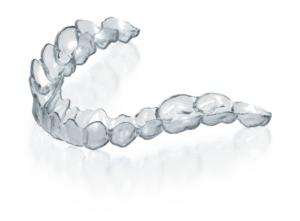
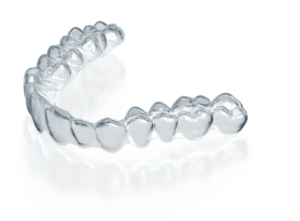
However, something so transformative to one’s confidence requires more than merely a few years of correction, but a lifetime of consistency using retainers. The devices present a seemingly small price to pay for the benefits it affords, as they are a direct route of preservation for patients’ smiles and associated confidence. However, surrounding their absolute importance, what are the consequences of broken or lost retainers?
Issues with retention
It is well understood that tooth position is prone to relapse after orthodontic correction, subtly shifting within days, leading to compromised aesthetics within weeks. Particularly within the first 3-12 months after braces, every hour without retainers can be hugely detrimental to alignment. Teeth maintain their biological activity well beyond treatment, having a natural inclination to ‘return back home’ to their original position prior to orthodontic treatment – counteracting years of orthodontic correction.[i]
Other studies evidence that the likelihood of relapse is highest in the immediate period after orthodontic appliance removal with one study reporting a relapse within 2 hours after removing orthodontic pressure.[ii] However, this susceptibility never entirely disappears, with a combination of factors inducing a relapse: elastic recoil of the periodontal and gingival fibres, natural age-related occlusion changes,[iii] oral habits like bruxism or imbalanced mastication, and pressure from the oral cavity like the tongue or lips.[iv][v]
Retention is an integral extension to orthodontics, proposing a segment of the treatment that is led by personal accountability. Due to the reduced continuous professional support throughout this phase, various unforeseen issues can occur.
Fragile materials and loss
One particular unplanned complication is that of everyday wear – the inherent vulnerability of the material. Due to the nature of retainers being a thin plastic, they are easily susceptible to damage.
Retainers can crack, warp, and snap due to various determinants, even with the most cautious of patients. The improper storage – high temperatures causing them to lose shape, or forgetting to return them to their handy cases – can be cause for damage. Other explanations include accidents when cleaning the appliance, and even the most unexpected situations like pets chewing them or everyday accidents like inadvertently standing on them.
Another major reason for remigrating teeth is that of lost retainers – a sheer moment of absent-mindedness or busy schedules that lead to the unfortunate demise of dentition alignment.
Outdated methods mean minimal reassurance
The extent of change that these relapses can cause reiterates the importance of retainers, and of the speed required to reproduce such devices when unforeseen circumstances occur.
Regularly, patients must wait multiple days to weeks for replacement retainers to be fabricated. With emergency appointments placing them in line for the impression scans or moulding, their production often leaves patients waiting with migrating teeth as laboratories manufacture and ship the new retainers. Many practices still rely on these timely traditional methods and such issues require a solution that offers speed, without compromising accuracy.
Digital workflows in orthodontics are increasingly improving these measures. In-house 3D printing makes retainers production more accessible, offering a faster turnaround for patients who have lost or broken their retainers. Digital software systems allow for the digital storage of patient scans, and faster fabrication processes – meaning no need for patients to return for new scans when in need of new retainers and less time for teeth to migrate back to their ‘home’. These resolutions address both the exigency of avoiding biological relapse and in reassuring patients that their care is continuously proactive with readily-available support.[vi]
Retainers on Demand
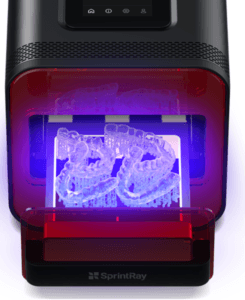 The SprintRay Retainer bypasses the issues associated with lost and broken retainers entirely, revolutionising digital orthodontic workflows. With same-appointment delivery though its use of Cloud AI, fabrication workflows are minimised incredibly. The resin means design and 3D prints take just 5 minutes, skipping the model thermoforming and long laboratory waiting times – ensuring that patients’ newly aligned smiles aren’t without retention for too long.
Furthermore, this latest invention from the SprintRay Biomaterial Innovation lab never compromises quality. Formulated for strength and translucency, the fit and finish are remarkable.
Modern solutions to modern problems
Orthodontic treatment will always require a long-term commitment – extending far beyond the use of appliances themselves – with the continued wearing of retainers required to maintain alignment. With lost and broken retainers posing an ongoing and common threat, the relapse of teeth doesn’t have to be.
Modern workflows allow for such issues to be readily rectified, without the once-dreaded consequences. 3D printing offers speed, precision, and enhanced patient satisfaction in them knowing that they always have an immediate solution available.
For more information on the SprintRay 3D printing solutions changing the game in dentistry, please visit https://sprintray.com/en-uk/
 Ross Phillips – SprintRay Area Manager UK & Nordics
[i] Chacón-Moreno A, Ramírez-Mejía MJ, Zorrilla-Mattos AC. Relapse and inadvertent tooth movement post orthodontic treatment in individuals with fixed retainers: A review. Rev Cient Odontol (Lima). 2022 Sep 28;10(3):e116. doi: 10.21142/2523-2754-1003-2022-116. PMID: 38389556; PMCID: PMC10880701.
[ii] APA
Mirzaei, R., Arash, V., Rahmati-Kamel, M., Abesi, F., & Bijani, A. (2023). Evaluation of the Effects of Low-Level Laser Therapy on the Rate of Relapse of Mandibular Incisors after Fixed Orthodontic Treatment: A Randomized Controlled Trial. Journal of Babol University of Medical Sciences, 25(1), 152-159.
[iii] Wang, J. et al. (2025) The age-related effects on orthodontic tooth movement and the surrounding periodontal environment, Frontiers. Available at: https://www.frontiersin.org/journals/physiology/articles/10.3389/fphys.2024.1460168 com (Accessed: 24 September 2025).
[iv] Gulzar, M., Fida, M. & Sukhia, R.H. Self -reported bruxism in patients undergoing Orthodontic treatment – a cross-sectional study. BMC Oral Health 24, 1577 (2024). https://doi.org/10.1186/s12903-024-05379-z
[v] Najjar, H. E., Alasmari, R. M., Manie, A. M. A., Balbaid, K. N., Alzaher, K. H., Assiri, A. T., Alqarni, S. S., Turkistani, A. A. A., Anzi, S. K. A., Alkhudhayr, B. A. and Alfaifi, S. A. (2023) “Factors affecting retention and relapse in orthodontics”, International Journal Of Community Medicine And Public Health, 10(8), pp. 2946–2950. doi: 10.18203/2394-6040.ijcmph20232173.
[vi] Tsoukala E, Lyros I, Tsolakis AI, Maroulakos MP, Tsolakis IA. Direct 3D-Printed Orthodontic Retainers. A Systematic Review. Children (Basel). 2023 Apr 3;10(4):676. doi: 10.3390/children10040676. PMID: 37189925; PMCID: PMC10136491.