

 Social media has become a powerful driver of health and cosmetic trends – from TikTok fads and Instagram challenges to lifestyle crazes and recipe shortcuts. More recently, social media has fast-tracked the spread of so-called “health hacks” insurmountably. Within the oral health and aesthetics fields, these tricks have become both incredibly noticeable and often problematic. These cosmetic treatments are trending, not only due to patients yearning for pearly white smiles, but because platforms such as TikTok and Instagram are mass-spreading the dramatic “before and after” revolutions, fast fixes, and fun, trendy hacks.
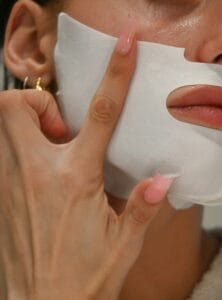
One of the latest viral fads is mouth taping during sleep. Advocates propose that taping the lips closed throughout the night encourages nasal breathing, reduces snoring, improves sleep quality, and enhances facial structure over time.[i] The initial perspective of this might be that it appears harmless, and is a trend that will gradually subside. However, dental professionals are increasingly concerned or the ultimate detriment that this trend, and others, are initiating.[ii]
More risk than reward
Clinically, mouth taping is problematic due to the multiple risks associated with it. Primarily, the restricted airflow through taping is inherently dangerous, and even more so for patients with respiratory conditions or sleep apnoea, both diagnosed, and – even more dangerous – undiagnosed.
With the potential of tape obstructing breathing during sleep, even through something as minimal as congested nasal airways, the consequences can be severe.[iii] Secondary repercussions include the risks of contributing towards xerostomia. Saliva is one of the body’s most important natural defences by washing food debris away and neutralising acids. By drying out the mouth from this vital element, individuals become more prone to dental caries, periodontal disease, and halitosis.
Though nasal breathing is proven to be beneficial, there is no reliable evidence to support the notion that forcibly taping one’s mouth shut is effective or safe. The home-made intervention is not a reasonable substitution for professional evaluation and treatment.
The range of risky dental trends
Mouth taping is not an exception, but part of a greater spectrum of trends and “dental hacks” that have surfaced over the years, targeting viewers who are none-the-wiser to the ramifications of these shortcut trends.
Cheap solutions for teeth whitening are almost always unregulated and high in unsafe ingredients like hydrogen peroxide and abrasives.[iv] This can lead to extreme sensitivity, enamel erosion, and even chemical burns. These impairments are often heavily marketed by influencers, who irresponsibly promote kits and products through fabricated transformation posts without the disclosure of the sponsorships and risks attached.
Other risky dental trends include at-home aligners, which offer purchasers cost-effective, convenient solutions that have not been advocated by orthodontic assessment, nor vital monitoring and radiographs. These “hacks” lead to gum recession, bite misalignment, and even non-reversible damage like root resorption.[v]
Additionally, cosmetic tourism has recently attracted patients looking for cheap answers to veneers, crowns, and more.[vi] In a survey of UK dentists, 86% reported treating patients who developed problems following treatment abroad. These treatments take place in countries that hold different regulatory standards, and whom often prioritise profit by using low-quality materials, and minimal aftercare – leaving patients to battle infections, unforeseen issues, and even remedial treatments in the UK, costing them even more money. Over 50% of these “fixing” cases cost patients over £1,000, with some exceeding £5,000.[vii]
The common denominator between each “hack” is cheap convenience and fast turnaround. Yet, without professional insight, the long-term biological and financial effects entirely, and damagingly, surpass these benefits.
Professional for a reason
These patient repercussions are avoidable through the cosmetic dentistry offered by qualified clinicians, who balance aesthetic outcomes and patient safety. All stages of the treatment are thoroughly informed through assessment, research, and experience. Not only should clinicians ensure the maintenance of oral health, but systemic health too, each whilst adhering to patient budget and expectations.
Patients are becoming wiser to the adverse consequences of cheap hacks and convenient oversees treatment, whilst others need great education through professional informing. From whitening to orthodontics, clinicians have a duty to inform patients of the risks and alternatives to online tricks. Establishing a strong reputation within the field can be a tricky task without the right resources. However, establishing this strong reputation can offer a whole network of support and knowledge.
Excellence within the industry
The British Academy of Cosmetic Dentistry (BACD) creates environments that ensure the adaption of each individual treatment to each specific patient. For clinicians, membership offers access to renowned networking events, in-depth education, and mentorship – each of which allow clinicians to remain at the forefront of innovative cosmetic dentistry. For patients, the BACD is the hub of reassurance. Knowing that their clinician is a member indicates their commitment held to continuous learning, meticulous insight, professional excellence, and the adherence to ethical standards – beyond any unregulated hack or dangerous trend found on the internet.
From mouth taping to home-whitening, and all internet hack in between, the environment of detrimental health hacks is flourishing. Subsequently, clinicians are forced to keep up with the trends, offering solutions to the consequences and having to confidently encourage patients to avert the harmful conveniences. By utilising the guidance and tools offered through professional and acclaimed organisations, both patients and clinicians can unite in safe, ethical, and aesthetic cosmetic treatment.
For further information and enquiries about the British Academy of Cosmetic Dentistry visit www.bacd.com
 Author: Dr. Carol Somerville Roberts President of the British Academy of Cosmetic Dentistry
[i] Rhee J, Iansavitchene A, Mannala S, Graham ME, Rotenberg B (2025) Breaking social media fads and uncovering the safety and efficacy of mouth taping in patients with mouth breathing, sleep disordered breathing, or obstructive sleep apnea: A systematic review. PLOS ONE 20(5): e0323643. https://doi.org/10.1371/journal.pone.0323643
[ii] Sarah K. Fangmeyer, Christopher D. Badger, Punam G. Thakkar, Nocturnal mouth-taping and social media: A scoping review of the evidence, American Journal of Otolaryngology, Volume 46, Issue 1, 2025, 104545, ISSN 0196-0709, https://doi.org/10.1016/j.amjoto.2024.104545.
[iii] Lee YC, Lu CT, Cheng WN, Li HY. The Impact of Mouth-Taping in Mouth-Breathers with Mild Obstructive Sleep Apnea: A Preliminary Study. Healthcare (Basel). 2022 Sep 13;10(9):1755. doi: 10.3390/healthcare10091755. PMID: 36141367; PMCID: PMC9498537.
[iv] Carey CM. Tooth whitening: what we now know. J Evid Based Dent Pract. 2014 Jun;14 Suppl:70-6. doi: 10.1016/j.jebdp.2014.02.006. Epub 2014 Feb 13. PMID: 24929591; PMCID: PMC4058574.
[v] Kreuter, P., Sára Haba, K., Kiss-Dala, S. et al. Root resorption caused by aligners, self-ligating appliances, and conventional fixed appliances: a CBCT-based meta-analysis. BMC Oral Health 25, 1259 (2025). https://doi.org/10.1186/s12903-025-06639-2
[vi] Doughty, Janine & Moore, Deborah & Ellis, Matthew & Jago, Jazz & Ananth, Prasanthi & Montasem, Alexander & Holden, Alexander & Johnson, Ilona. (2025). Contemporary dental tourism: a review of reporting in the UK news media. British Dental Journal. 238. 230-237. 10.1038/s41415-025-8330-2.
[vii] BDA (no date) UK dentists picking up the pieces from Dental Tourism Boom, British Dental Assocation. Available at: https://www.bda.org/media-centre/uk-dentists-picking-up-the-pieces-from-dental-tourism-boom/ (Accessed: 11 September 2025).