


 Author: Karen Harnott – Total TMJ Operations Director
Consistency in healthcare is absolutely crucial for accurate diagnoses, successful treatments and excellent patient outcomes. This consistency stretches to the classification of health conditions; if multiple systems are used by practitioners, then the treatments and results may be different.
Dental practitioners are vital for the diagnosis and classification of cleft lip and palate, supporting parents with affected babies and preparing the latter for surgery. However, categorising the anatomy and severity of each cleft lip and palate patient comes with a multitude of choices. This is further why consistency is important for the classification of the condition.
Dash to diagnose
Whilst a cleft lip is often noticed during the 20-week screening scan in the second trimester, a cleft palate is more difficult to detect via ultrasound. If a cleft lip or palate is not visible on the scan, they are diagnosed immediately after birth, or during a physical examination within 72 hours of birth.[i] Cleft lip can encompass a wide range of severity, from a notch located on the left or right side of the lip to the most severe form, bilateral complete cleft lip.[ii]
The challenges posed by the conditions are instant, with infants unable to make a seal tight enough to feed through. Later problems, such as inhibited tooth growth, a higher risk of tooth decay, and a higher risk of ear infection and impacted hearing, underline how vital it is for surgery to correct the deformity.
The classification of a cleft lip and palate eases treatment planning and helps the patient, or the parents of the patient, to name, grade, plan, discuss and ultimately remember the clinical scenario.ii But there are many classifications to choose from.
Class struggle
Classification systems are based on cleft lip and palate morphology, with a few based on the embryological development of the cleft. Among the more widely used is the Kernahan classification, which employs a ‘striped Y’ diagram to visualise the extent and location of the cleft. However, when compared against the classification determined by the American Cleft Palate Association, the Kernahan system has limitations, such as an inability to separately identify cleft of the lip and alveolar.ii Despite this, the Kernahan system uses similar subheadings for combined clefts of the primary and secondary palate as it does for clefts only in the primary palate – this highlights how a simplified description could cover all cleft types and ease the classification model.ii
In the UK, two systems stand out. The Veau classification divides clefts into four groups: soft palate only, hard and soft palate, unilateral complete, and bilateral complete. This does not account for the severity of the defect.
In contrast, the LAHSHAL classification provides clinicians with a more comprehensive system. In practice it allows cleft to be easily coded for computer use. LAHSHAL splits the mouth into seven parts, each corresponding to a letter: right lip (L), right alveolus (A), right hard palate (H), soft palate (S), hard palate (H), left alveolus (A), left lip (L). For maximum coverage, LAHSHAL can describe over 12,000 combinations.[iii]
A new study emerges
More recently, a study aimed to develop a new, anatomically based classification system for nasal deformities in infants with cleft lap and palate. Motivated by the omission of nasal deformities secondary to orofacial clefts in other classifications, the study focused on assessing aspects like the symmetry of the septum, projection of the nasal tip, and the shape of the nostrils.[iv] Using a range from moderate to severe, and guided by photographs of patients, the findings demonstrated a strong consistency among clinicians, with excellent agreement across the survey.[v]
By following such a protocol, clinicians can better evaluate the efficacy of different treatment approaches whilst also identifying potential areas for refinement.v This in turn can transform the life of a cleft lip and palate patient, supporting them in living without many of the complications associated with a cleft lip and palate and secondary nasal deformity. It is therefore essential for clinicians to retain consistency in the classifications as this means consistency for the patient and improved surgical outcomes.
Prepping with the best
Pre-treatment preparation is essential for achieving the desired outcome. Clinicians should recommend the DynaCleft® system from Total TMJ for cleft lip and palate patients. A collaborative result developed by plastic surgeons, orthodontists and cleft palate teams, the system gently guides and supports facial tissues, improving nasal symmetry and better positioning the cleft lip and palate for optimal surgical results.
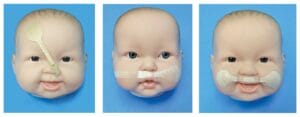
The correct classification of cleft lip and palate is integral for optimising treatment outcomes. Having consistency and staying up to date on the latest research allows clinicians to support affected patients to the highest level, preparing them an improved quality of life.

For more details about Total TMJ and the products available, please email info@totaltmj.co.uk
[i] NHS (2019). Overview – Cleft lip and palate. [online] NHS. Available at: https://www.nhs.uk/conditions/cleft-lip-and-palate/.
[ii] Singh, D., Bastian, T., Singh, M. and Sharma, P. (n.d.). Classification Systems for Orofacial Clefts. [online] doi:https://doi.org/10.5005/jp-journals-10037-1035.
[iii] Uhbristol.nhs.uk. (2020). The South West Cleft Service. [online] Available at: https://www.uhbristol.nhs.uk/patients-and-visitors/your-hospitals/bristol-royal-hospital-for-children/what-we-do/the-south-west-cleft-service/information-and-leaflets/information/.
[iv] Mejia, M., Bernal, I., Cordero, J.P., Bercu, C., Rohan Policherla and Steinberg, J.P. (2025). A Proposed Nasal Deformity Classification System for Infants With Cleft Lip and Palate. Journal of Craniofacial Surgery. [online] doi:https://doi.org/10.1097/scs.0000000000011151.
[v] Health, W.K. (2025). New classification system proposed for infants with nasal deformity in cleft lip and palate. [online] Medicalxpress.com. Available at: https://medicalxpress.com/news/2025-05-classification-infants-nasal-deformity-cleft.html [Accessed 11 Jul. 2025].