

 Author: Alistair Mayoh – Marketing Director Kemdent
The quality of dental laboratory workflows depends on a number of variables – the skill of the technician team, the materials used, and the technology available to professionals all make a significant difference. In order to improve the quality of the restorations produced on a daily basis, professionals can look into the addition of new workflows where relevant, and embrace training opportunities that ensure each laboratory team member can confidently work with the latest solutions.
Improving the accuracy, durability, and quality of dental restorations will make a dental laboratory more attractive to collaborate with in the eyes of a dental practice. The lost wax casting technique is a fundamental aspect of the process used for fabricating dental prosthetics and appliance, and the accuracy and consistency of the operation is crucial to a successful outcome.[i] If laboratory teams can optimise this, they can improve their business’ offering to clinicians, and support a wider range of patients.
Whether adopting new workflows, or introducing new members to the team, it’s important to ensure each technique is performed with skill. Understanding the current solutions available that can improve the predictability of workflows is vital, and begins with assessing the digital world around us.
Going digital
When producing high-quality, detailed and precise metal restorations, the conventional lost wax casting technique can often be employed with confidence. With the integration of 3D printing and related computer-aided design and computer-aided manufacturing (CAD/CAM) solutions, technicians can expect an improved lead time and minimised production costs over time.[ii]
In dentistry, the traditional lost wax casting method has been shown to produce fixed dental prostheses of a predictable internal fit, with accuracy comparable to that of new CAD/CAM systems and the metal casting technique.[iii] Many technicians will learn the lost wax approach during their training, and so will be familiar with the workflow.
The literature notes that conventional fabrication has some drawbacks which can increase the technical sensitivity of the approach and the number of errors made; these drawbacks include a larger number of laboratory steps and the lack of a standard cement thickness during placement.[iv] The use of digital solutions to reduce laboratory steps and simplify fabrication procedures is a welcome adaption in modern workflows to minimise the risk of such mistakes.iv
This offers a number of benefits to clinicians. First, reduced errors save time and financial expense for reproducing products and using up materials at the same time. Secondly, an accelerated workflow creates more time in the day to take on more work, engage in training, or simply focus on the work that is already being completed with less time pressures, potentially minimising mistakes even further, and improving the working environment.
Overcoming the challenges of technique sensitive workflows is not always simply achieved by introducing CAD/CAM systems. Lab teams need to understand how to complete their chosen approach – conventional or otherwise – with confidence, being capable of independently ensuring that high-quality results are produced consistently.
A chance to learn
Improving technical skills to optimise the lost wax casting technique or use of CAD/CAM solutions in the dental laboratory is possible in a number of different ways. Continuous professional development (CPD) is essential for every dental technician, and acts as the perfect opportunity to refine skills and encounter new technology.[v] Clinical dental technicians require 75 hours of CPD per five year cycle, and dental technicians need 50 hours per five year cycle in order to maintain professional status.[vi]
The CPD opportunities that are undertaken should be relevant to a professional’s current or intended field of practice.vi This can include the use of CAD/CAM processes, or refining conventional approaches, dependent on the workflows of the dental laboratory. If the team comes together to plan for and take on informative CPD sessions, the laboratory can benefit from more accurate products, more efficient workflows, and more effective services for dentists, which can help drive business.
Material choice
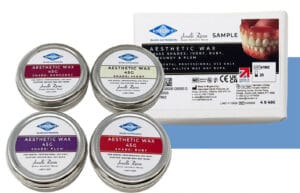
Another game-changer will be the physical materials used in the dental laboratory, no matter the workflow used. Technicians should look for cost-effective solutions that are designed to minimise errors. The help of a trusted manufacturer can be useful, as they can advise on the best possible solutions for each workflow’s unique needs.
Kemdent is a leading provider of high-quality dental laboratory solutions, including specially designed CAD/CAM wax discs. Used in the fabrication of wax models, the discs burn out without a trace. They are ideal for use in the lost wax casting process, for denture creation, and for frameworks for crown and bridge models. Compatible with a range of leading CAD/CAM solutions, the Kemdent solution supports a wide variety of dental laboratories with their workflows.
Taking on new technology, training and materials can change the way a laboratory produces restorations for the better. Technicians should analyse the choices available to them, and embrace changes to workflows where it will improve their production, and the laboratory as a whole.

For more information about the leading solutions available from Kemdent, please visit www.kemdent.co.uk or call 01793 770 256
[i] Wang, Y., Li, Y., Ma, C., Zhang, W., Yuan, Z., Zhu, Q., … & Pang, M. (2025). Effectiveness evaluation of a serious game for dental lost wax casting training. BMC Medical Education, 25(1), 316.
[ii] Alami, A., Ayoub, M., Yasin, A., Alashkar, A., Mdallal, A., Khuri, S., … & Alshemsi, F. (2023). Lost wax casting: from 3D printing to functional parts. Resourceedings, 3(3), 10-16.
[iii] Dahl, B. E., Dahl, J. E., & Rønold, H. J. (2018). Internal fit of three‐unit fixed dental prostheses produced by computer‐aided design/computer‐aided manufacturing and the lost‐wax metal casting technique assessed using the triple‐scan protocol. European journal of oral sciences, 126(1), 66-73.
[iv] Ahmadi, E., Tabatabaei, M. H., Sadr, S. M., & Atri, F. (2020). Comparison of the marginal discrepancy of PFM crowns in the CAD/CAM and lost-wax fabrication techniques by triple scanning. Dental and Medical Problems, 57(4), 417-422.
[v] Ismail, E. H., & Al-Moghrabi, D. (2023). Interrelationship between dental clinicians and laboratory technicians: a qualitative study. BMC Oral Health, 23(1), 682.
[vi] General Dental Council, (2025). CPD guidance for professionals. (Online) Available at: https://www.gdc-uk.org/education-cpd/cpd/cpd-scheme [Accessed October 2025]