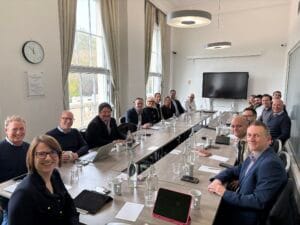
 The inaugural NASDAL (National Association of Specialist Dental Accountants and Lawyers) Forum took place in London recently, bringing together key opinion leaders, accountants, lawyers, business experts, and figures from across UK dentistry for an open and forward-looking discussion on the current state and future direction of the profession.
The meeting began with a warm welcome and a clear statement of purpose. This was not an event to benefit NASDAL members, but rather a wider initiative intended to serve the profession as a whole. The forum’s aim: to share insight, encourage understanding, and – where appropriate – inform future policy. As attendees were reminded, “we can all make better decisions if we know what is happening out there.”
The session was conducted under Chatham House Rules, allowing participants to speak freely and explore sensitive topics. Members of the media were present to report on the event, focusing on emerging themes rather than individual comments.
The current landscape
Political and NHS Environment
The political backdrop was reviewed, with Westminster and Cardiff both facing uncertain times. In Wales, the forthcoming Senedd elections in 2026 could end Labour’s majority, adding further unpredictability to health policy.
The NHS itself remains a key concern. Delegates highlighted a worrying trend of young dentists leaving the NHS pension scheme often unaware of the substantial benefits it offers—including maternity, ill health benefits and long-term security. There was consensus that financial literacy among young dentists is a growing problem. Many rely on misleading “finfluencers” on social media and struggle to find relevant, individualised financial advice.
Participants noted that dental schools still provide little education in business or finance. Several suggested that an elective module on business management could be transformative. The rapid adoption of AI tools such as ChatGPT was also discussed—useful perhaps, but often used without understanding the right questions to ask. It can sometimes be misleading and even dangerous.
There is also a worrying disconnect between associates and the responsibilities of business ownership. As Making Tax Digital progresses, many practitioners remain unaware of the basics of tax or NHS structures, including what a UDA even represents. The profession’s tendency to prioritise advanced aesthetic work (“Align Bleach Bond”) over foundational skills was cited as another cultural challenge – popular with the public, but potentially damaging in the long term.
Technology and AI
AI in dentistry was described as both a “buzzword” and a serious disruptor. The rise of AI-driven reception systems and diagnostic tools promises greater efficiency and patient communication but may also lead to job losses and questionable research integrity. Some attendees cautioned that AI could become a “comfort blanket” for decision-making rather than a true clinical aid. Others noted that despite the hype, dentistry has weathered many technological shifts before and survived them all.
Corporate and Private Activity
The market landscape is changing rapidly. Two major corporates have recently gone through tender exercises for plan provision, while investment for one apparently remains pending. The emerging model appears to favour larger, consolidated practices that combine NHS throughput with “affordable private care.” Out-of-town sites are increasingly popular, raising concerns about the decline of the traditional high street practice.
Some attendees had seen a noticeable slowdown in new squat practices, many of which failed to invest adequately in marketing and struggle to break even within the first 18 months. It may have been seen as an easy alternative which it certainly isn’t – the amount of cash required is often not realised. However, a few savvy, social-media-driven startups are succeeding by building online demand before opening their doors.
Joint venture and community interest models were also debated. While potentially attractive exit strategies, they require significant scale and come with complex funding and risk structures.
Orthodontic Contracts
Orthodontic contracts were discussed and attendees noted that the current system makes orthodontic businesses difficult to finance, as most banks are unwilling to lend against contracts of limited duration. Commissioners, it was reported, are often reluctant to roll over contracts or make new long-term commitments partly due to fear of legal challenge.
Losing an NHS Contract is a disaster for any orthodontic practice and potentially for patients too. Although wind down arrangements are generally in place, these have not delivered the care that might be expected.
The discussion explored why the government has not considered offering in perpetuity contracts at a reduced UOA value – an approach that could provide stability without significantly increasing cost. The potential for private equity investment in orthodontics was also examined, though concerns were raised that such investors could quickly lose contracts, making the sector less appealing.
Looking Ahead
Budget and Financial Outlook
Attention then turned to the fiscal environment. Despite last year’s changes to Capital Gains Tax (CGT), there appears to be little concern among some sellers—a complacency that may prove misplaced if the rate rises further. Many have already withdrawn funds from pensions fearing future restrictions.
Any moves to align CGT more closely with income tax or to adjust National Insurance thresholds, would have wide implications for practice owners and associates alike. Interestingly, some younger dentists may favour a salaried approach without understanding all the consequences – this reflects broader generational shifts in financial attitudes. It was felt that major pension reform was unlikely due to the time consuming administration.
The forum closed with a call for continued collaboration and communication. Attendees agreed that the challenges facing UK dentistry – from funding and workforce pressures to technology and taxation – require open dialogue and shared insight across the sector.
By bringing together experts and voices from all corners of dentistry, NASDAL has created a platform that could help shape not only the business landscape of the profession, but also its policy future.
Chair of NASDAL, Heidi Marshall commented, “the forum was a great opportunity for so many interested parties to come together and share knowledge for the benefit of all. The next step will be to build on these conversations—turning awareness into action, and shared understanding into positive change.”
NASDAL Media Officer, Johnny Minford added, “this initiative really does show the value of having specialist and expert knowledge when making key business decisions.”