


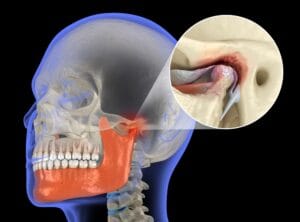
The jaw has multiple important functions within human biology. The temporomandibular joint (TMJ) connects the jawbone to the skull, enabling essential functionality like eating, talking, yawning, and more. Jaw pain, clicking, stiffness, or chronic headaches can seem ordinary but, for many people, they should not be ignored as they may be early symptoms of temporomandibular joint disorder (TMD). Dysfunction in the TMJ causes patients to experience substantial discomfort, inevitably leading to a reduced quality of life. An abundance of research on the condition associates it not only with physical trauma or arthritis but also with outwardly non-injurious daily habits.[i][ii]
For general dental practitioners, early identification of related symptoms is imperative. In doing so, symptom management can be explored and, if necessary, appropriate referrals and long-term solutions can be navigated. Understanding the factors involved in escalating TMD can improve patient outcomes, augment quality of life, and reduce reliance on invasive interventions or pharmaceutical assistance.
TMD explained
Temporomandibular disorder is a common but painful and frequently under-diagnosed condition. Symptoms are vast in nature, spanning jaw pain, an inability to open the mouth, crepitus, and even migraines.[iii] Estimates suggest that between 5% and 12% of the population experience TMD symptoms.[iv]
The condition can rarely be pinpointed to one singular origin; it often arises due to an amalgamation of causes.[v] These might include joint inflammation, unusual oral habits, physical trauma, muscular tension, and psychological stress. The issue can go undiagnosed or misdiagnosed as sinus pain or general stress.[vi] However, with its ability to cause extreme discomfort and diminish quality of life immensely, it’s important to recognise inhibiting factors that can cause or make pain worse over time.
Aggravating habits, what to avoid
Common daily habits or actions can aggravate symptoms further and even increase the risk of developing TMD. Though innocuous, these habits should be avoided and minimised.
It is widely understood that bruxism is one of the major risk factors for TMD. [vii][viii] It occurs during both waking and sleeping hours and can be provoked by stress and poor sleeping conducts. The habitual grinding can lead to microtrauma and muscular strain around the joint which not only affects sleep quality with nocturnal bruxism, but often develops into greater problems and constant pain.[ix]
Another regular habit that can be altered to reduce or avoid muscular pain is that of poor posture.[x] Maintaining a forward-head position, due to phone or computer use, reading, or generally poor posture, can severely impact the alignment between muscles surrounding the jaw.[xi] The imbalance of calibration between the jaw, neck, and shoulder muscles can lead to persistent tension, exacerbating the burden on the TMJ.[xii]
Other parafunctional oral habits such as biting nails, chewing on pencils, and resting the chin on the hand can seem harmless. However, the repeated stress on the jaw muscles and surrounding joints can cause inflammation and muscle fatigue.[xiii] Due to their instinctive and constant nature, parafunctional behaviours are major risk factors for TMD.[xiv] Psychological stress and anxiety have been proven to elevate muscle tension in the head, neck, and jaw, subconsciously increasing the risk of parafunctional behaviours like clenching or lip biting. The subliminal nature of these behaviours makes stress and anxiety one of the most detrimental factors regarding TMD.
Simple at-home strategies
Those experiencing constant jaw pain, constrained opening, frequent clicking, or pressure will undoubtedly require a professional evaluation. Early assessments by a dentist can prevent escalation of the problem to chronic status.
Before the necessity for professional intervention, certain adaptations can have a significant impact on a patient’s experience with TMD. Primarily, parafunctional habits must be minimised: nail or pencil biting ceased and refrainment from resting the jaw upon the hand. Furthermore, stress management, through mindfulness or breathing techniques, can also assist.
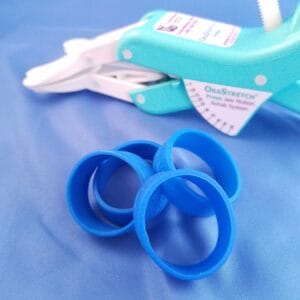
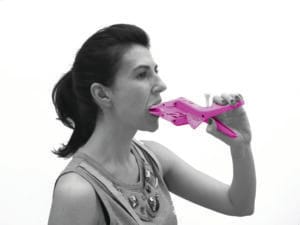
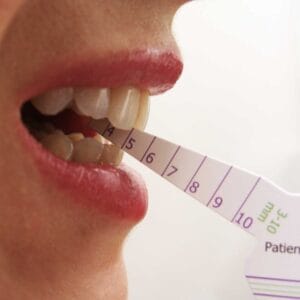
For those seeking guided physical support, solutions like the OraStretch® Press Rehab System from Total TMJ can help encourage jaw mobility and recovery without forceful movement. The device supplies innovation from the comfort of one’s home, allowing patients to reclaim power over their recovery. Its passive stretching abilities mobilise the TMJ to regain muscle strength and enhance jaw function. Within a week, users can expect their rehabilitation to thrive, gaining 1-2mm of jaw range of motion back.
The path to a painless lifestyle
Jaw pain is more than merely a nuisance, it can indicate underlying joint strain and muscular imbalance. By recognising and addressing behaviours such as clenching, posture, stress, and parafunctional habits, individuals can greatly reduce inflammation and pain associated with TMD. If symptoms persist, early professional intervention is essential, yet with awareness, small adjustments to daily actions, and supportive tools, TMD can be effectively and comfortably managed.
For more details about Total TMJ and the products available, please email info@totaltmj.co.uk
Author: Karen Harnott Total TMJ Operations Director

[i] Franks A. S. (1969). Temporomandibular joint in adult rheumatoid arthritis. A comparative evaluation of 100 cases. Annals of the rheumatic diseases, 28(2), 139–145. https://doi.org/10.1136/ard.28.2.139
[ii] Demjaha, G., Kapusevska, B., & Pejkovska-Shahpaska, B. (2019). Bruxism Unconscious Oral Habit in Everyday Life. Open Access Maced J Med Sci. 2019 Mar 15; 7 (5): 876-881.
[iii] NHS Choices (2020). Temporomandibular disorder (TMD). [online] NHS. Available at: https://www.nhs.uk/conditions/temporomandibular-disorder-tmd/.
[iv] Matheson, E. M., Fermo, J. D., & Blackwelder, R. S. (2023). Temporomandibular Disorders: Rapid Evidence Review. American family physician, 107(1), 52–58.
[v] Matheson, E. M., Fermo, J. D., & Blackwelder, R. S. (2023). Temporomandibular Disorders: Rapid Evidence Review. American family physician, 107(1), 52–58.
[vi] Kanehira, H., Agariguchi, A., Kato, H., Yoshimine, S., & Inoue, H. (2008). Association between stress and temporomandibular disorder. Japanese Journal of Prosthodontics, 52(3), 375–380. https://doi.org/10.2186/jjps.52.375
[vii] Ohlmann, B., Waldecker, M., Leckel, M., Bömicke, W., Behnisch, R., Rammelsberg, P., & Schmitter, M. (2020). Correlations between Sleep Bruxism and Temporomandibular Disorders. Journal of clinical medicine, 9(2), 611. https://doi.org/10.3390/jcm9020611
[viii] Poveda Roda, R., Bagan, J. V., Díaz Fernández, J. M., Hernández Bazán, S., & Jiménez Soriano, Y. (2007). Review of temporomandibular joint pathology. Part I: classification, epidemiology, and risk factors. Medicina oral, patologia oral y cirugia bucal, 12(4), E292–E298.
[ix] Commisso, M., Martínez-Reina, J. & Mayo, J. A study of the temporomandibular joint during bruxism. Int J Oral Sci 6, 116–123 (2014). https://doi.org/10.1038/ijos.2014.4
[x] Minervini, G., Franco, R., Marrapodi, M. M., Crimi, S., Badnjević, A., Cervino, G., Bianchi, A., & Cicciù, M. (2023). Correlation between Temporomandibular Disorders (TMD) and Posture Evaluated trough the Diagnostic Criteria for Temporomandibular Disorders (DC/TMD): A Systematic Review with Meta-Analysis. Journal of clinical medicine, 12(7), 2652. https://doi.org/10.3390/jcm12072652
[xi] Minervini, G., Franco, R., Marrapodi, M. M., Crimi, S., Badnjević, A., Cervino, G., Bianchi, A., & Cicciù, M. (2023). Correlation between Temporomandibular Disorders (TMD) and Posture Evaluated trough the Diagnostic Criteria for Temporomandibular Disorders (DC/TMD): A Systematic Review with Meta-Analysis. Journal of clinical medicine, 12(7), 2652. https://doi.org/10.3390/jcm12072652
[xii] Xiao, C.-Q., Wan, Y.-D., Li, Y.-Q., Yan, Z.-B., Cheng, Q.-Y., Fan, P.-D., Huang, Y., Wang, X.-Y. and Xiong, X. (2023). Do Temporomandibular Disorder Patients with Joint Pain Exhibit Forward Head Posture? A Cephalometric Study. Pain Research and Management, 2023, pp.1–11. doi:https://doi.org/10.1155/2023/7363412.
[xiii] Šimunović, L., Lapter Varga, M., Negovetić Vranić, D., Čuković-Bagić, I., Bergman, L., & Meštrović, S. (2024). The Role of Malocclusion and Oral Parafunctions in Predicting Signs and Symptoms of Temporomandibular Disorders—A Cross-Sectional Study. Dentistry Journal, 12(7), 213. https://doi.org/10.3390/dj12070213
[xiv] Abe, S., Kawano, F., Matsuka, Y., Masuda, T., Okawa, T., & Tanaka, E. (2022). Relationship between Oral Parafunctional and Postural Habits and the Symptoms of Temporomandibular Disorders: A Survey-Based Cross-Sectional Cohort Study Using Propensity Score Matching Analysis. Journal of clinical medicine, 11(21), 6396. https://doi.org/10.3390/jcm11216396