

 Accidents happen. In healthcare, however, they can have significant consequences for clinicians and patients – physically, emotionally, and legally. This includes injuries caused by sharps in the dental practice.
For this reason, strict routines are in place for the management of sharp items, in hopes that individuals can avoid harm in all instances. When professionals are injured, it’s important that the correct workflows are in place for recovery to minimise distress. Dental teams need to also realise that accidents provide an effective chance for practices to learn, and make changes to protect professionals in future.
A sticking point
According to recent research carried out by Initial Medical with the British Association of Dental Nurses (BADN) in 2025, around 51% of dental nurses have had an inoculation injury.[1] Around 76% of those that have been affected have had multiple inoculation injuries,1 which suggests that not only are many individuals affected in dentistry, but repeated events are somewhat common.
Of the injuries in the report, respondents said that 96% could have been avoided.1
A percutaneous injury carries many risks for dental professionals. The main problem is the potential exposure to infections, such as bloodborne viruses (BBVs).[2] The most common forms of BBVs include human immunodeficiency virus (HIV), hepatitis B (HBV) and hepatitis C (HCV). Prevalence in the UK population is generally low, with patients affected by each condition estimated to be <0.3%, <1% and <0.5% respectively.[3]
Only a small number of percutaneous injuries are known to have caused infection that led to serious illness, but the injury and anxiety around its impact can still have a significant effect on a dental professional.2 To combat this, clinicians need two key factors considered: protections need to be in place to minimise injury risk, but equally as important, dental teams need to know what to do when a problem does occur. Knowledge of post-exposure procedures and next steps can alleviate some of these anxieties.
Team knowledge
Safe sharps handling can avoid the majority of inoculation and percutaneous injuries in dental care. Clinicians should ask themselves whether a safer sharp device could be used, and seek out personal protective equipment (PPE) such as puncture-resistant gloves or finger coverings.[4]
Training should also be provided for all dental team members, ensuring they know how to work safely with the sharp equipment and procedures in everyday care.4 This could include the use of needles, scalers, and probes, which caused 38%, 27% and 27% of injuries from clinical items respectively.1
According to the BADN research, a third of injuries occurred after an item was used, but prior to disposal.1 Dental professionals need to have training dedicated to the management of sharp items during this phase of use. This includes awareness around recapping procedures, which should be avoided at all costs unless a risk assessment identifies it as a solution to another risk (such as reducing the risk of contaminating a sterile space), though appropriate devices, such as needle-blocks, need to be in place for this.4
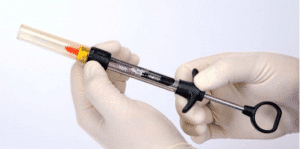
Safely managing sharp objects at any point of use protects not only clinicians and patients, but many unseen professionals who may have to handle the item later in the workflow. Between 2012 and 2022, the NHS as a whole processed 1,947 successful claims for professionals affected by needlestick injuries, and 1,460 of these were received from ancillary workers (including cleaners, porters, laundry and maintenance staff), with 432 from clinical staff.[5]
Taking action
Dental professionals should also be aware of the actions they need to take when an injury occurs. This includes notifying the employer, recording the incident and supporting an investigation of the incident which may prompt changes.4 To facilitate this, dental teams need to encourage a culture of honesty and support, with investigations led by accident prevention, not blame placement in mind.4 If team members feel they will be in trouble, panic can ensue, and not only could incidences go unreported, but key opportunities to prevent future injuries may be missed.
Put protection in place
Safe disposal of sharp items is paramount, as misunderstood workflows or inappropriately designed and positioned containers create the ideal environment for injury. Clearly marked and secure waste bins should be placed close to the point of use, alongside instructions for disposal.
Eco Sharps Bins from Initial Medical are compliant with current regulations, with colour-coded solutions to follow Health Technical Memorandum 07-01. They are made from at least 40% recycled plastic, and are puncture-resistant and seepage-proof to minimise the risk of injury. They are suitable for wall and trolley mounting brackets, ensuring clinical teams can position them wherever needed.
Sharps injuries present a significant risk to healthcare staff, but using current guidance and lessons learnt from previous incidents ensures teams can be kept safe. Amended workflows to avoid repeat injuries is key, and is possible with a culture of honesty and non-judgement throughout the dental team.
 Author: Rebecca Waters
To find out more, get in touch at 0808 304 7411 or visit the website today www.initial.co.uk/medical

About Initial Medical
Initial Medical set the standard in healthcare and infectious waste management in the UK, providing a reliable, effective and fully compliant service built around customer needs and delivered by our highly trained local teams. We are ISO 9001:2015 accredited, with technology fully integrated into our operations, providing full traceability of service delivery, electronic waste documentation and the best customer experience possible. We also offer innovative healthcare waste management services and infection control products, to help break the chain of transmission and prevent cross contamination.
Initial Medical are a company with a ‘World Class’ Health and Safety record, and ISO 45001:2018 accreditation. We are also accredited to ISO 14001:2015 environmental standards, and pride ourselves on our sustainable approach with a focus on delivering eco-friendly products and operational solutions.
Media enquiries:
For more information, please contact:
01227 265700
[1] Based on an independent study conducted with dental professionals, Initial Medical internal data.
[2] Health and Safety Executive, (n.d.). Needlestick or sharps injuries in health and social care: Overview. (Online) Available at: https://www.hse.gov.uk/healthservices/needlesticks/overview.htm [Accessed July 2025]
[3] Public Health England, (2017). Overview: Management of bloodborne virus (BBVs) risk on bomb blast victims (hepatitis B, C and HIV). (Online) Available at: https://assets.publishing.service.gov.uk/media/5a81ece740f0b62305b918b1/Management_of_bloodborne_virus_risk_overview.pdf [Accessed July 2025]
[4] Health and Safety Executive, (2013). Health and Safety (Sharp Instruments in Healthcare) Regulations 2013. (Online) Available at: https://www.hse.gov.uk/pubns/hsis7.pdf [Accessed July 2025]
[5] NHS Resolution, (2025). Did you know? Preventing needlestick injuries. (Online) Available at: https://resolution.nhs.uk/learning-resources/preventing-needlestick-injuries/ [Accessed July 2025]