

 Author: Stuart Clark
Having grown up within dentistry, Stuart has developed an unparalleled understanding of the industry. He is a technical specialist in digital imaging, pulling on his extensive experience as a Technical Director for Schick Technologies. Stuart is also an expert auto-CAD surgery designer and dental equipment engineer.
In the constantly changing space of digital dentistry, it’s important clinicians who are looking to make upgrades take the time to reflect on the benefits, drawbacks and the potential impact new systems will have on their workflows. One piece of equipment that can have the biggest impact on a dental practice is an intraoral scanner. Able to capture 3D images of patients’ teeth quickly, ready to view imminently, intraoral scanners offer a whole host of benefits, and are the foundation of treatment planning for the modern dentist – also able to aid in diagnosis and communication.
As such, we explore the benefits offered by intraoral scanners in depth, the impact they have on workflows in today’s dental practice, and what features can help an intraoral scanner stand out.
What are the benefits?
Intraoral scanners capture detailed images of patients’ teeth and oral structures, helping clinicians notice very subtle issues which may otherwise be missed in the early stages of disease. This improved diagnostic accuracy helps dental teams to produce the most effective treatment plans possible across a wide range of clinical scenarios. By having access to the live feedback afforded by intraoral scanning, clinicians are able to identify issues such as improper bite or worn dental restorations more easily, meaning that informed decisions can be made more quickly with regards to potential diagnosis and treatment plans.
Further to this, intraoral scanning often makes workflows more efficient, with faster turnaround times as shipping times are minimised. Dental labs can now receive scans digitally, meaning that the creation of restorations such as crowns and bridges is much faster than when traditional impressions are sent.
Additionally, many patients have reported that they find intraoral scanners far more comfortable that traditional impressions, as they do not require the use of impression materials. This makes their experience more pleasant, quicker, and less invasive – reducing their time in the dental chair.[i]
Good for business
In addition to the clinical benefits offered by an intraoral scanner, there are advantages for the business too. In the long term, clinicians can expect to make savings both in terms of material costs (thanks to the simplified restorative workflow without the need for impression materials, trays, and shipping expenses) and the reduction in re-makes (attributed to improved accuracy) therefore making dental practices more profitable.
Further to this, investing in a high-quality intraoral scanner displays a clinician’s commitment to excellent dental care. Taking on digital dentistry shows an ability to stay up-to-date with modern innovations, and an eagerness to constantly improve the services provided.
Communication with colleagues, labs, and patients
Communication can also be drastically improved using a digital method. Firstly, intraoral scans can be transmitted to dental labs online, giving them access to a clear and accurate digital model – ideal for more precise restorations and prosthetics, and creating a more collaborative workflow.
In a similar fashion, digital impressions can be shared easily with colleagues, incredibly useful when collaboration with a specialist is needed for a specific case, or where a second set of eyes is helpful. Additionally, having a digital model of the patient’s mouth available almost instantly enables more productive conversations to take place during appointments. It allows the clinician to show patients exactly what they mean when describing particular areas of concern, deepening a patient’s understanding of their own oral health and potential treatment needs going forward.
What if this was all wireless?
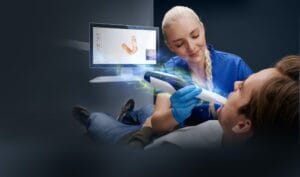
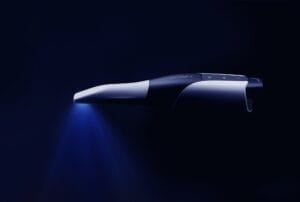
When selecting new digital equipment for the dental practice, it’s helpful to consider the areas which would most impact your day-to-day use, and each solution’s versatility. For example, the Primescan 2 intraoral scanner, available from the experienced team at Clark Dental, is completely wireless without compromising on scanning power or quality – setting it apart from the rest. Equipped with caries detection, it uses fluorescence and near infrared technology to assist with early diagnosis. The cloud-native intraoral scanner allows the user to scan directly to the cloud using any device that has access to the internet, including a mobile phone or tablet. This gives clinicians the freedom to scan from anywhere as the Primescan 2 is not tied to a specific screen or attached to a trolley. Clinicians can also scan patients across multiple surgeries, or share the scanner with colleagues in the practice. Additionally, this is the ideal solution for those who work across multiple locations.
Digital dentistry continues to have a massive impact for clinicians, dental technicians, and, ultimately, patients. As such, it’s vital that practitioners select solutions that are right for them, considering the various benefits and drawbacks. Working with an experienced supplier is essential to ensure you are making an informed decision.
For more information call Clark Dental on 01268 733 146, email info@clarkdental.co.uk or visit www.clarkdental.co.uk
[i] Isidora Christopoulou, Eleftherios G Kaklamanos, Miltiadis A Makrygiannakis, Ilias Bitsanis, Apostolos I Tsolakis, Patient-reported experiences and preferences with intraoral scanners: a systematic review, European Journal of Orthodontics, Volume 44, Issue 1, January 2022, Pages 56–65, https://doi.org/10.1093/ejo/cjab027