

Have you ever watched a master at work, simultaneously exercising total focus and painstaking precision, while making rapid decisions that appear to come easily? This phenomenon has been described as a flow state, in which there is a harmonious fusion between action and consciousness.
Experienced by artists, musicians, writers and athletes when fully immersed in creative activity, flow is also a goal of practitioners in the clinical setting. During procedures that require a high level of practical acuity as well as a deep understanding of the task at hand, highly skilled clinicians are better equipped to work calmly and confidently when they are totally focused and engaged, in addition to being fully conversant in all the necessary skills required.[i]
What is the flow state?
Those in a state of optimal experience, as it is also known, appear to have almost automatic control over their actions. They have high-focus and clear goals, which they easily and fluently monitor and adjust. They are fully alert and able to discount non-relevant stimuli. They lose self-consciousness as they immerse themselves fully into their chosen activity. When in this mental state, time seems to pass more quickly, and there is a great sense of pleasure and reward.[ii]
The term, coined in the 1970s by Hungarian psychologist Mihály Csikszentmihalyi, describes the sensation as one that occurs when challenges and skills are in fine balance, and everything seems to fall into place. He describes flow as a state that can be experienced in the narrow mental state between boredom and anxiety.[iii]
The neuroscience and psychology of flow
The neurocognitive processes involved in achieving a flow state have been studied extensively. Using functional magnetic resonance imaging (fMRI) to understand brain activity during a flow state, researchers found that dorsolateral prefrontal areas were quite active while the frontal lobes were less so. This indicates that self-reflective thinking was low, and that much of the behavioural regulation involved in optimal experience was automatic.[iv]
A key aspect of achieving a flow state is the alignment between an individual’s abilities and the difficulty of a task. Tasks that are too easy can lead to boredom, while those that are beyond capabilities may result in frustration, stress, or disinterest, all of which hinder the flow experience. The balance of these aspects of brain function during a flow state suggests a potential involvement of the brain’s locus coeruleus-norepinephrine (LC-NE) system.[v]
Norepinephrine (NE), one of the four primary neuromodulators, influences nearly all cortical and subcortical regions. Neurons in the locus coeruleus (LC) release NE to regulate baseline arousal and support various sensory-motor and behavioural functions. This small brainstem nucleus is crucial for managing arousal, alertness, attention, stress responses, emotional memory, and cognitive functions throughout the brain. This means that the brain is operating in fluid harmony between automatic, emotional and intellectual processing functions while in flow.[vi]
Csikszentmihalyi explored the psychological benefits to individuals of deeply engaging in enjoyable experiences, like playing chess, rock-climbing, playing a sport or dancing. Not only do individuals achieve a sense of creative accomplishment and heightened functioning,[vii] achieving this state can improve emotional and mental balance, wellbeing and creativity. Those who are able to achieve a flow state may demonstrate improved attention across all tasks and interactions.[viii]

The clinical advantages of achieving a flow state
Some research with microsurgeons has shown that clinicians may benefit from the explicit recognition of flow states and the application of strategies that foster and balance flow within a surgical procedure. Techniques such as visualisation, mindfulness practices, and attention training are tools that may potentially enhance flow experiences, reduce stress, improve performance, and work to prevent burnout.[ix]
Achieving total focus, calm, mental clarity and mastery during complex surgical procedures requires a good educational grounding. Clinicians require intimate knowledge of anatomy, and all possible complications. Training and preparation is needed to find the sweet spot where skills are fully utilised, and abilities are honed to complete a stimulating task with quiet confidence and full engagement.
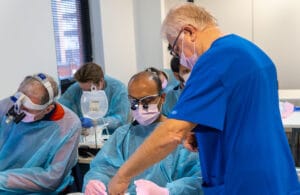
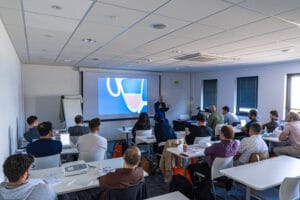
A prime example is the Hands-On Training: Zygomatic, Nazalus, Trans-Sinus & Pterygoid Implants With Z.M.I.T. Zygomatic Minimally Invasive Technique at the ICE Postgraduate Dental Institute and Hospital. The course is led by renowned specialist oral surgeon, Professor Cemal Ucer. The course has been structured for those wishing to introduce zygomatic implants into their practice, learning techniques to minimise the risk of damage occurring to vital anatomical structures such as the orbit, pterygoid and infratemporal fossa and the surrounding blood vessels and nerves.
Achieving advanced practical and mental skills is an important part of developing the mastery needed to fully experience a flow state. Those wishing to develop their practice as implantologists or oral surgeons can do so by pursuing high-quality educational experiences that focus on honing all the skills and senses involved in the practice.

Please contact Professor Ucer at ucer@icedental.institute or Mel Hay at mel@mdic.co
01612 371842
[i] Dowling KW, Landis CG, Landis GH. Reconstructive Microsurgery and the Flow State. Plastic Surgery. 2024;0(0). doi:10.1177/22925503241276548
[ii] van der Linden D, Tops M, Bakker AB. Go with the flow: A neuroscientific view on being fully engaged. Eur J Neurosci. 2021 Feb;53(4):947-963. doi: 10.1111/ejn.15014. Epub 2020 Nov 9. PMID: 33084102; PMCID: PMC7983950.
[iii] David J. Harris, Samuel J. Vine, Mark R. Wilson, Chapter 12 – Neurocognitive mechanisms of the flow state, Editor(s): Mark R. Wilson, Vincent Walsh, Beth Parkin, Progress in Brain Research, Elsevier, Volume 234, 2017, Pages 221-243, ISSN 0079-6123, ISBN 9780128118252, https://doi.org/10.1016/bs.pbr.2017.06.012.
[iv] van der Linden D, Tops M and Bakker AB (2021) The Neuroscience of the Flow State: Involvement of the Locus Coeruleus Norepinephrine System. Front. Psychol. 12:645498. doi: 10.3389/fpsyg.2021.645498
[v] van der Linden D, Tops M and Bakker AB (2021) The Neuroscience of the Flow State: Involvement of the Locus Coeruleus Norepinephrine System. Front. Psychol. 12:645498. doi: 10.3389/fpsyg.2021.645498
[vi] Breton-Provencher V, Drummond GT, Sur M. Locus Coeruleus Norepinephrine in Learned Behavior: Anatomical Modularity and Spatiotemporal Integration in Targets. Front Neural Circuits. 2021 Jun 7;15:638007. doi: 10.3389/fncir.2021.638007. PMID: 34163331; PMCID: PMC8215268.
[vii] Csikszentmihalyi, M. (2000). Beyond boredom and anxiety. Jossey-bass.
[viii] David J. Harris, Samuel J. Vine, Mark R. Wilson, Chapter 12 – Neurocognitive mechanisms of the flow state, Editor(s): Mark R. Wilson, Vincent Walsh, Beth Parkin, Progress in Brain Research, Elsevier, Volume 234, 2017, Pages 221-243, ISSN 0079-6123, ISBN 9780128118252, https://doi.org/10.1016/bs.pbr.2017.06.012.
[ix] Dowling KW, Landis CG, Landis GH. Reconstructive Microsurgery and the Flow State. Plastic Surgery. 2024;0(0). doi:10.1177/22925503241276548