There is a moment an orthodontist will come to recognise. The patient is in the chair for their debond appointment. Treatment has gone well, the result is aesthetically pleasing, and yet the patient is looking at the results with an expression you weren’t expecting. They are not unhappy, exactly. But perhaps they are not as delighted as you hoped.
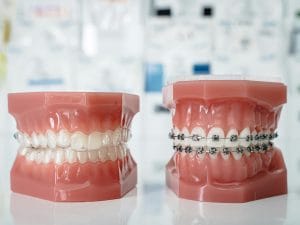
The end of a course of fixed brace treatment is, for the clinician, the final step. In patient terms, it is frequently something more complicated than that. Managing the final stages of orthodontic treatment, and the patient’s experience of them, is a skill that complements technical ability, and one that deserves more attention than it typically receives in orthodontic training.
A compliance challenge
Compliance is a well-documented issue throughout orthodontic treatment,[i] but it becomes particularly notable toward the end of a course. Even if they have been diligent with oral hygiene, attendances, and elastic wear for the first six months of treatment, patients can become harder to engage as treatment progresses and the visible results plateau. The dramatic changes are behind them; the remaining movements are subtle and patients may struggle to see the point of pursuing.
This is the point at which clinical communication matters most. Explaining clearly what the final adjustments are achieving and why they matter for long-term stability helps patients understand that the last phase of treatment is not a formality. The retention of the result depends on it. Patients who disengage at this stage are more likely to debond prematurely, miss the appointments that allow final refinements, and ultimately achieve a result that falls short.[ii] [iii]
The debond appointment
Not many appointments in orthodontic treatment carry more emotional weight than the debond. Patients have waited months for this moment, and their expectations are shaped by a combination of the treatment goals that were set at the start and images on social media.
The first thing many patients notice after bracket removal is the texture of their tooth surfaces. The feeling of residual composite and the roughness of surfaces that have been under brackets for the duration of treatment is unexpected for most patients, and can provoke anxiety about permanent damage. Explaining the polishing process, and the fact that surfaces will feel different a few days later, helps stop it becoming a source of distress.
The second common point of difficulty is demineralisation. White spot lesions around bracket bases are a possible complication of fixed appliance therapy,[iv] and their visibility immediately post-debond can be a shock to patients. Pre-emptive conversations about white spot risk, good oral hygiene support throughout, and monitoring of at-risk patients are all preferable to explaining white spots to a confused patient in the debond appointment.
Retention
The debond appointment is also the moment at which retention must be thoroughly explained. Patients who have completed months of treatment are, understandably, in a celebratory mood. They are not always ready to hear that the work is not entirely done. But discussing retention is not negotiable – because without it, patients are significantly more likely to be disappointed with the durability of their result, and more likely to attribute any relapse to a failure of the treatment rather than a failure of the retention protocol.
The key messages are simple but need to be communicated clearly: teeth move throughout life, and retainer wear is a long-term commitment. Patients who understand from the outset that retention is part of the treatment rather than an afterthought are better equipped for it.
Fixed retention, removable retainers, or a combination of both should be selected based on the individual case. Patients who have found compliance challenging during treatment are unlikely to suddenly become diligent retainer wearers afterwards. Honest discussions about retention will produce better long-term outcomes.
An exercise in empathy
Finishing a course of orthodontic treatment well is ultimately an exercise in patient empathy as much as clinical skill. It requires recognising that the patient’s experience of the end of treatment is not the same as the clinician’s. Patients who feel well informed and well supported at every stage of the journey are more likely to be satisfied with outcomes that are exactly what was planned.
For clinicians looking to build their skills and confidence across the full arc of fixed brace treatment, from diagnosis through to debond and retention, IAS Academy’s Fixed Brace pathway provides the structured training, hands-on support, and lifelong mentoring that makes the difference between completing cases and completing them well. The end of treatment is not the end of the relationship. It is the beginning of a new satisfied patient who can’t wait to tell others about their experience.

For more information or to book the course, visit https://courses.iasortho.com/courses or call 01932 336470 (Press 1)
Author: Dr Tif Qureshi founder and a clinical director of IAS Academy

[i] Perillo L, d’Apuzzo F, De Gregorio F, et al. Factors Affecting Patient Compliance during Orthodontic Treatment with Aligners: Motivational Protocol and Psychological Well-Being. Turk J Orthod. 2023;36(2):87-93. doi:10.4274/TurkJOrthod.2022.2021.0255
[ii] Bibona K, Shroff B, Best AM, Lindauer SJ. Factors affecting orthodontists’ management of the retention phase. Angle Orthod. 2014;84(2):225-230. doi:10.2319/051313-372.1
[iii] Gorassini, Francesca & Fiorillo, Luca & Marrapodi, Maria & D’Amico, Cesare & Basile, Michela & Cicciù, Marco & Cervino, Gabriele. (2024). Debonding issues in orthodontics: an RCTs systematic review. Exploration of Medicine. 5. 477-491. 10.37349/emed.2024.00233.
[iv] Khoroushi M, Kachuie M. Prevention and Treatment of White Spot Lesions in Orthodontic Patients. Contemp Clin Dent. 2017;8(1):11-19. doi:10.4103/ccd.ccd_216_17