Root canal treatment remains one of the more demanding procedures in general practice, both physically and mentally. For these reasons, a clear, repeatable approach to canal preparation can make it more predictable for the clinician and more comfortable for the patient.
Uncertainty is a significant factor with endodontics. Most of what determines how the procedure goes happens at one specific stage, which is shaping the canal; this is where time efficiency is difficult to maintain and where procedural errors are most likely to arise. It also largely dictates whether the remaining steps proceed smoothly, as a well-shaped canal makes everything that follows more predictable.
Shaping shapes the outcome
The cleaning and disinfection of the root canal system is, of course, the ultimate goal of treatment, but it is the shaping of the canal that makes effective cleaning possible. A well-prepared canal allows irrigants to reach the apical region,[i] and provides the clinician with a reliable path to working length. Where this stage is compromised, the remainder of the procedure becomes considerably more difficult, with an increased risk of complications such as ledging, transportation, or instrument separation,[ii] none of which are easy to recover from once they present.
Curved canals present the greatest difficulty in this respect. An instrument that is too rigid will tend to straighten the canal as it works, deviating from the original anatomy and increasing the likelihood of perforation or apical blockage. Smaller, more flexible instruments reduce this risk, yet reaching working length with them can be time-consuming and requires a meticulous, repetitive technique. For the busy practitioner, this is frequently the point at which a case either progresses smoothly or begins to overrun, and it is therefore the stage where a dependable method is required to offer the greatest benefit.
The value of a streamlined sequence
One of the most effective ways to make preparation more predictable is to reduce the number of decisions the clinician must make at the chairside. An extensive tray of files invites uncertainty as to which instrument should be used next, whereas a defined sequence establishes a clear order of use, with each instrument building upon the work of the one before. This allows professional attention to remain focused on technique rather than on managing the system itself, which is particularly valuable I endodontics, where deviations can arise at any point. Working with fewer instruments also means fewer changes during the procedure, which saves time and reduces the handling that can introduce error.
Flexibility and fracture resistance remain central to any modern file system. Instruments manufactured to flex with the canal rather than against it are better able to preserve the original anatomy.[iii] A instrument that can be pre-bent to support a difficult access, then hold that flexed shape rather than springing back, gives the clinician more control where it matters most.[iv]
Disinfection
 It is worth remembering why the canal is shaped at all, as the purpose is not the shape in itself, but the access that it creates. A canal opened to a consistent, tapered form allows irrigant to flow to the apical third and to be exchanged effectively, which is where the effective disinfection of the root canal system takes place.[v] When shaping is rushed or inconsistent, both irrigation and the long-term outcome suffers.
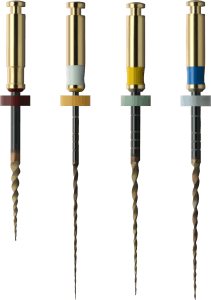
The HyFlex EDM OGSF Sequence from COLTENE has been designed around this principle of simplicity. It comprises four files, used in a pre-set defined order: Opener, Glider, Shaper, and Finisher. Available in 21mm and 25mm lengths, with a corresponding update for the CanalPro Jeni endomotor, the sequence is intended to reach working length with minimal pecking and a short learning curve, supporting the general practitioner in approaching routine endodontics with greater confidence.
Confidence in routine endodontics
Predictable endodontics begins with predictable shaping. By reducing the number of files in use and following a clear, defined order, clinicians can spend less time deciding what to do next and more time on the technique that protects the canal and the patient. A well-engineered sequence offers a practical route to treating more cases in practice, more confidently.

To find out more about the COLTENE HyFlex EDM OGSF Sequence, visit www.coltene.com, email info.uk@coltene.com or call 01444 235486.
Author: Vik Sharma, Sales Director, COLTENE Group

[i] Boutsioukis C, et al. Effect of Master Apical File Size and Taper on Irrigation and Cleaning of the Apical Third of Curved Canals. (Iran Endod J / open access on PMC). https://www.ncbi.nlm.nih.gov/pmc/articles/PMC4043551/
[ii] Greco K, Paolone G, Cicero G, et al. Cyclic fatigue resistance of four heat-treated nickel-titanium files in severely curved simulated canals: an in vitro study. J Clin Med. 2024;13(19):5739. Open access: https://www.ncbi.nlm.nih.gov/pmc/articles/PMC11477095/
[iii] Iacono F, Pirani C, Generali L, et al. Experimental analysis of the influence of heat treatments on the flexibility of NiTi alloy for endodontic instruments manufacturing. Materials (Basel). 2023. Open access: https://www.ncbi.nlm.nih.gov/pmc/articles/PMC10180458/
[iv] Razzaq AA, et al. Heat treatment and surface treatment of nickel-titanium endodontic instruments. Front Dent Med. 2021;2:769977. Open access: https://www.frontiersin.org/journals/dental-medicine/articles/10.3389/fdmed.2021.769977/full
[v] Khademi A, Yazdizadeh M, Feizianfard M. Minimal apical enlargement for penetration of irrigants to the apical third of root canal system: a scanning electron microscope study. J Endod / open-access reprint. Open access: https://www.ncbi.nlm.nih.gov/pmc/articles/PMC4479783/