

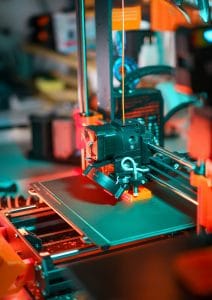
3D printing has absolutely transformed the way dental practices operate, allowing clinicians to produce everything from surgical guides and models to definitive restorations… all chairside.
With this remarkable capability comes an equally important responsibility. The moment a printer enters a practice, the safety of every appliance that touches a patient depends on the material and the process behind it. As implementation rates increase, it is worth considering how clinicians can ensure the resins used are completely safe.
The hidden risk of incomplete curing
Photopolymer resins are biologically inert in neither their liquid nor partially cured state. In their uncured form they are cytotoxic, due to the presence of unreacted monomers and oligomers within the material.[i] When a print is not washed and cured abiding by a meticulous protocol, these residual compounds remain trapped within the structure. Over time, they can leak into the oral cavity, where they have been linked to mucosal irritation, allergic reactions and, in more vulnerable or immunocompromised patients, have been associated with cytotoxic responses in vitro.
With 3D printing, the remaining residue is potentially toxic.[ii] Research has repeatedly shown that the degree of polymerisation achieved during printing and post-processing is the single most important factor in determining whether a restoration is safe long-term.
Biocompatible does not automatically mean safe
A common and dangerous misunderstanding is that a resin labelled as biocompatible is safe regardless of how it is handled. Rather, biocompatibility relates only to the finished restoration once it has been perfectly washed and fully cured in line with a validated process.[iii] A systematic review of 3D-printed dental resins found that while many materials presented positive biocompatibility, others raised genuine concerns over cytotoxicity, with material composition, post-processing technique, and manufacturing method being the significant factors.[iv]
Further studies have demonstrated that intraoral ageing causes resins to release residual material and degradation products, and that insufficiently post-cured samples consistently show increased cytotoxicity.[v] The implication is clear. Without strict standardisation across the entire workflow, even a well-designed material can become unsafe in everyday use.
Why validation matters more than ever
Safety failures can occur at either end of the process – stemming from a poorly conceived material or from inadequate printing, washing, and curing that leaves leachables behind. This is why regulatory frameworks like the ISO 10993 demand that materials undergo systematic cytotoxicity, sensitisation, systemic toxicity, and genotoxicity evaluation before they are approved for extended contact with oral tissues.[vi]
For clinicians, the practical takeaway is that the printer, the resin, and the post-processing equipment cannot be treated as separate decisions. They form a single ecosystem, and safety is only as strong as the weakest link within it. Choosing components that have been developed, tested, and validated together removes a lot uncertainty and protects both the patient and the practice.
What this means in everyday practice
It’s not complicated to ensure that practices are abiding by these expectations properly. Simply following the manufacturer’s validated wash and cure settings with absolute precision, rather than shortening them to save a few minutes between patients can go a long way. Furthermore, washing solutions should be kept clean and replaced regularly. Similarly, curing units should be maintained and checked frequently, as a weakening light source can quietly affect polymerisation.
A dental-first approach to safety
This is where a dedicated dental manufacturer makes a huge difference, with one in particular being SprintRay – creator of a 3D printing ecosystem that is a step beyind anything in the field. SprintRay develops its materials, printers, and post-processing protocols as one integrated system, with patient safety at the centre rather than as a final consideration. Every SprintRay material is engineered specifically for intraoral use and put through rigorous testing, including cytotoxicity evaluation, to confirm it will not cause harm or irritation once placed.[vii]
Safety as standard
3D printing offers extraordinary benefits, but these should never come at the expense of patient wellbeing. Evidence consistently shows that resin safety depends on both material quality and the rigor of the post-processing workflow. By choosing solutions that have been developed and validated for dental applications from the ground up, ensuring that what they place in a patient’s mouth is safe and consistent.

For more information on the 3D printing solutions available from SprintRay, please visit https://sprintray.com/en-uk/
Author: Ross Phillips, SprintRay Area Manager UK & Nordics

[i]Invisible threat: how uncontrolled 3D printing post-processing leads to toxic orthodontic appliances. Specialty Appliances. July 2025. https://specialtyappliances.com/invisible-threat-how-uncontrolled-3d-printing-post-processing-leads-to-toxic-orthodontic-appliances/ [Accessed June 2026]
[iv]AlGhamdi A, et al. Biocompatibility of 3D-printed dental resins: a systematic review. Cureus. 2024. https://pmc.ncbi.nlm.nih.gov/articles/PMC10839546/ [Accessed June 2026]
[v]Comparison of three dental resins for 3D printing of orthodontic appliances: comparison of leaching, biocompatibility, and thermo-mechanical properties after post-curing and aging. Dental Materials. November 2025. https://www.sciencedirect.com/science/article/pii/S0109564125008024 [Accessed June 2026]
[vi]Navigating FDA clearance and biocompatibility standards for dental 3D printing resin: a comprehensive regulatory guide. February 2026. https://luxcreo.com/navigating-fda-clearance-and-biocompatibility-standards-for-dental-3d-printing-resin-a-comprehensive-regulatory-guide/ [Accessed June 2026]
[vii]Innovations in 3D printing materials for dental applications. SprintRay. June 2025. https://sprintray.com/innovations-in-3d-printing-materials-for-dental-applications/ [Accessed June 2026]