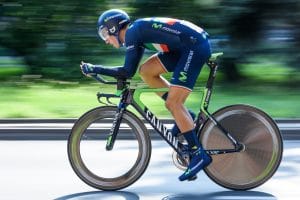
Athletes operate at the limits of human capacity. Training programmes are meticulously planned, recovery is monitored, and biomechanics are analysed in fine detail. Yet one structure frequently escapes routine scrutiny: the temporomandibular joint (TMJ).
Jaw clenching isn’t limited to elite sports – it’s common whenever people push their bodies hard. Whether bracing for heavy lifts, stabilising during contact, or tensing in high-pressure moments, the jaw may tighten subconsciously. While this can feel like added strength or control, repetitive strain on the masticatory system can eventually lead to temporomandibular joint disorder (TMD).
A 2025 cross-sectional study of 337 elite German athletes found that 10 per cent reported self-reported TMD symptoms, with significantly higher rates in female athletes compared with males.[i]
For clinicians, understanding this relationship is essential. Subtle dysfunction in the TMJ can compromise recovery, alter neuromuscular patterns and ultimately influence performance outcomes.
Why athletes represent a unique risk group
Sport creates a distinct biomechanical and physiological environment. Maximal strength efforts encourage full-body muscular co-contraction, including activation of the jaw elevators. In contact disciplines especially, high-velocity impacts and repetitive microtrauma increase mechanical stress to the craniofacial region. Even in non-contact sports, habitual bracing patterns may overload the TMJ.
Psychological stress compounds this picture. Competitive pressure elevates baseline muscle tone and can reinforce parafunctional habits such as clenching or bruxism. Sleep disturbance, frequent travel across time zones and cumulative fatigue reduce tissue recovery capacity. Over time, what begins as a temporary coping strategy may become a persistent neuromuscular pattern.
Importantly, TMD in athletes is rarely attributable to a single incident. Rather, it reflects the interaction between load, habit and recovery.
Clinical presentation: often overlooked
TMD in patients who are committed to training rarely presents dramatically. Symptoms tend to develop gradually and may fluctuate in intensity. Those who are accustomed to training through discomfort may also not volunteer jaw-related complaints unless prompted.
Common symptoms include:
- Morning stiffness or tightness in the jaw
• Joint clicking, catching or deviation on opening
• Pain during mastication
• Headaches, particularly in the temporal or peri-orbital region
• Cervical tension or reduced neck mobility
• Fatigue during prolonged speaking or chewing[ii]
Because these symptoms are often low-grade, they can be dismissed as inconsequential. However, within the context of elite sport – where marginal gains are decisive – even minor dysfunction may erode training quality.
Targeted questioning during dental visits can facilitate early detection. Enquiring about jaw clenching during training and perceived tension during competition can uncover patterns that might otherwise remain hidden.
The wider biomechanical implications
The TMJ does not function in isolation. It forms part of an integrated cranio-cervical system. Altered jaw mechanics may influence cervical posture, breathing patterns and neuromuscular coordination.
Forward head posture, commonly observed in fatigued athletes, increases strain on both cervical structures and the TMJ. Chronic masticatory muscle tension can contribute to headaches and restrict cervical rotation. Compensatory patterns may extend to the shoulders and thoracic spine, subtly affecting upper limb mechanics and overall kinetic chain efficiency.
For strength and conditioning professionals and physiotherapists and dentists treating athletes, this interconnectedness is clinically significant. Persistent, low-grade TMD may increase vulnerability to secondary injury or blunt performance adaptations.
Management in the elite environment
Managing TMD in high-performance sport requires a pragmatic, multidisciplinary approach. Interventions must address underlying mechanisms whilst respecting training schedules and competition demands.
Education and behavioural awareness
Athletes benefit from simple positional cues such as “lips together, teeth apart” to discourage unnecessary clenching. Breath-led bracing strategies can provide trunk stability without excessive jaw activation.
Manual therapy and rehabilitation
Targeted treatment of the masticatory muscles, combined with cervical and scapular control exercises, can restore coordinated function. Rehabilitation should progress in line with sport-specific demands to ensure transfer into competition.
Load and recovery optimisation
TMD symptoms often parallel spikes in training intensity. Periodisation, sleep optimisation and nutritional support remain central to reducing central sensitisation and supporting tissue recovery.
Protective measures
In contact sports, appropriately fitted mouthguards reduce impact forces and may limit excessive tooth-to-tooth loading. For athletes presenting with nocturnal bruxism, occlusal appliances may be indicated following dental assessment.
A structured rehabilitation solution
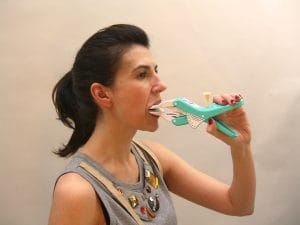
Where restricted opening or persistent muscle tightness is present, structured home rehabilitation may support clinical intervention. The OraStretch® Press Rehab System from Total TMJ is a user-operated device designed to gently stretch orofacial tissues and improve TMJ range of motion. It enables athletes to perform controlled, repeatable stretching outside of treatment sessions. As with all TMD management, device use should form part of a broader plan that includes behavioural modification and therapeutic exercise.
Protecting performance
In sports, inefficiencies can accumulate, which can impact functioning, concentration and recovery. The jaw, though often overlooked, is part of the athlete’s performance system.
By recognising repetitive clenching behaviours, screening proactively and implementing early, evidence-informed management strategies, clinicians can reduce the risk of persistent dysfunction. Protecting TMJ health is about safeguarding neuromuscular integrity, optimising rehabilitation and preserving the athlete’s capacity to perform at the highest level.

For more details about Total TMJ and the products available, please email info@totaltmj.co.uk
Author: Karen Harnott – Total TMJ Operations Director

[i] Merle, C.L., Rott, T.A., Rauch, A., Wolfarth, B., Wüstenfeld, J., Hellmann, D., Haak, R., Schmalz, G. and Ziebolz, D. (2025). Temporomandibular disorders and the use of oral splints among elite sport athletes: a questionnaire-based cross-sectional study in Germany. Clinical Oral Investigations, 29(7). doi:https://doi.org/10.1007/s00784-025-06434-x.
[ii] NHS Choices (2020). Temporomandibular disorder (TMD). [online] NHS. Available at: https://www.nhs.uk/conditions/temporomandibular-disorder-tmd/.