

What do teenagers want? It’s a question with an ever-changing answer, as each year sees the explosion of new trends and fashionable looks. The recent phenomenon of ‘looksmaxxing’ – in which influencers encourage social media users to take extra steps to enhance their physical attractiveness – is the latest example of changing patterns in aesthetics and teenage behaviour.
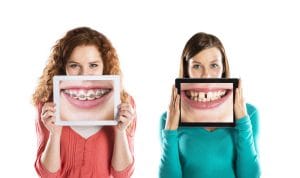
A smile can define a person’s appearance; it is often one of the first things noticed when meeting someone new. For teenagers, their smile can be a source of confidence or self-consciousness, dictating quality of life during a time of intense physical and emotional growth. For dental practitioners, managing adolescent patients can be difficult, particularly when professional health advice, as well as how to enhance the aesthetic of the smile and jaw, is also competing with online trends. A firmer understanding what each adolescent patient wants is needed to inform effective support.
Causing a tough time
It is unsurprising that teenagers want to improve their smiles. Research has found that teens who lose their teeth due to caries or trauma are 42 per cent more likely to be bullied.[i] Assessing 4,400 children over a 6-year span into their teenage years, a 2024 government survey reflects the need for more preventive action – in England, 16.2 per cent of year 6 school children had experienced dental decay.[ii] The subsequent changes can impact self-confidence if there is notable edentulism.
Being bullied for appearance has always been a problem, with the impact affecting children psychologically and physically – obesity is an adverse outcome associated with bullying.[iii] The cycle between oral health, bullying and overall wellbeing therefore needs interrupting. Studies have found that one-third of adolescents struggle with low self-esteem, particularly in the early teenage years.[iv] As such, the enhancement of their image positively correlates with attitude, personality and self-esteem. Pursuing treatment options to improve dentofacial aesthetics, such as a chipped tooth, may be an inevitability; the smile is at the core of both facial attractiveness and also how others perceive their psychological traits.[v] By restoring or improving the smile, teenage patients can feel more confident, especially in social situations and meeting new people.
Finding what adolescents want
Knowing how to manage adolescent patients can be tricky, especially finding out what they want from care. There is little consensus: one study group reported that 78 per cent of adolescents expressed a desire for orthodontic treatment, whereas another report only identified 22 per cent of patients looking for such care.[vi] The same is true for treatments that are the focus of online trends – not every teenager will be attracted to, or even know about, what others are doing on social media.
Online trends on how to improve facial appearance raises concerns about a teenager’s ability to make fully informed decisions and the risk that aesthetic treatments strengthen the belief that image decides self-worth.[vii] They are often perpetuated by people without adequate medical training, meaning adolescents could be engaging with unsafe, unproven advice.
One specific trend is ‘hardmaxxing’, an extreme and unregulated form of ‘looksmaxxing’ that is considered dangerous. Among the viral practices is bone smashing, designed to sharpen the jawline by taking a hammer to the jawbone and regrowing the bone structure.[viii] Dental practitioners must shepherd teenagers away from such measures, with indirect communication such as leaflets or posters serving as a passive way of highlighting the risks and long-term damage.
By taking the time to talk with adolescent patients about any elements of their smile that they are dissatisfied with, dental practitioners can determine if an aesthetic treatment is genuinely in the patient’s best interest. More broadly, there must be a systemic intervention with schools and social media to champion healthy body images and mitigate the pressure young people may place on themselves to look a certain way.
Changes in the dental practice
In the dental practice, recommending a consistent oral hygiene routine ensures a preventive approach. It ensures the natural dentition is kept healthy and attractive, minimising problems including staining, chipping, and decay. This may offset the need for aesthetic dental treatments by reducing the risk of tooth loss and maintaining a healthy smile.

At the core of effective daily dental care and oral prophylaxis is interdental cleaning. The Cordless Advanced water flosser from Waterpik™ delivers a comprehensive clean to the teeth, gingivae and interdental spaces, with three pressure settings and four flossing tips providing a customisable experience for optimal compliance. Up to 2x as effective as string floss for removing bacterial plaque and improving gum health,[ix] the Cordless Advanced is also suitable for orthodontic patients, thoroughly cleaning around the brackets and wire and lowering the risk of tooth decay.
The aesthetic demands for teenage patients fluctuate as fashions come and go. By encouraging diligent dental care and a preventive approach, teenage patients can feel happy with their smile, boosting their quality of life.

For more information on WaterpikTM water flosser products visit www.waterpik.co.uk.
WaterpikTM products are available from Amazon, Costco UK, Argos, Boots and Tesco online and in stores across the UK and Ireland.
Author on behalf of Waterpik – Sharon Kidd Dental Hygiene

[i] The University of Sydney. (2025). Teens who lose teeth to decay and injury nearly twice as likely to be bullied, study reveals. [online] Available at: https://www.sydney.edu.au/news-opinion/news/2025/09/02/teens-tooth-decay-bullying.html.
[ii] Office, GOV.UK. (2024). Detailed findings of year 6 oral health survey. [online] GOV.UK. Available at: https://www.gov.uk/government/statistics/oral-health-survey-of-children-in-year-6-2023-detailed-report/detailed-findings-of-year-6-oral-health-survey.
[iii] The University of Sydney. (2025). Teens who lose teeth to decay and injury nearly twice as likely to be bullied, study reveals. [online] Available at: https://www.sydney.edu.au/news-opinion/news/2025/09/02/teens-tooth-decay-bullying.html.
[iv] Gavic, L., Budimir, M., & Tadin, A. (2024). The association between self-esteem and aesthetic component of smile among adolescents. Progress in orthodontics, 25(1), 9.
[v] Gavic, L., Budimir, M. and Antonija Tadin (2024). The association between self-esteem and aesthetic component of smile among adolescents. Progress in Orthodontics, [online] 25(1). doi:https://doi.org/10.1186/s40510-023-00508-w.
[vi] Gavic, L., Budimir, M. and Antonija Tadin (2024). The association between self-esteem and aesthetic component of smile among adolescents. Progress in Orthodontics, [online] 25(1). doi:https://doi.org/10.1186/s40510-023-00508-w.
[vii] Borin, M., Nittari, G., Degliuomini, R.S., Schiraldi, L., Summa, P.G.D. and Buzzaccarini, G. (2025). Teen beauty trends: the ethics and impact of aesthetic medicine on adolescents. JPRAS Open. doi:https://doi.org/10.1016/j.jpra.2025.10.014.
[viii] Clegg, R. (2026). Sculpting jaws, giving scores: Inside the world of looksmaxxing. BBC News. [online] 15 Mar. Available at: https://www.bbc.co.uk/news/articles/cx28z4zypkno.
[ix] Mancinelli‐Lyle, D., Qaqish, J. G., Goyal, C. R., & Schuller, R. (2023). Efficacy of water flossing on clinical parameters of inflammation and plaque: a 4‐week randomized controlled trial. International Journal of Dental Hygiene, 21(4), 659-668.